Moscow is not a shtetl scaled up. It is a capital city that tried, for a long time, to make Jewish life private, suspicious or invisible. The surprise of the post-Soviet years is how thoroughly that silence broke. Synagogues filled, schools reopened and community institutions once again carried a public face.
What returned was not just religion in the abstract. It was ordinary Jewish visibility: a calendar on the wall, a school bus in traffic, Hebrew lettering above the door, the confidence of people who no longer had to ask permission to be seen.
From banished to central
Moscow’s Jewish history stretches back to the seventeenth century, but it only became a major centre in the late nineteenth and early twentieth centuries, when legal restrictions loosened and the city began to attract merchants, students and political thinkers. That growth was throttled under Soviet rule, then bent into a quieter form of endurance.
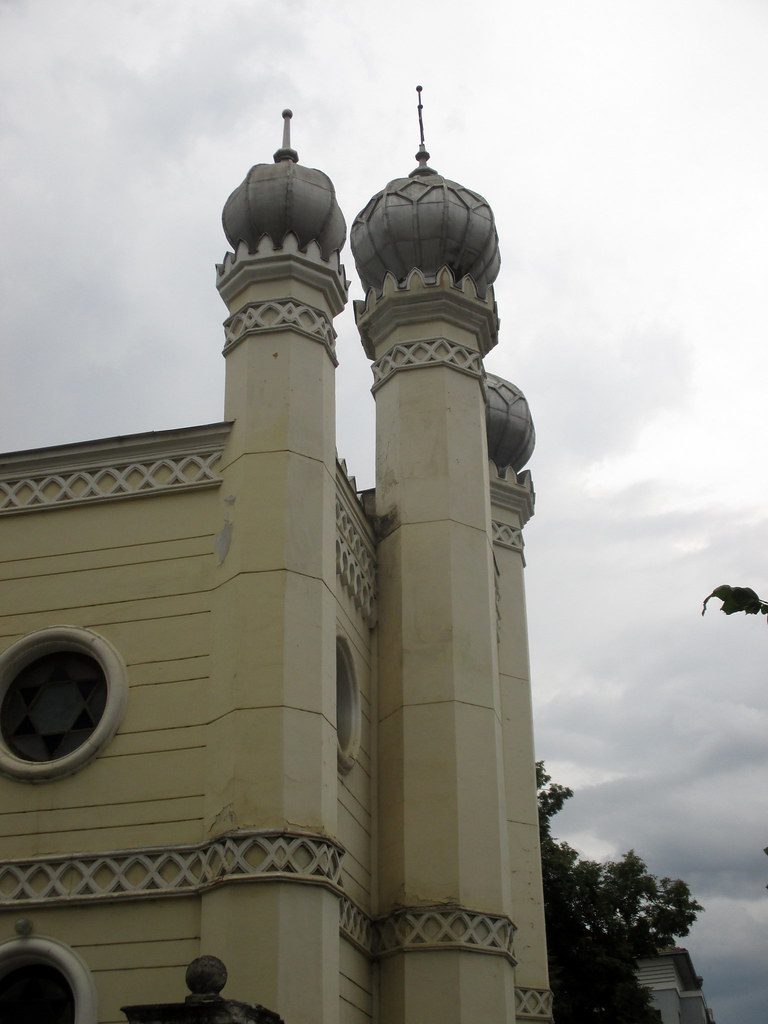
The Moscow Choral Synagogue, completed in 1906, is the great surviving stone witness to that earlier ascent. It stood through the Soviet period, badly bruised but not erased, and then became one of the places where renewed Jewish life could gather again after the empire of silence cracked.
Moscow Choral Synagogue completed
The main Orthodox synagogue in central Moscow opened in 1906 after a long and obstructed building process. Its survival through the Soviet decades made it the obvious stone anchor for the city’s later revival.
Moscow Choral SynagogueThe reopening of communal life
After the Soviet collapse, more institutions followed: schools, a community centre, study rooms, welfare structures and the practical machinery any Jewish city needs if it is to remain itself. The Moscow Jewish Community Centre in Maryina Roshcha became the largest in Russia, a clean sign that the community was no longer content to live only in memory.
This is the pattern in Moscow now: not triumphalism, but steadiness. The city no longer asks Jews to hide their names. That is a change worth recording with respect.
Moscow stopped asking Jews to disappear. The capital became visible again to the people who had been there all along.
Moscow Jewish Community Centre opens
Opened in 2000 in Maryina Roshcha, the Moscow Jewish Community Centre became the largest Jewish community centre in Russia. It stands for the post-Soviet return of schools, worship and communal life to the capital.
Moscow Jewish Community CentreA capital with a memory
Moscow’s Jewish story is full of interruptions. That is true. But interruption is not the same thing as absence. The old structures, the new schools and the daily routines of a living community prove the difference.
There are cities that tolerate Jewish memory. Moscow is one that has to live with Jewish present tense. That is better.