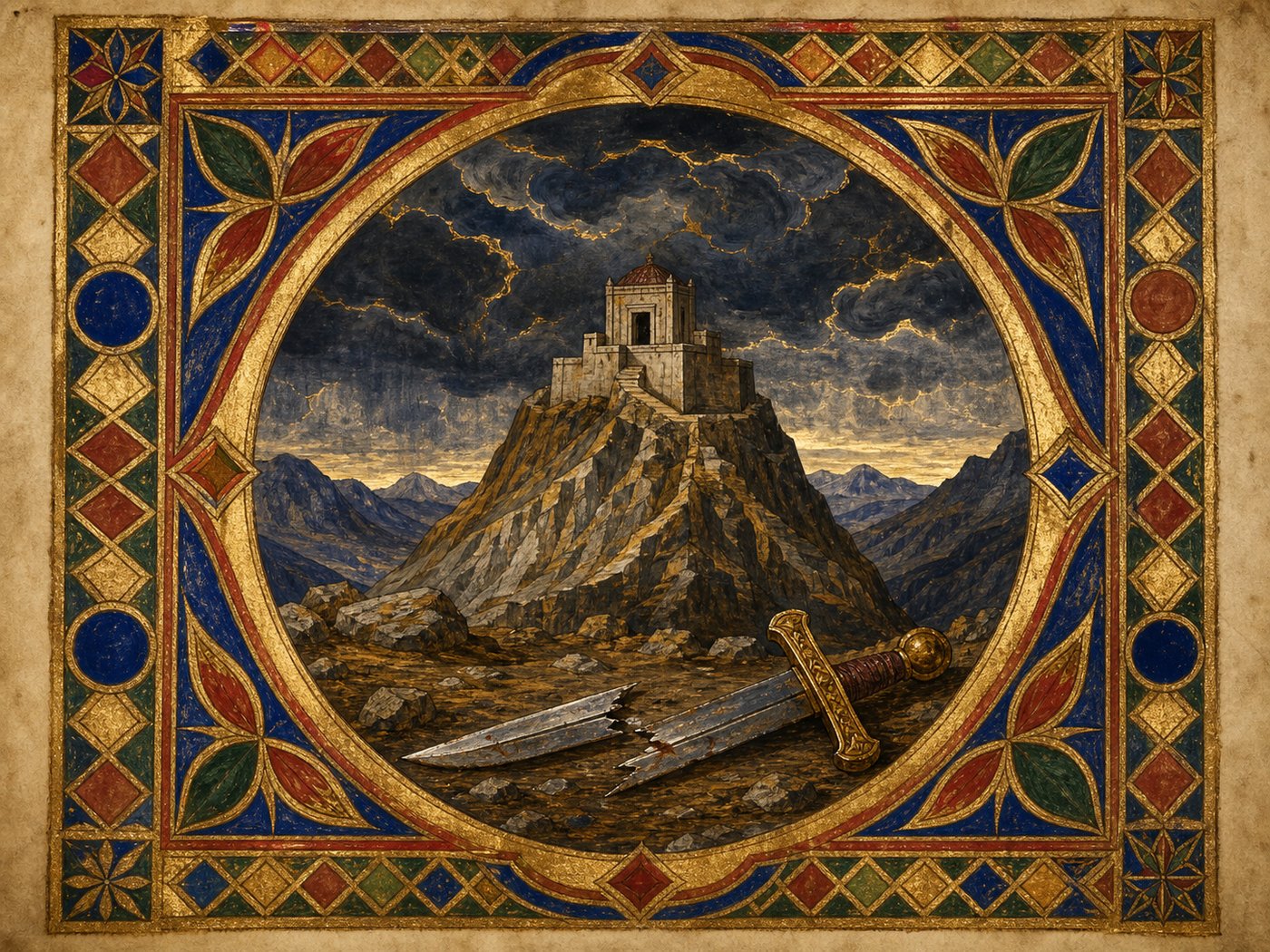
The mountain was chosen before Jerusalem was. When Moses stood on the plains of Moab and laid out the terms of entering the land, he named Gerizim as the mountain of blessing and Ebal as the mountain of curse (Deuteronomy 27). The tribes were to stand on those two slopes when they crossed the Jordan, and the covenant was to be spoken between them. Whatever happened afterwards - whatever David built, whatever Solomon consecrated, whatever became of the capital on its ridge to the south - Gerizim had been in the story first. The Samaritans never forgot that.
Who the Samaritans are is, depending on who you ask, a simple question or a loaded one. The Jewish account, preserved in 2 Kings 17, says that after the Assyrians deported the northern Israelite population in 722 BCE they resettled the region of Samaria with peoples from Babylon and elsewhere, who mixed their foreign cults with a surface veneration of the God of Israel. The Samaritan account - which the Samaritans themselves would give you, and which modern scholarship increasingly takes seriously - is that they are direct descendants of the northern tribes of Ephraim and Manasseh, who survived the Assyrian conquest in place, kept the Torah, and were never welcomed back into communion with the Jerusalemite community that returned from Babylonian exile. The argument is ancient, the partisans have never stopped arguing, and the Samaritans are still here - a community of roughly 900 people today, still ascending Gerizim for Passover, still reading from their ancient Torah scroll.
The record
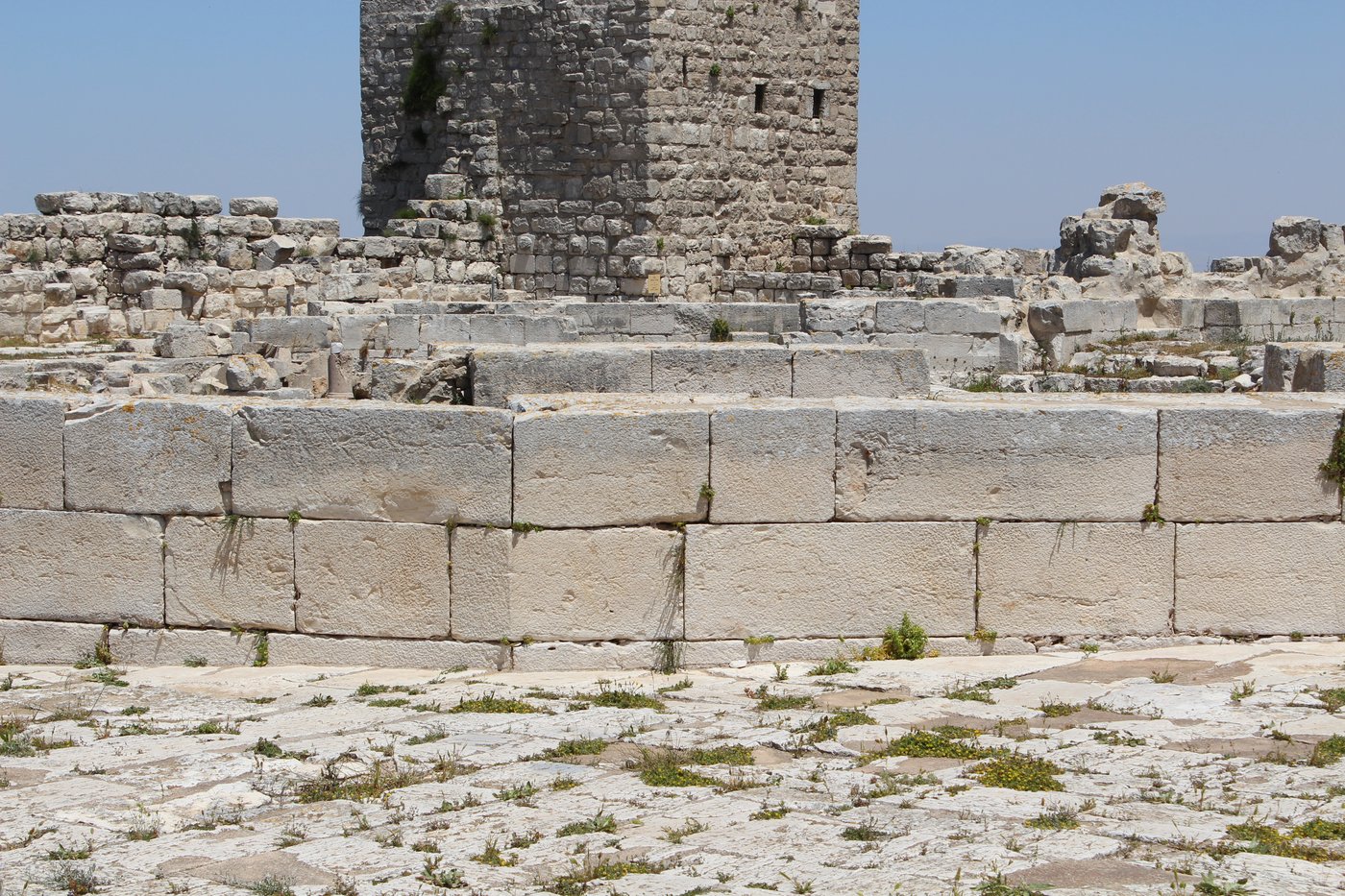
Archaeological excavations on the summit of Mount Gerizim, directed by Yitzhak Magen for the Israel Antiquities Authority between 1983 and 2006, uncovered the remains of a large sacred precinct dated to the fifth or fourth century BCE - broadly contemporaneous with the return from Babylon and the consolidation of the Jerusalem Temple under the Persian administration. The site produced over four hundred dedicatory inscriptions in Aramaic, including offerings made on behalf of named individuals and their families, confirming active religious use over several centuries. The finds are published in Yitzhak Magen, Haggai Misgav, and Levana Tsfania, Mount Gerizim Excavations, Volume I: The Aramaic, Hebrew and Samaritan Inscriptions (Israel Antiquities Authority, 2004). Significant assemblages are held at the Israel Antiquities Authority storage facilities and at the Good Samaritan Museum near Nablus.
The sanctuary that stood on Gerizim was not a rough hill altar. It was a substantial temple, built in the Persian period and enlarged under early Hellenistic rule - a House of God on the same scale of ambition, if not the same scale of fame, as the one in Jerusalem. The Samaritan Pentateuch, which differs from the Masoretic text at several hundred points, reads the commandment to build the altar on Mount Gerizim rather than on the unnamed mountain of Deuteronomy 27 - a textual difference that is not a copying error but a theological statement. Each community read the same covenant and heard the mountain differently. That is the nature of schism: not that one side has a text and the other has a tradition, but that both have both, and neither can convince the other that it is reading them wrong.
The record
The Gerizim sanctuary was destroyed in approximately 128 BCE by the Hasmonaean ruler John Hyrcanus I, who also razed the Samaritan city of Shechem in the same campaign. The event is recorded by Josephus in Antiquities of the Jews XIII.9.1 (255-256), written c. 93-94 CE, and is consistent with the archaeological record: the Magen excavations found destruction layers on the summit dated to the late second century BCE. Some sixty years later, in 63 BCE, Pompey's arrival ended Hasmonaean independence. Under Roman rule the summit saw later imperial building work in the second century CE, while the Samaritan community rebuilt a new sacred structure on Gerizim. (Josephus, Antiquities XIII.9.1; Magen et al., Mount Gerizim Excavations, IAA 2004.)
The destruction by Hyrcanus is the hinge on which everything turns. He was a Hasmonaean king-priest who had spent his reign expanding Judaean borders and enforcing religious conformity with considerable violence - the forced conversion of the Idumaeans is the other entry on his record that history cannot quite look past. Destroying the Samaritan Temple was, from his perspective, a political and theological tidying-up: one Israelite covenant, one legitimate sanctuary, one Jerusalem. From the Samaritan perspective it was something else - not a correction but a desecration, a cousin-king burning the mountain that Moses named first. The Samaritans rebuilt on Gerizim anyway. They always came back to the mountain. Hyrcanus is long gone; the Samaritan Passover sacrifice still ascends the slope every spring.
The record
The Samaritan community today numbers approximately 900 people, divided between Holon in Israel and Kiryat Luza on Mount Gerizim. They maintain the world's oldest continuously practised form of Israelite sacrifice - the Passover lamb - on the summit of Gerizim each spring, a practice documented in continuous use and recorded extensively by ethnographers and archaeologists. The Samaritan Pentateuch, their version of the Five Books, has been known to Western scholars since a manuscript was brought to Europe in 1616; the critical edition by August von Gall (Der hebräische Pentateuch der Samaritaner, 1914-1918) remains a landmark in textual scholarship, and the tradition is studied at institutions including the École Biblique et Archéologique Française in Jerusalem and the Hebrew University.
There is something quietly instructive in the Gerizim story for anyone who wants to understand the Israelite inheritance. The tradition did not travel in a single stream from Sinai to the present. It divided, argued, built competing temples, and destroyed each other's sanctuaries - and yet both streams carried the Torah, both observed the Sabbath, both circumcised their sons, both pointed their prayers toward the mountain Moses named. The schism was real; so was the family. That combination - genuine dispute inside undeniable kinship - is not a problem the Gerizim story creates. It is the thing the Gerizim story is about.