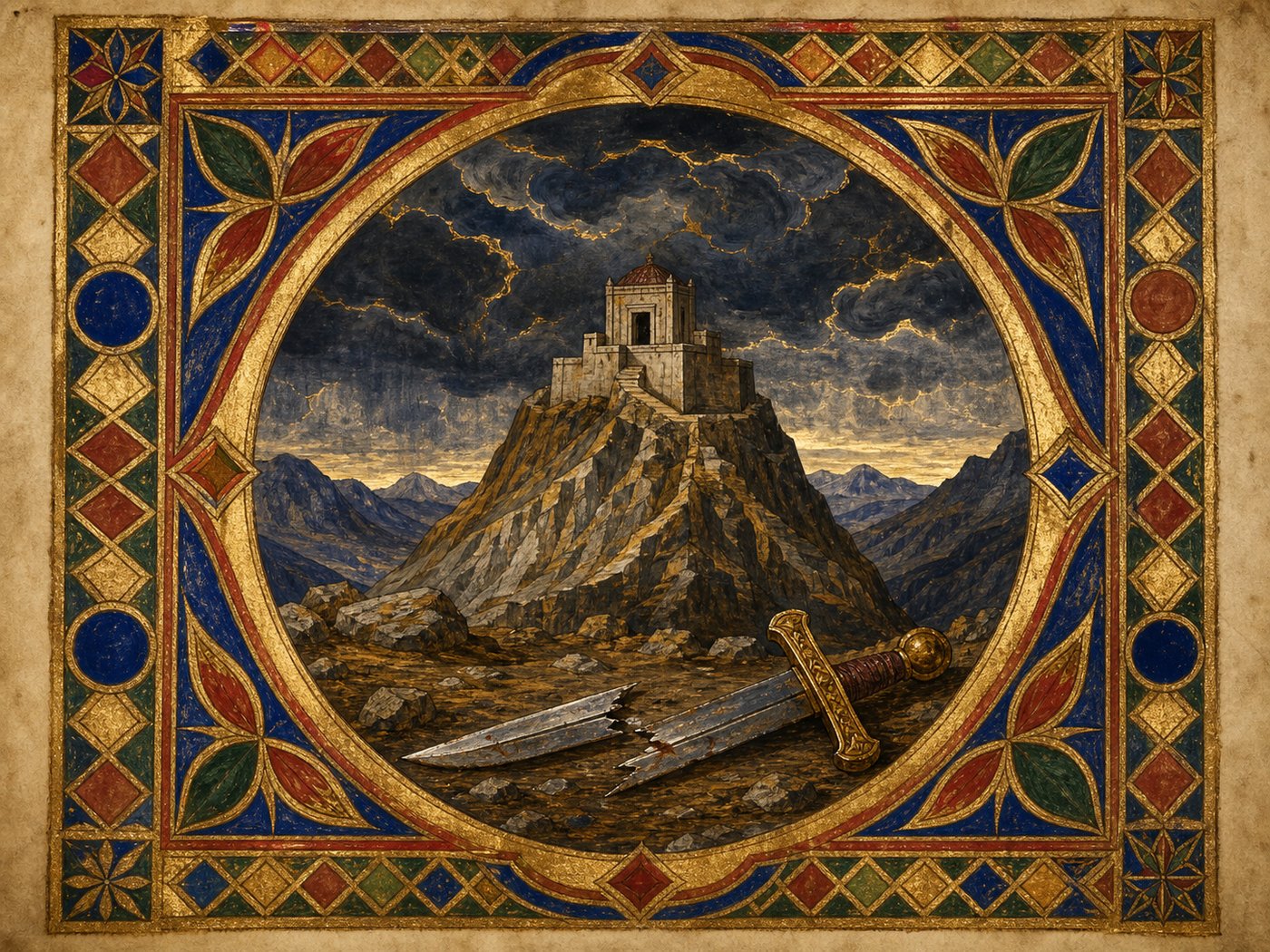
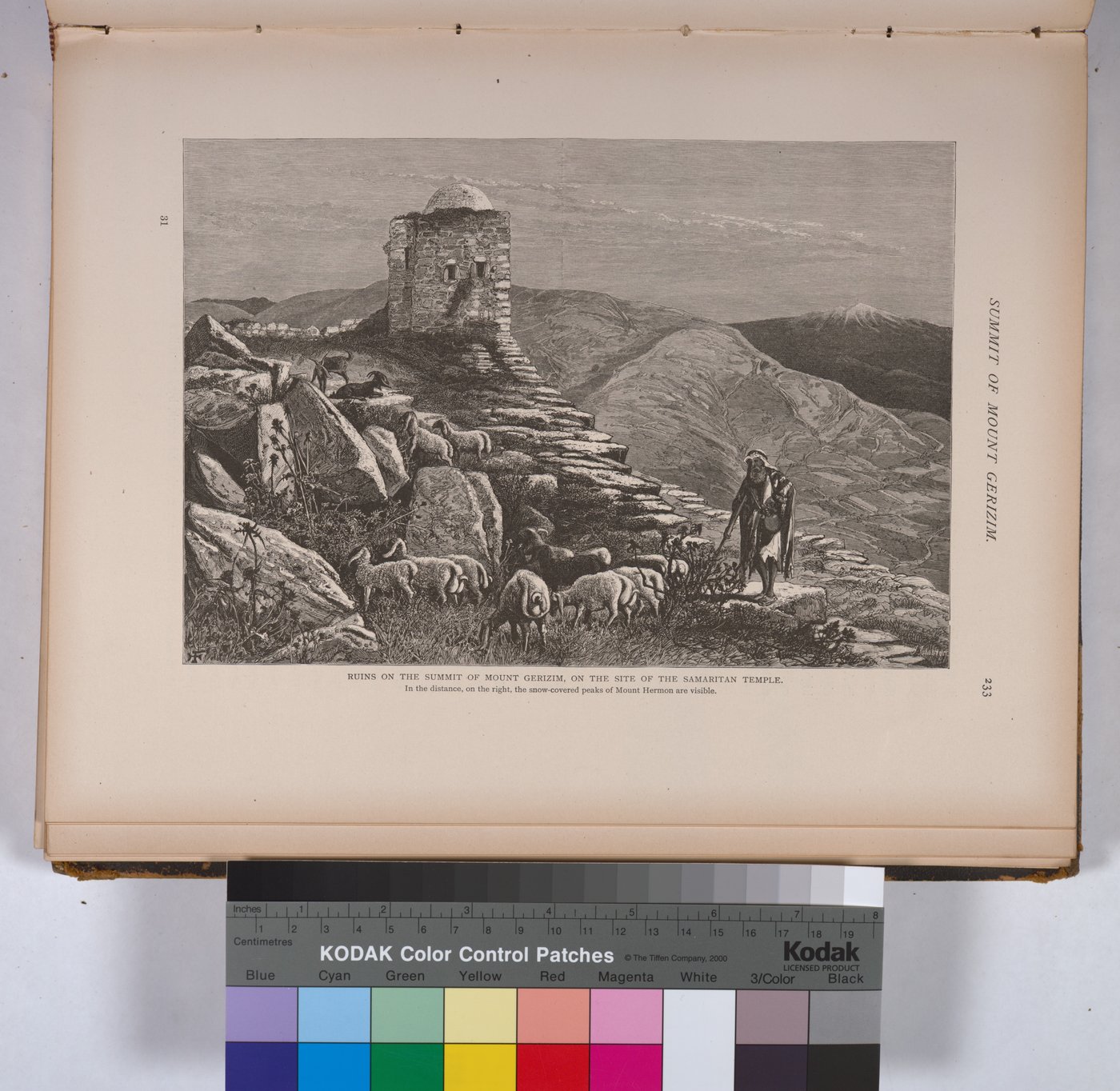
Mount Gerizim had always been the centre of the world - at least for those who prayed with their faces towards it. The Samaritans, descendants of the ancient inhabitants of the northern highlands, kept their Torah, observed their Passover on Gerizim's summit, and regarded the site as the original sanctuary: holier than Jerusalem, older than any temple the southern dynasty had built. By the late fifth century CE, they had endured centuries of rule by foreigners who did not share this view - Hellenistic kings, Roman governors, and now the Christian emperors of Byzantium, who had built a church dedicated to the Theotokos directly on the peak they held sacred. It was an occupation written in stone on the mountain itself.
In 484 CE the Samaritans acted. A leader named Justa - also rendered Justus or Justasus in some sources - was raised up and crowned as king in Neapolis, the Roman city at the foot of Gerizim known today as Nablus. The revolt seized the city, overran the region, and for a period held off the imperial response. It was not a chaotic uprising: it had a leader, a coronation, and the ambition of restoration. The community that gathered behind Justa was asserting something precise - that this land, this mountain, this people had a claim that no emperor's church could extinguish.
The record
The revolt of 484 CE is recorded in two Byzantine chronicle sources. The chronicler Malalas (John Malalas, Chronographia, Book XV, writing in the sixth century) records a Samaritan uprising in the reign of the emperor Zeno (474-491 CE) in which the Samaritans killed the bishop of Neapolis during a church assault on Gerizim, and that the rebel leader was subsequently killed and the revolt suppressed by the comes Asclepiades. The Samaritan leader's name is given as Justa in some manuscript traditions. The Chronicon Paschale, a seventh-century Byzantine chronicle, also records the event. Scholars including Yitzhak Magen, who directed the excavations on Mount Gerizim for the Israel Antiquities Authority, date this as the first in a series of major Samaritan revolts, distinct from the larger and better-documented revolts of 529 and 556 CE. (Malalas, Chronographia XV; Magen, Mount Gerizim Excavations, Israel Antiquities Authority, 2008.)
What the revolt meant to those who joined it can be read in its target. The Samaritans did not march on Caesarea, the provincial capital, or attack Roman garrisons in the open field. They seized Neapolis and struck at the church on Gerizim. The church of the Theotokos had been built there under the emperor Zeno himself, possibly as a deliberate act of Christianisation of the site the Samaritans held most sacred. To destroy or reclaim it was not a tactical choice - it was a theological one. The coronation of Justa at Neapolis carried the same weight: this was not merely resistance but counter-sovereignty, a claim that the order of the world ought to be arranged differently, with Gerizim at its centre and its own people as its stewards. It was the kind of act that empires record in their chronicles because they cannot afford to ignore it, and that communities remember because it tells them who they are.
The record
Archaeological excavations on Mount Gerizim conducted between 1982 and 2004 by Yitzhak Magen for the Israel Antiquities Authority uncovered extensive Samaritan settlement remains as well as evidence of the Byzantine church complex built on the sacred precinct. The excavations revealed a large octagonal church, dated to the fifth century CE, constructed over or adjacent to the site the Samaritans identified as the ancient altar. Coin finds, pottery sequences, and destruction layers across the site provide a material context for the cycle of revolt and repression recorded in the Byzantine sources. The IAA final publication - Magen, Mount Gerizim Excavations, Volumes I and II (Israel Antiquities Authority, 2004 and 2008) - remains the standard archaeological reference for the physical history of the site across the relevant period.
Justa did not prevail. The comes Asclepiades suppressed the revolt, the leader was killed, and the imperial order was restored on the mountain. But 484 CE was not the end. The Samaritans rose again in 529 under Julian ben Sabar - a revolt so severe that it drew a full imperial military response and left much of the Samaritan population of the region diminished or displaced. They rose again in 556. Each revolt was answered with force, and each time the community was smaller. The mountain remained. The excavations show it: occupation layers, ash, rebuilding, more ash. A people who kept returning to the place they believed the world had begun, even when the world disagreed.
The 484 revolt sits in the longer history of this land as a reminder that the borders drawn by empires do not settle the question of who belongs. The Samaritans kept Torah, climbed their mountain, and on one remarkable occasion in the fifth century found a man to crown as king in the shadow of a Byzantine church. They lost. The record of their loss is preserved in the chronicles of the empire that defeated them - which is its own kind of survival.