The Samaritans were not a people who accepted their diminishment quietly. Heirs of the old northern tribes - keepers of the Torah in its most ancient form, guardians of Gerizim as the holy mountain - they had watched Judaea fall, then rise, then fall again, and had been taxed, restricted, and intermittently persecuted under Byzantine Christian rule for over a century. By the early sixth century they had already risen in revolt twice, in 484 and again around 495, and each time the effort had been strangled before it could take lasting shape. The third revolt, the one Julian ben Sabar led in 529, was something different. For a few months it looked like a kingdom.
Julian - his Samaritan name was probably Yulianus or a Hebrew equivalent; the sources give the patronymic ben Sabar - rallied his people around the mountain they had never ceased to regard as the true site of the covenant. He was crowned, by some accounts on Gerizim itself, and took the title of king. The revolt swept through the Samaritan heartland of Samaria: Caesarea Maritima, the great coastal city and provincial capital, was captured and briefly held. Churches were burned. The Byzantine garrison was driven back. For a summer, the idea of a restored Samaritan polity on the land of their ancestors was not merely a prayer - it was an army with a capital.
The record
The principal Byzantine source for the revolt is the chronicle of John Malalas (c. 491 - c. 578 CE), who wrote in Greek and whose Chronographia records the uprising under the reign of the emperor Justinian I. Malalas names the rebel leader and describes the capture of Caesarea and the killing of its bishop Ammonas. The Byzantine response came in two waves: the army of the comes Theodorus, then a larger force reinforced by the Ghassanid Arab federates under their phylarch al-Harith ibn Jabalah (Arethas in the Greek sources), who were Christian allies of Constantinople. The combined force defeated Julian in battle; he was killed, and his head was sent to Justinian in Constantinople. (John Malalas, Chronographia, Book 18; Bonn edition, pp. 445-446.)
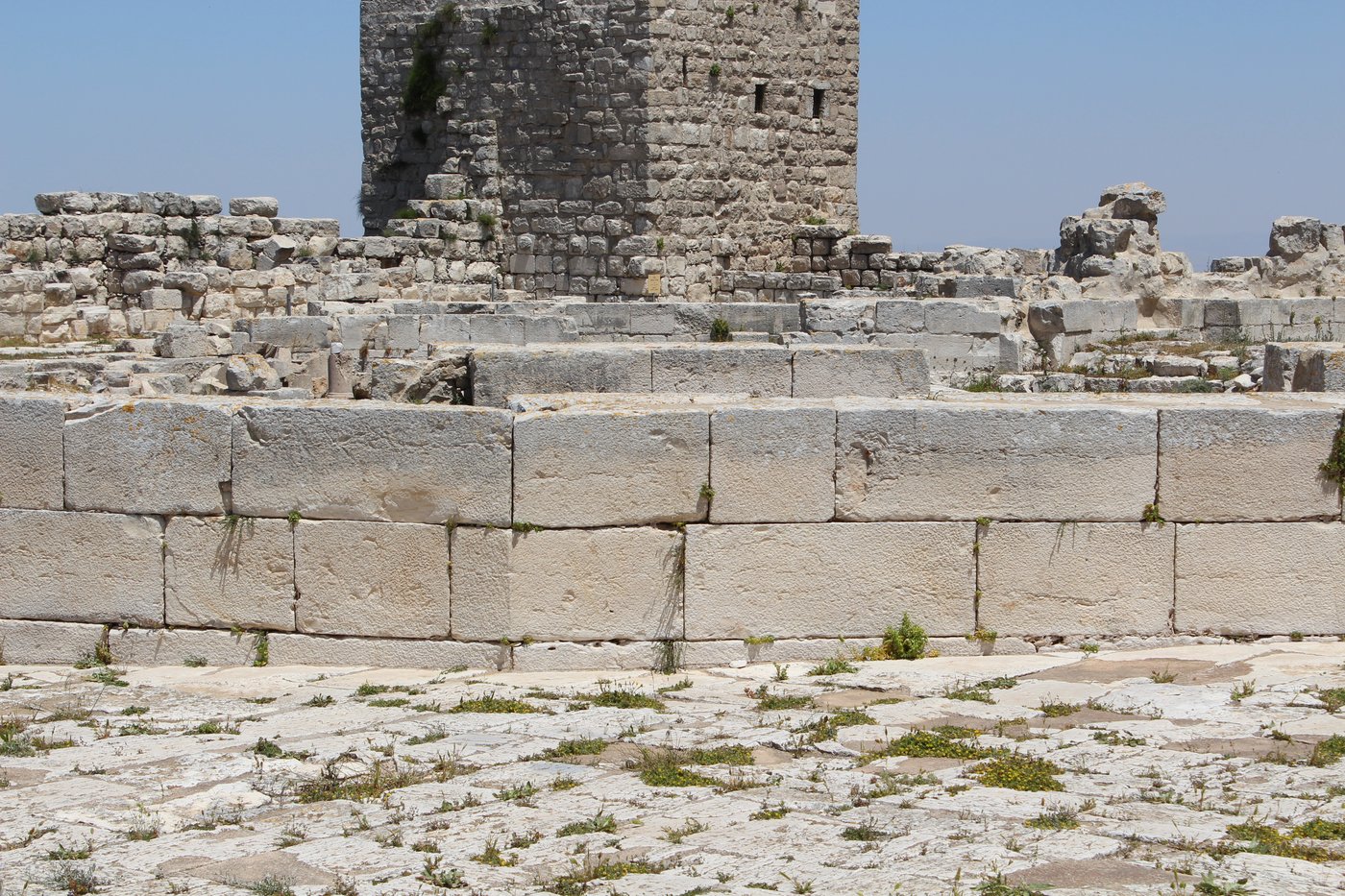
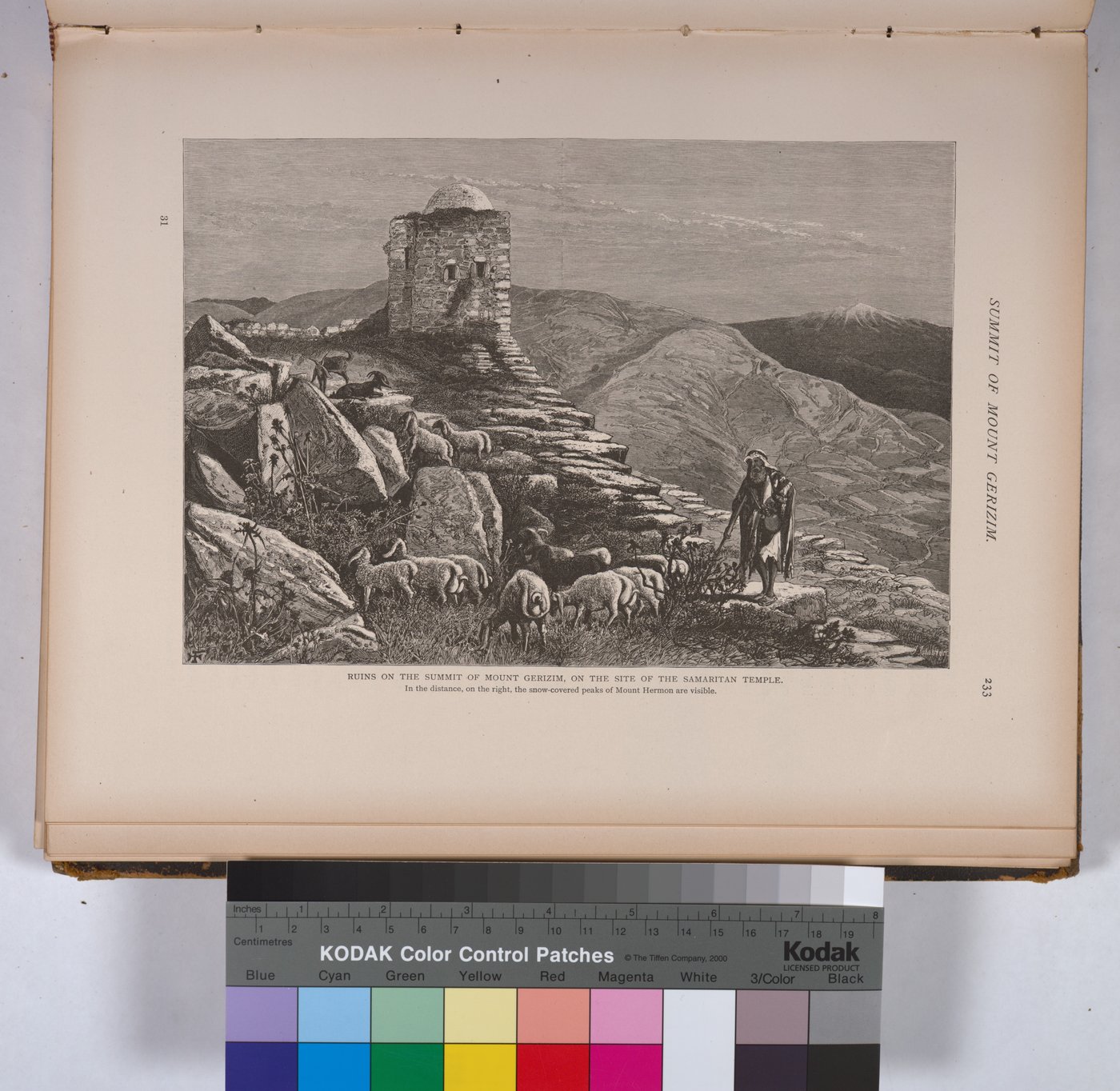
The defeat was catastrophic in scale. Ancient and medieval sources - some certainly inflated, but consistent in direction - speak of tens of thousands killed and a comparable number sold into slavery, many of them shipped to Persia and the markets of the East. The Samaritan population of the hill country, already reduced, was shattered. Gerizim, which had been the site of a Samaritan temple before it was demolished under the emperor Zeno in the 480s, was now definitively in Byzantine hands, a church standing where the altar had been. The land did not become less holy to the Samaritans; it simply became less reachable. There would be one further revolt, in 556 CE, but by then the community was a fraction of what it had been. Julian ben Sabar's summer kingdom was the last serious attempt to reclaim the mountain by force.
The record
The Samaritan revolts and their demographic consequences are documented in the Procopius of Caesarea's Historia Arcana (Secret History), written around 550 CE, which records Justinian's brutal suppression and states that the Samaritan population of Palestine was effectively destroyed as a coherent force in the land. Archaeological evidence from Samaritan sites in the hill country of Samaria - excavated by teams including those working at Khirbet Samara and at Mount Gerizim itself under Yitzhak Magen of the Israel Antiquities Authority - shows a clear discontinuity in Samaritan material culture in the sixth century, consistent with the collapse the textual sources describe. (Procopius, Historia Arcana, ch. 11; Yitzhak Magen, "Mount Gerizim - A Temple City," Israel Antiquities Authority, 2008.)
What Julian ben Sabar attempted was not irrational. The Byzantine empire of 529 was stretched: Justinian was fighting on the western front, reconstructing an empire in theory while managing barbarian kingdoms in practice, and his hold on the east was administrative rather than military. A fast-moving revolt that seized a coastal city and controlled the hill country posed a genuine problem. That it was extinguished so decisively says something about the limits of what was possible in 529 CE - not about the courage or clarity of the attempt. The Samaritans who followed Julian to the mountain they regarded as sacred were not confused about what they wanted. They wanted their land, their mountain, and a king of their own. They got it, briefly, and then they were broken.
The Samaritan community persists today - one of the smallest and most continuous communities in the land, still living on and near Mount Gerizim, still reading the Torah in the Samaritan script, still observing Passover on the mountain. They number in the hundreds. Julian ben Sabar's kingdom lasted a summer; their presence has lasted three thousand years. The revolt of 529 CE is remembered in their liturgy as a catastrophe. It is also the last time one of their own wore a crown on Gerizim. Both things are true, and both deserve the record.