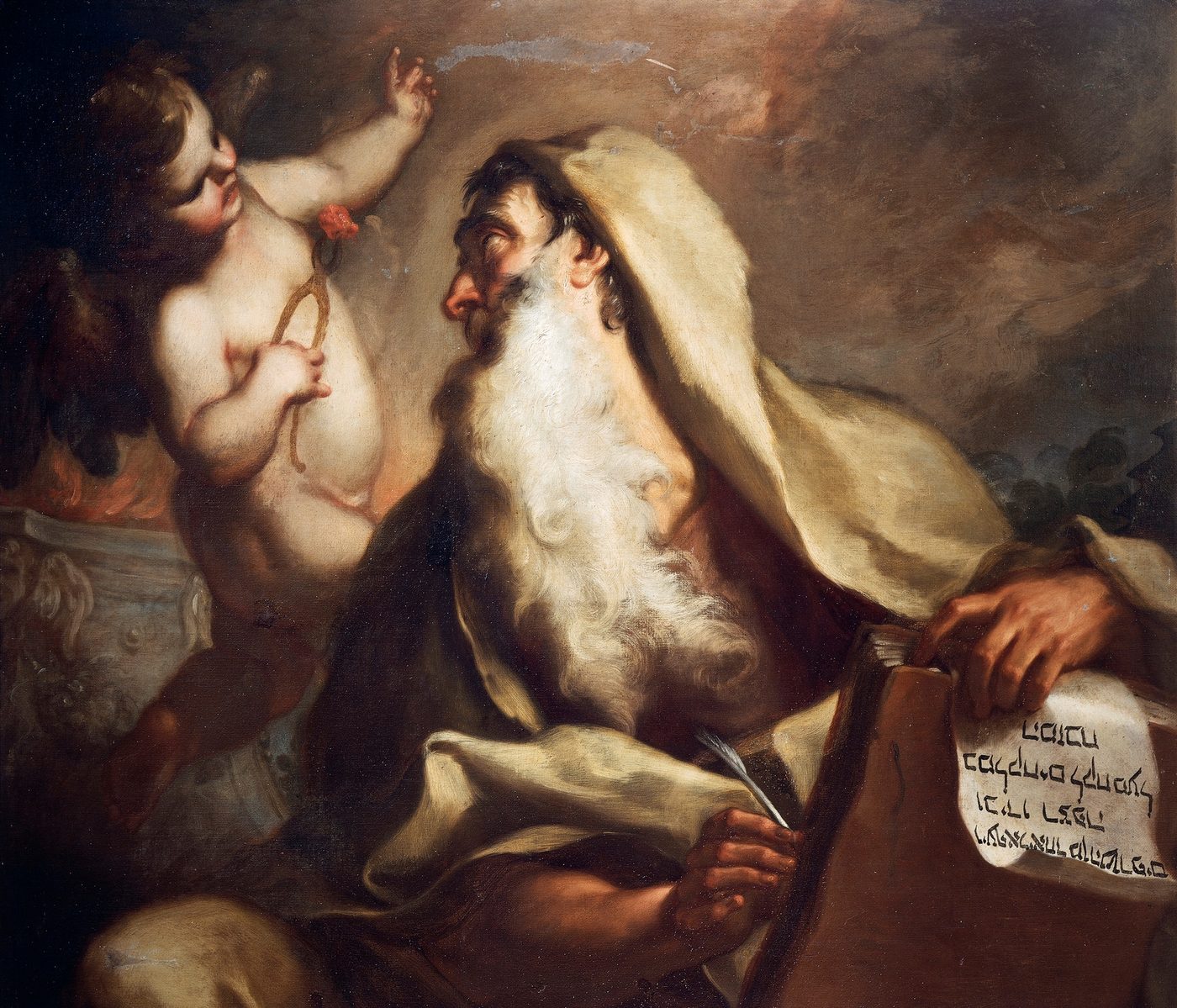
Elijah the Tishbite appears in 1 Kings 17 with no preamble, no genealogy, no introduction beyond where he is from. He walks into the presence of King Ahab of Israel and announces that there will be no dew or rain except by his word. Then he turns and leaves. The rain stops. Three years of drought follow. That entrance - unannounced, total, and backed by consequences - sets the register for everything Elijah does. He does not petition. He declares. He is not a courtier. He is a force.
The people of the Northern Kingdom were living through a contested century. Ahab ruled a prosperous, confident state, and his marriage to Jezebel of Sidon had brought Baal-worship into the royal court with full official blessing. The prophets of the older tradition were being killed or driven into hiding. Into this Elijah walked, a man from Tishbe in Gilead - the east bank, the rougher country - carrying nothing but certainty. The drought was not metaphor. It was the argument, laid on the land.
The record
The contest on Mount Carmel is described in 1 Kings 18, one of the most cinematically detailed sequences in the entire Hebrew Bible. Elijah challenges the 450 prophets of Baal and 400 prophets of Asherah to a trial by fire: each side prepares a sacrifice, and the god who answers by fire is the true god. Baal's prophets call from morning until afternoon. The text in verse 27 records Elijah's mockery with a directness that remains startling - he suggests Baal may be sleeping, or away on a journey, or perhaps preoccupied. Then Elijah drenches his altar three times with water from the four large jars his servants bring. The source is the Masoretic text of 1 Kings 18:17-46, as preserved in the Aleppo Codex (10th century CE) and the Leningrad Codex (1008-1009 CE), the two principal witnesses to the Ben Asher tradition of the Hebrew Bible.
What follows is the scene that every child who has grown up with this story carries: the fire coming down, the altar consumed, the water in the trench boiling away, the people falling on their faces and crying out. Elijah has his moment of total vindication. Then he prays for rain, seven times sending his servant to look toward the sea, and on the seventh time the servant reports a cloud, small as a man's hand, rising from the Mediterranean. Elijah tells Ahab to ride - the rain is already on its way. The drought is over. Elijah ran ahead of Ahab's chariot all the way to Jezreel. He had won everything he had come to win. And then, almost immediately, he ran away.
The record
The flight to Horeb and the still small voice (1 Kings 19) follows directly. Jezebel sends a messenger threatening Elijah's life, and the prophet who had faced 850 prophets alone is suddenly exhausted and afraid. He travels forty days and forty nights to Horeb - the mountain of God, Sinai - and shelters in a cave. The text records the divine encounter in 1 Kings 19:11-12: a great wind, an earthquake, a fire - and then, after the fire, a "still small voice" (Hebrew: qol demamah daqah, literally "a voice of thin silence"). The tradition recorded in the Talmud (Babylonian Talmud, Tractate Sanhedrin 113b) links Elijah's mission directly to his later role as herald of the messianic age, citing Malachi 3:23 ("Behold, I will send you Elijah the prophet before the great and terrible day"). The voice at Horeb does not release Elijah. It sends him back: anoint Hazael, anoint Jehu, call Elisha. There is work left to do.
The figure of Elijah never quite leaves. He does not die in the ordinary way - he is taken up in a whirlwind in a chariot of fire, and his mantle falls to Elisha (2 Kings 2:11-13). That departure without a grave meant he could return. The Passover Seder sets a cup for him. The havdalah ceremony that closes Shabbat sings for him. At every brit milah, a chair is reserved in his name. He became the great wandering protector, the one who travels the world in disguise and shows up when things are at their most desperate - to feed a hungry family, settle a legal dispute, appear as a poor man at a door that remains open. The rabbis who compiled the Talmud and the midrashim turned him into the nearest thing the tradition has to an angel who was once a man. He is the man of fire who learned, at a cave on Sinai, that sometimes the answer is the silence after the storm.
Elijah matters to this story because he established what a prophet is permitted to be: independent of court, unmanageable, loyal to something older than the current king. He was not the first prophet. But he is perhaps the one who set the template - the solitary figure with a burning sense of what is right and the nerve to say it in public, to the wrong person, at the wrong time. The tradition kept his seat warm at every table. That is a very specific kind of honour.