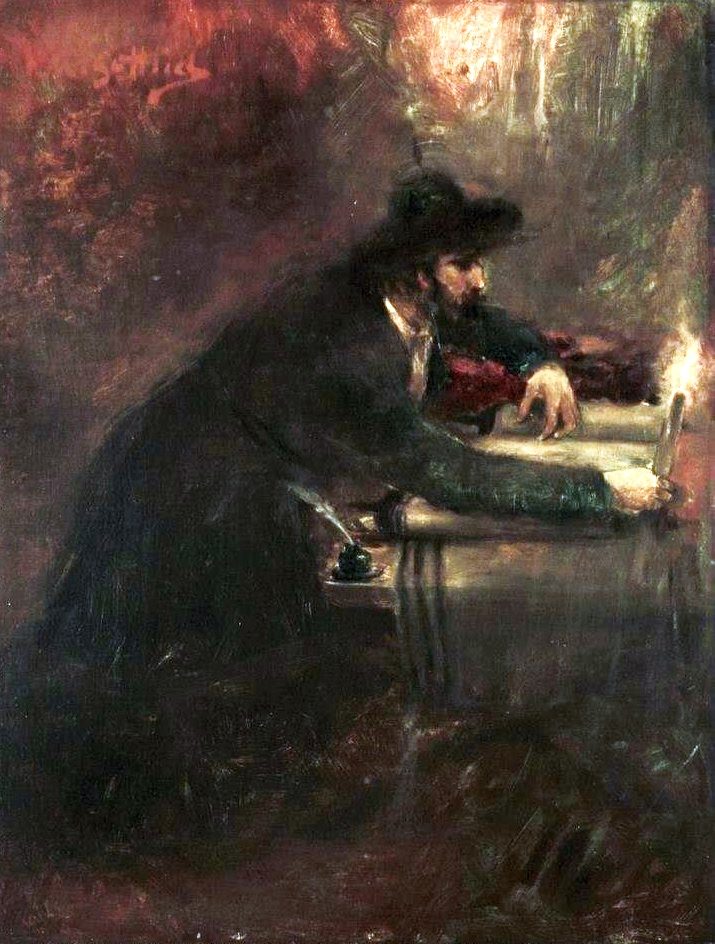
In the year that King Uzziah died, Isaiah of Jerusalem had a vision in the Temple that unmade him and remade him in the same hour. He saw the divine throne, the seraphim, the smoke, the shaking thresholds - and then a coal from the altar touched his lips and he was sent. What he was sent to say was not comfortable. He was told to speak to a people who would hear and not understand, see and not perceive. The task was to proclaim until the cities lay waste and the land was a desolation. And then - tucked into the commission like a coal wrapped in cloth - a question: "How long?" The answer shapes everything that follows. Not for ever. Until a remnant remains.
The Hebrew word is she'ar - remnant, remainder, the part that is left when the rest has gone. Isaiah names his first son Shear-Jashub, "a remnant shall return," and walks the child into the sight of the Judean king as a walking argument. The name is not consolation. It is also warning: a remnant, not the whole; return, but only after catastrophe. Isaiah is not softening what is coming. He is insisting that coming through the far side of it is part of the design, and that the fragment will be holy precisely because it will have passed through fire and survived.
The record
The prophetic activity of Isaiah ben Amoz is dated in the superscription of the biblical book (Isaiah 1:1) to the reigns of Uzziah, Jotham, Ahaz, and Hezekiah, kings of Judah - a span running from approximately 740 to 700 BCE. This period brackets the Assyrian campaigns under Tiglath-Pileser III (745-727 BCE) and Sargon II (722-705 BCE), during which the northern kingdom of Israel was dismantled: the population of Samaria was deported to Assyria in 722 BCE (2 Kings 17:6) and replaced by settlers from other conquered territories - a documented Assyrian policy of population displacement attested in the Annals of Sargon II, inscribed on clay prisms now held in the Oriental Institute, Chicago, and the British Museum, London.
Isaiah was watching this happen in real time. The northern tribes were not merely defeated; they were dispersed, their communal identity dissolved into the Assyrian administrative machine. The ten tribes who had gone north after Solomon's death were ceasing to exist as a recognisable entity. From Jerusalem, the prophet looked at what empire does to a people and developed a counter-theology. The remnant idea is not passive. It carries an active verb: yashuv, shall return. The fragment does not simply persist - it returns, reconstitutes, re-establishes. The she'ar is not a relic. It is a seed.
This is the move that will echo across the whole of Jewish history. When the Babylonians destroyed Jerusalem in 586 BCE, those who survived in exile picked up Isaiah's word and found it already waiting for them - the framework for understanding catastrophe not as the end of the story but as the passage through which the next chapter runs. When Ezra and Nehemiah led a return from Babylon, the language they reached for was Isaiah's. The concept was old enough, by then, to feel like a promise confirmed rather than a hope invented.
The record
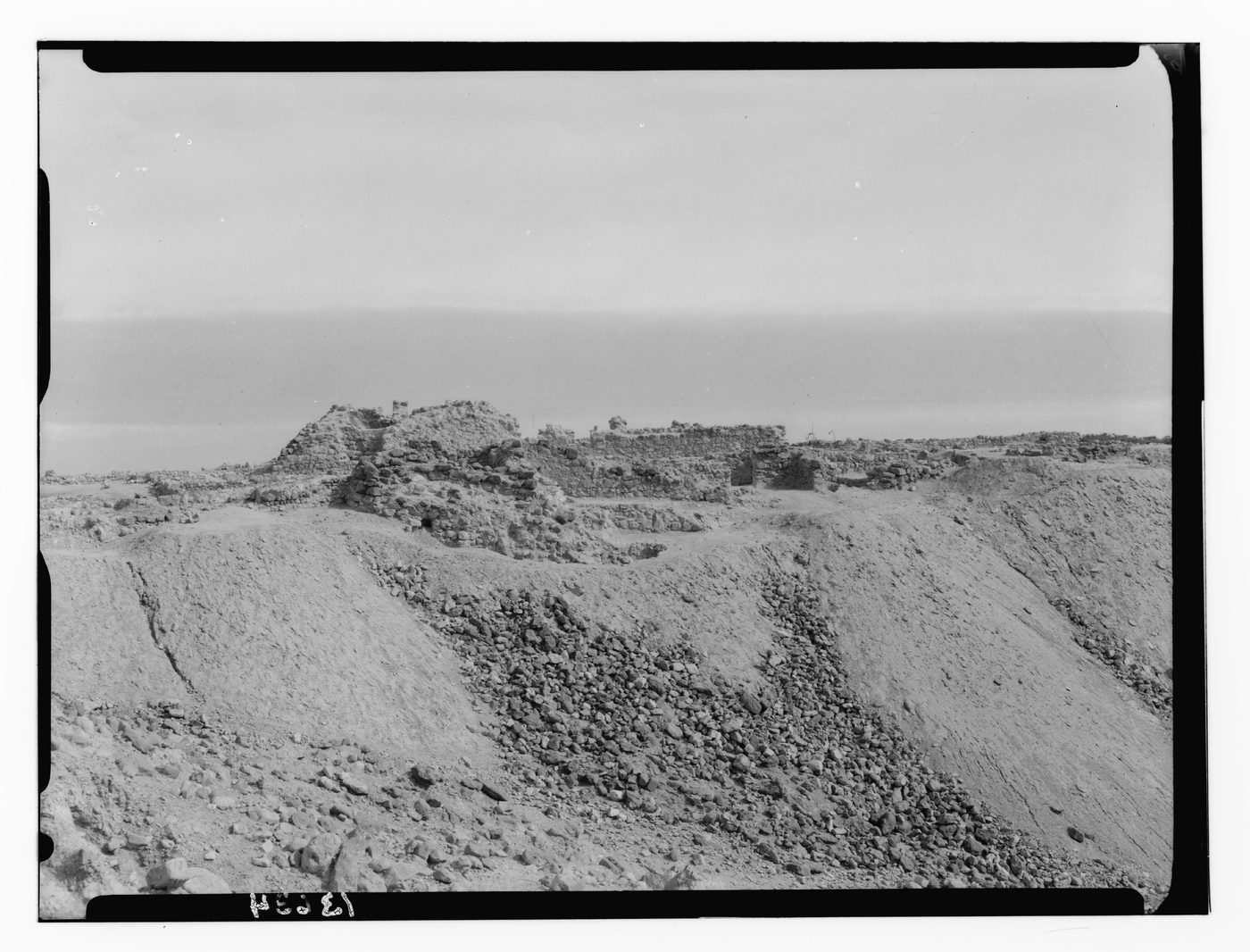
The she'ar/remnant concept appears explicitly in Isaiah 10:20-22, where the prophet declares that "a remnant of Israel... shall no more lean upon him who smote them, but will lean on the Holy One of Israel, in truth." The passage gives the remnant a theological character - it is not simply the survivors but those who have reoriented their allegiance. The same strand runs through Isaiah 4:3, 6:13, 11:11-16, and 28:5. The Dead Sea Scrolls, discovered at Qumran from 1947 onwards and now held at the Israel Museum in Jerusalem (the Great Isaiah Scroll, 1QIsa-a, dated to approximately 125 BCE), preserve the complete text of Isaiah - the oldest known complete copy of the Book of Isaiah - showing the remnant passages transmitted intact across six centuries of copying before the common era. (The Great Isaiah Scroll, Israel Museum, Jerusalem; first published by Millar Burrows, The Dead Sea Scrolls, 1955.)
There is a reason this idea gripped the tradition so firmly that Isaiah's son was named after it. Empires operate by scale: they absorb the many, outnumber the resistant, and overwhelm by mass. The remnant theology inverts that logic entirely. Smallness is not a measure of defeat. A burning coal, a pruned stump, a tenth that remains after the tithe - these become the site of holiness, not its absence. Israel at its most diminished is not therefore less. The fragment carries the covenant. The seed holds the tree.
Isaiah spoke in Jerusalem under four kings and watched one empire swallow the north and besiege the south. He never saw the full return. But the word he coined - she'ar, remnant - kept working after him. Every generation that survived what should have ended the story reached for it, found it already coined, already consecrated, and walked forward under it. That is a different kind of power than Assyria had, and longer-lasting.