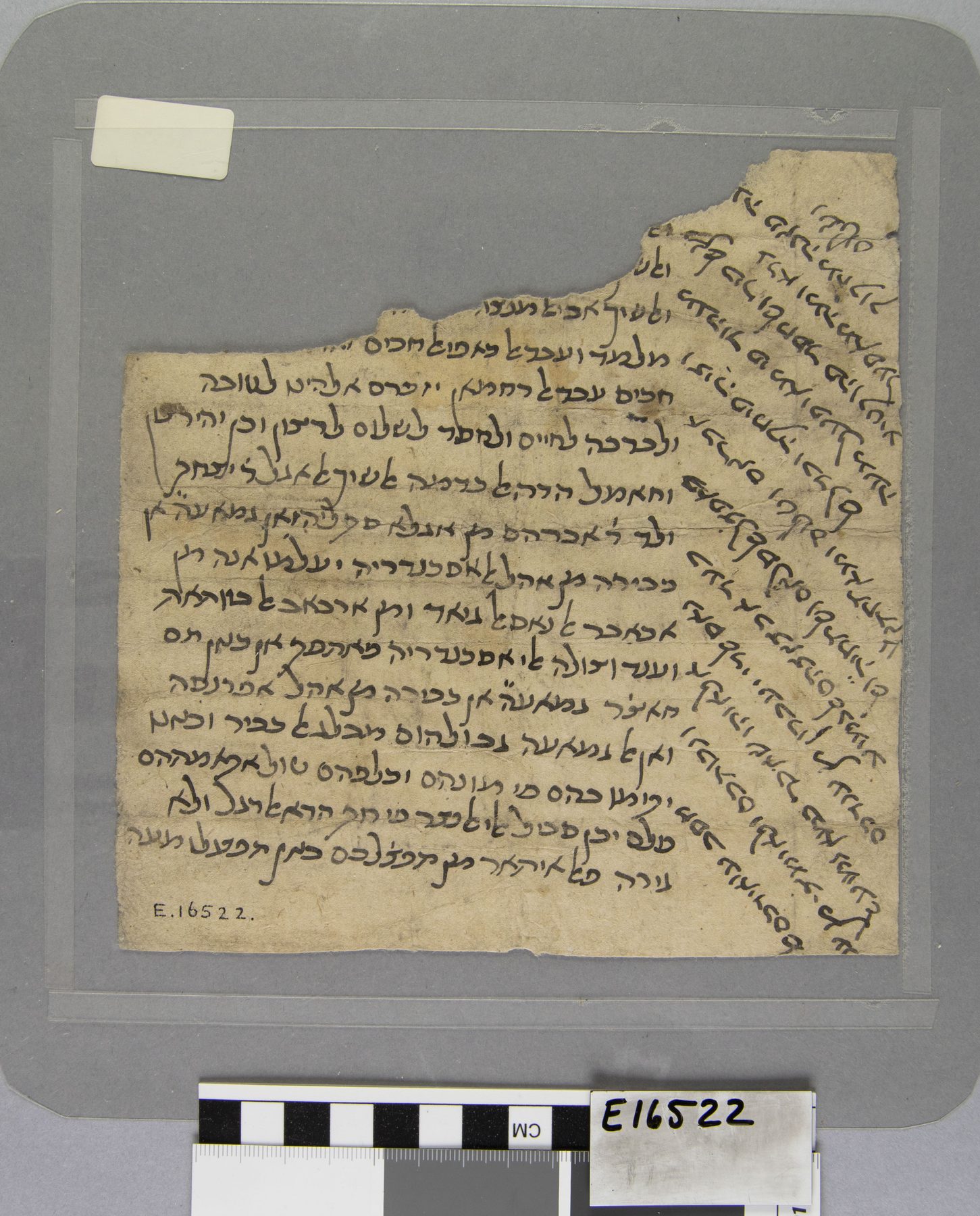
Yiṣḥaq b. Avraham carries a request for help on the reverse of PGP 8965. Princeton's catalogue dates the document to about 1212 and identifies its unnamed writer as a Jewish shipowner from Alexandria. In Goitein's displayed translation, the writer says he intended to sail to Cyprus, but a strong storm diverted his boat to Tarsus. He feared the king would detain him. The catalogue describes that danger as being kept from Alexandria.
The letter records what followed: letters of safe-conduct, an illness and treatment in Alexandria, then an appeal for Yiṣḥaq. Its details belong to this writer's account and to this request.
The writer at Tarsus
The translation says that young men travelling with the writer told Fahd b. Karīm that he had arrived. Fahd came aboard, told him to disembark without fear, and brought letters of safe-conduct from the king. The writer says he could then return to his place. Princeton's catalogue describes Fahd as a Christian business friend, probably an Egyptian native. That identification is catalogue language.
The translation also records that ministers received the writer well and expected him to stay. They made offers, and he set a limit for his stay: until the first of the following month. It also mentions an offer of money to Christians in the town and a marriage connection involving Fahdān. The document does not explain the arrangement further.
Stone - the record and its layers
PGP 8965 is catalogued as Letter UPenn E 16522, in the Penn Museum collection, with the historical shelfmark Philadelphia 16522. Princeton lists its primary language as Judaeo-Arabic, dates it c. 1212 CE, and identifies the writer as a Jewish shipowner from Alexandria. The record displays an English translation attributed to S. D. Goitein and links it to "Letters of Medieval Jewish Traders" (Princeton University Press, 1973), no. 76.
The catalogue supplies the date, collection, language and description of the writer. Goitein's displayed translation supplies the first-person report of Cyprus, Tarsus, fear, safe-conduct, illness and the appeal for Yiṣḥaq.
Letter: UPenn E 16522
Judaeo-Arabic letter, Penn Museum collection, historical shelfmark Philadelphia 16522. Writer: an unnamed Jewish shipowner from Alexandria. Translation attributed to S. D. Goitein, "Letters of Medieval Jewish Traders" (Princeton University Press, 1973), no. 76.
Princeton Geniza Project, PGP 8965Treatment in Alexandria
The writer says he had enjoyed Tarsus and might have stayed longer, but an illness known to his correspondent continued. Back in Alexandria, his paternal uncle took him to a physician. The translation directly describes that physician, Abū I-Karam Ibn al-Wāsiṭī, giving medicine three times. The writer reports that he recovered and gives devotional thanks.
Princeton's description says that four physician names occur in the record. The displayed translation directly describes one physician treating the writer. It preserves three further names - Abū l-Manṣūr, ʿAbd al-Kāfī and ʿAbd al-Raḥmān - in a partial verso passage. The letter gives no diagnosis.
Yiṣḥaq's request
The translation names the bearer as Yiṣḥaq b. Avraham, an illustrious man of Sicily (or Palermo), known in Alexandria and a scion of great families. Princeton's catalogue adds that he had been forced to leave his home.
Yiṣḥaq's arrival coincided with that of a large company from France. The letter says that Alexandria's community had made a large collection for the company and was meeting the costs of its maintenance and travel onward to the Holy Land. It says that the community could not provide for Yiṣḥaq, or anyone else, at that time. The writer asks the recipient to treat Yiṣḥaq well and to help him.
The letter makes Yiṣḥaq, rather than the shipowner, the beneficiary of this request. It does not record whether the recipient acted.
Stone - a document with a limit
This document preserves a catalogue description and a translated first-person account. It names the intended sailing to Cyprus, the diversion to Tarsus, the fear of detention, letters of safe-conduct, treatment in Alexandria and a request for Yiṣḥaq. The reviewed record does not name the shipowner or establish whether Yiṣḥaq received the help requested.
The shipowner reports getting home. Yiṣḥaq remains the person for whom the letter asks another recipient to act.
Further reading
- Princeton Geniza Project: PGP 8965 - Letter: UPenn E 16522
- S. D. Goitein, Letters of Medieval Jewish Traders (Princeton University Press, 1973), no. 76 - source of the displayed translation used throughout.