Jericho sits in the Jordan Valley where the land drops below sea level and the air is thick even in spring. The city had walls when Abraham was a child. It had walls when Egypt was young. By the time the tribes of Israel crossed the Jordan - dry-shod, the text insists, just as they had crossed the sea - Jericho had been a walled place for longer than any nation alive could remember. The first thing the land offered them was the thing the land had always kept locked.
The instruction given to Joshua was strange by any military logic. No battering rams, no siege towers, no assault in darkness. Instead: march around the city once each day for six days. Seven priests. Seven rams' horns. The Ark carried in silence behind them. On the seventh day, circle seven times, blow the horns, shout - and the wall will fall. The strangeness is the point. The land was not being taken by military genius. It was being received as a gift, on terms the giver set. Israel was meant to know the difference between conquest and inheritance.
The record
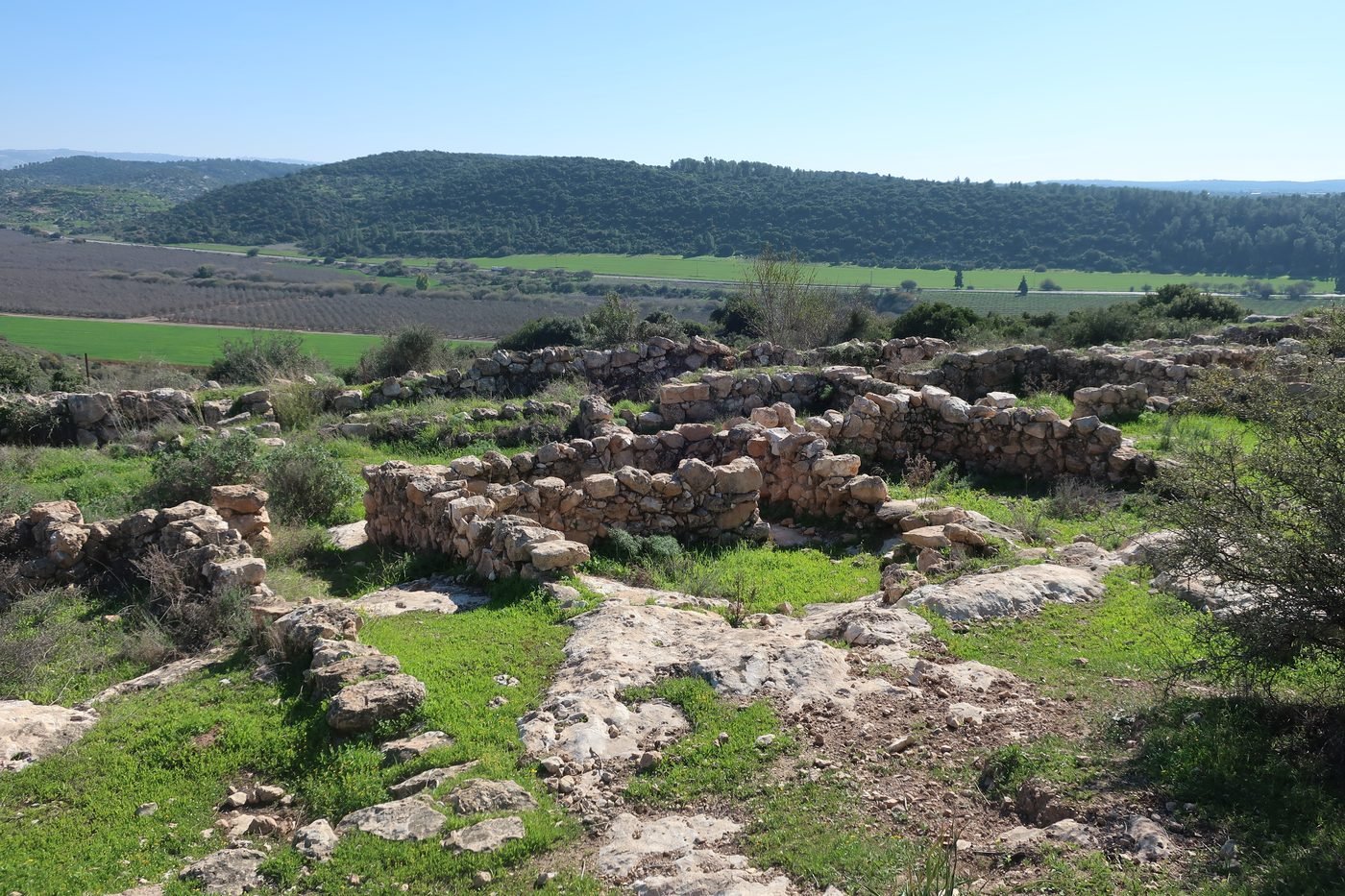
The site of ancient Jericho, Tell es-Sultan, was excavated by John Garstang in 1930-36 and more extensively by Kathleen Kenyon between 1952 and 1958. Kenyon's meticulous stratigraphic work established that the massive mud-brick ramparts of the Middle Bronze Age city collapsed and were destroyed by fire around 1550 BCE, at the end of the Middle Bronze Age. The Late Bronze Age levels she uncovered showed only sparse occupation and very little architecture, leading Kenyon to conclude that no significant walled city existed at Jericho in the 13th-century timeframe often assigned to the Exodus. However, archaeologist Bryant Wood, publishing in the Biblical Archaeology Review (1990), re-examined Kenyon's ceramic evidence and argued her dating was based on an absence of imported Cypriot wares - an argument from silence - and that the destruction layer she found at the end of the Middle Bronze Age fits a 15th-century date aligned with the earlier "high chronology" for the Exodus. The debate between a 15th-century and 13th-century date for the entry into Canaan remains active among specialists. (Tell es-Sultan excavations: British School of Archaeology in Jerusalem; Kathleen Kenyon, Digging Up Jericho, 1957; Bryant Wood, "Did the Israelites Conquer Jericho?" Biblical Archaeology Review, March/April 1990.)
The account of the fall in the Book of Joshua (chapters 2-6) is structured as carefully as a liturgy. Rahab, the woman in the wall - a Canaanite, not an Israelite - hides the spies and ties a scarlet cord in her window. Her household is the one thing preserved when the walls collapse outward. The city is declared herem - devoted entirely, not plundered for profit. The first fruits of the land belong to its owner, not its new tenants. Joshua then curses anyone who rebuilds Jericho's walls. The curse, recorded in Joshua 6:26, is later confirmed in 1 Kings 16:34 when Hiel of Bethel rebuilds the city and loses his sons, eldest and youngest, just as the curse said. The Bible does not forget its own promises or its own penalties.
The record
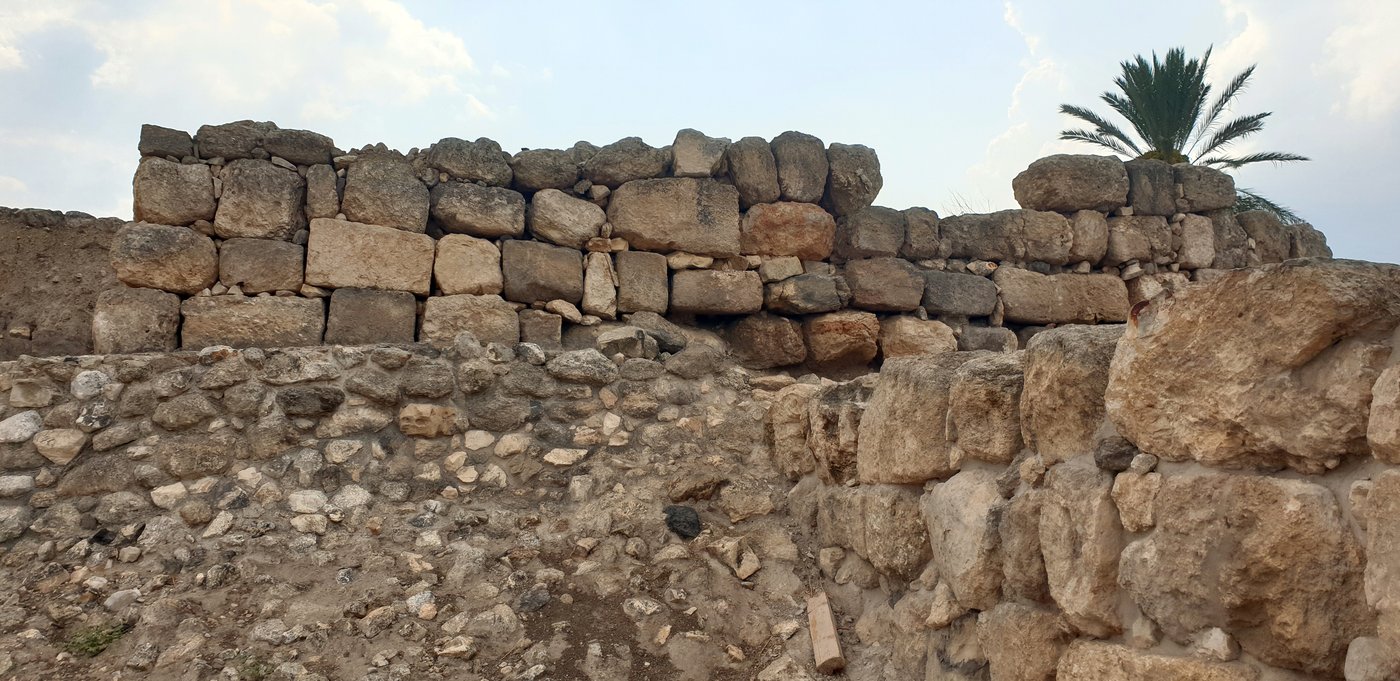
Some of the oldest known city walls anywhere in the world were found at Jericho. A stone tower dating to approximately 8000 BCE - well before the invention of writing - stands within the Tell es-Sultan tell. Excavated by Kenyon, the tower is roughly 8.5 metres tall, 8.5 metres in diameter, and was originally accompanied by a stone wall some 1.8 metres thick encircling the settlement. The city's pre-history as a place of walls was therefore not a Canaanite invention but a feature of the site going back ten thousand years before the events described in Joshua. When the text says "Jericho was shut up tight" (Joshua 6:1), the reader is meant to feel the weight of what that actually meant. No city in the ancient Near East had more practice at being defended. (Tell es-Sultan Neolithic tower: Kenyon excavations 1952-58; site managed by the Palestinian Authority's Ministry of Tourism and Antiquities; cf. Ian Kuijt and Nigel Goring-Morris, "Foraging, Farming, and Social Complexity in the Pre-Pottery Neolithic of the Southern Levant," Journal of World Prehistory, 2002.)
Jericho is the entry point. Everything that follows in the land - the allotments to the tribes, the building of Shiloh, the arguments over territory, the long centuries of settlement - begins here, at the oldest gate on earth. The wall fell not because Israel was militarily superior (forty years in the desert does not produce a siege-engineering tradition) but because the story insists that what was given was given, not taken. That distinction mattered then. It has kept mattering ever since.
Whether a particular layer of mud brick at Tell es-Sultan fell in 1400 BCE or 1200 BCE or some other year is a question archaeologists will continue to argue, and the argument is worth following honestly. What the record already holds, beyond dispute, is this: the place called Jericho is among the oldest continuously inhabited sites on earth, and the people who arrived at its walls were a tribe who had been shaped by forty years of learning to live without walls at all. That is the encounter the story is about. The archaeology frames it. The text names it.