Houston’s Jewish community never needed to become picturesque to become important. It grew by building congregations, schools and neighbourhood ties that matched the city’s own sprawl.
That made Houston a very American kind of Jewish city: not a single quarter, but a network of places linked by habit and institution.
Early congregations
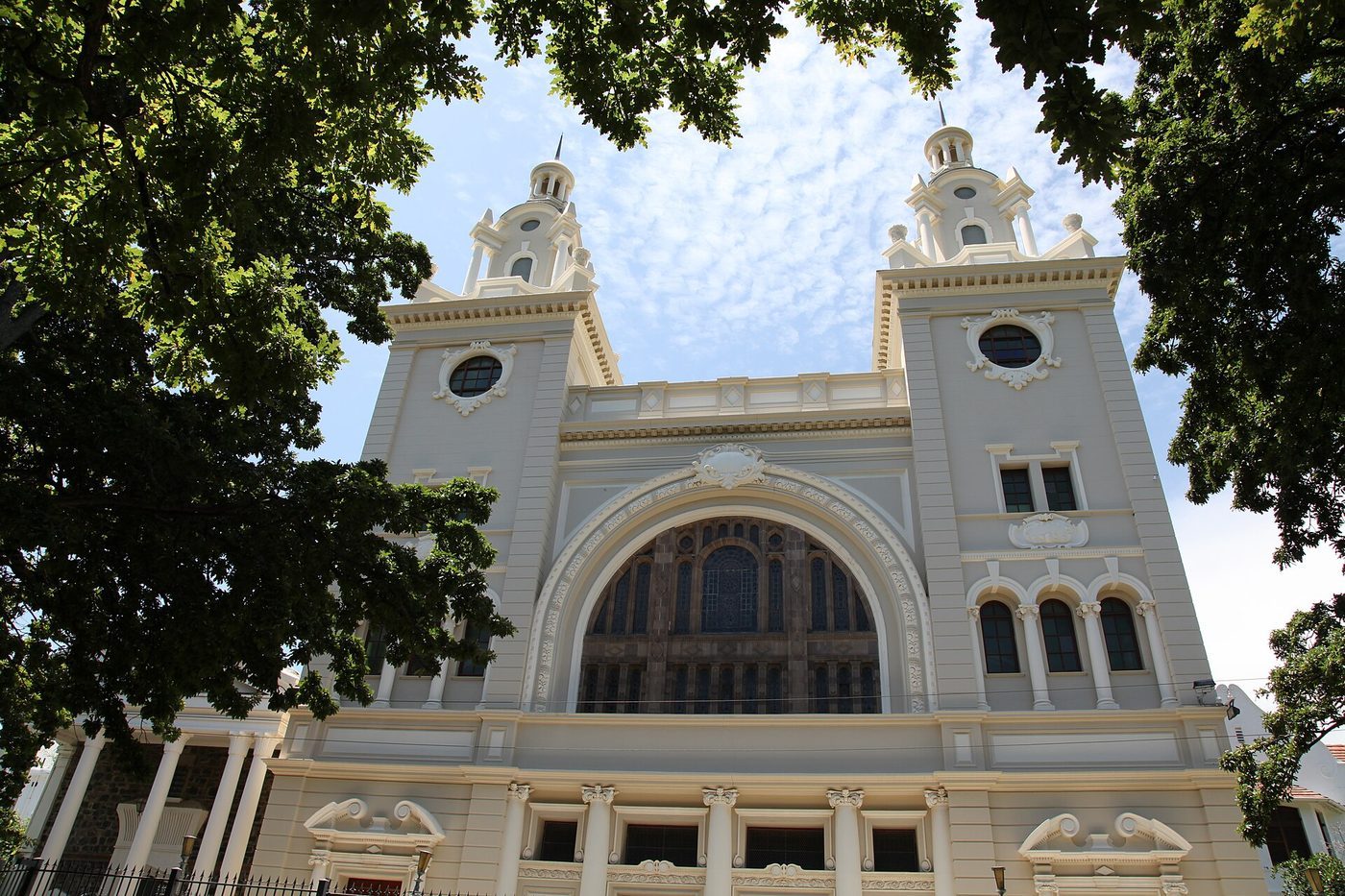
Congregation Beth Israel was founded in 1854 and remains the oldest Jewish congregation in Texas. It gives Houston a very early anchor point, long before the city became the giant it is now.
Later synagogues and schools followed population growth westward and southward, creating a modern communal map.
Congregation Beth Israel
Congregation Beth Israel was founded in 1854 as the oldest Jewish congregation in Texas. Its long life gives Houston an unusually deep communal root for such a young city.
Congregation Beth Israel history; Houston Jewish archivesSuburban confidence
By the late twentieth century the community had built a dense network of synagogues, schools and institutions across the metro area. Houston’s Jewish map now looks like the city itself: wide, practical and fully lived in.
That is the point here. Houston Jewish life is not a leftover corner. It is part of how the city works.
Beth Yeshurun and suburban expansion
Congregation Beth Yeshurun moved to its Beechnut Street campus in 1962, reflecting the westward movement of Houston’s Jewish population. The community’s postwar geography is one of suburban growth rather than downtown retreat.
Beth Yeshurun history; Houston Jewish FederationWhy Houston matters
Houston matters because it shows that a Jewish quarter can become a Jewish network without losing coherence. The city’s sprawl is part of the story.
So is the stubbornness that kept planting synagogues in it.