Susa was a city of ancient pedigree long before the Achaemenid kings chose it as their winter palace. Sitting on the Shaur river in what is now the Khuzestan province of south-western Iran, it had been a royal centre for Elamite civilisation for more than two thousand years. When Cyrus the Great unified the Persian empire in the sixth century BCE and his successors Darius I and Xerxes I transformed Susa into a monumental residence, they built on a site already thick with memory. Into this city - distant, powerful, the bureaucratic heart of the empire that had released them from Babylon - came Jews.
They came as courtiers, as administrators, as merchants and artisans, as the well-connected descendants of exiles who had made their way in Babylon and then, when the door opened, followed power eastward. The Book of Esther opens without apology in the citadel of Susa: "There was a Jewish man in Susa the citadel, whose name was Mordecai." No explanation is needed. The reader is expected to know that Jews were there, in the capital, near the court, present in the fabric of the empire. That expectation is itself a document of community life.
The record
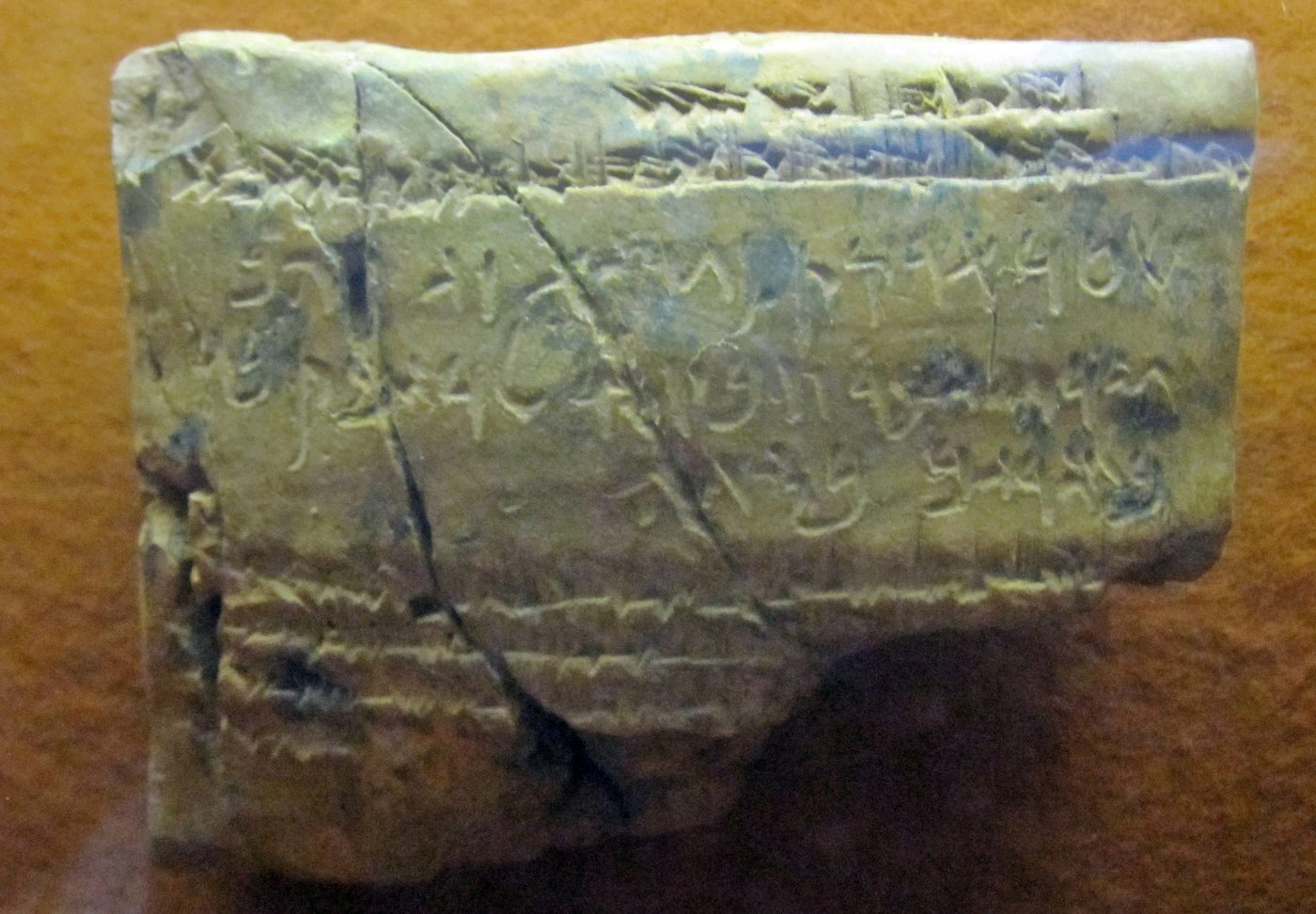
The Achaemenid palace complex at Susa - known in the ancient sources as Shushan - has been excavated continuously since the 1850s, principally by French archaeologists beginning with William Kennett Loftus (1851-52) and continuing through Marcel Dieulafoy (1884-86) and Jacques de Morgan (1897-1908). The Apadana, the great hypostyle audience hall of Darius I (begun c. 521 BCE), was identified in these excavations, along with the royal gate complex where Mordecai is placed in the Book of Esther (Esther 2:19, 3:2). A foundation tablet of Darius I, now in the Louvre (Sb 2786), describes the building of the palace and lists the diverse peoples and materials that contributed to its construction - including craftsmen from Ionia, Sardis, Bactria, and Egypt. The site is today designated Shush, in Khuzestan province, Iran, and inscribed on the UNESCO World Heritage List (2015).
What it meant to be Jewish in Susa is illuminated, obliquely, by the Book of Esther - a text that never mentions God, never describes prayer or sacrifice, and is set entirely inside the apparatus of a foreign court. Mordecai sits at the king's gate. His niece Esther becomes queen without revealing her ancestry. When Haman's decree threatens every Jew in the empire, the rescue comes not from prophetic intervention or miraculous parting of waters but from a woman who knows how a court works - who to approach, when to speak, how to wait. The story is a portrait of a community that had learnt to navigate power from the inside. That is not a criticism. That is what survival in a diaspora capital requires, and the text is proud of it.
The record
The Book of Esther is the primary textual source for Jewish life in Susa. It is read in full each year at Purim, the festival it establishes, and is one of the five Megillot (scrolls) of the Hebrew Bible. The book names Susa (Shushan in the Hebrew) 21 times. According to the text, Mordecai is a Benjaminite descended from exiles taken to Babylon by Nebuchadnezzar (Esther 2:5-6), placing the Jewish community in Susa as descendants of the Babylonian exile cohort. A physical reminder of the tradition persists at the site: the Tomb of Daniel in Susa (known locally as Shush) has been venerated as a Jewish holy site since at least the medieval period, referenced by the tenth-century traveller Eldad ha-Dani and later by Benjamin of Tudela in his twelfth-century Itinerary. The shrine, shared with Muslim visitors, remains standing in modern Shush.
The community at Susa was not simply surviving at the margins of empire - it was participating in it. The Elephantine papyri, a collection of Aramaic documents from a fifth-century BCE Jewish military garrison in Egypt, show Jews writing to the Persian governor of Judah and corresponding with the sons of Sanballat of Samaria in perfectly fluent Achaemenid administrative style. These are people who could draft a petition to a satrap, navigate a bureaucracy, and appeal upward through channels. The Susa community operated in the same environment, in the same language, at a higher level of proximity to the court. The Jews of Persia were not a tolerated curiosity. They were participants in the most sophisticated administrative system the ancient world had yet produced.
The record
The Elephantine papyri - a corpus of Aramaic documents discovered at Elephantine (Yeb) in Upper Egypt from 1893 onwards, now divided between the Staatliche Museen zu Berlin, the Brooklyn Museum, and other collections - provide the most detailed administrative evidence for Jewish life within the Achaemenid empire. The Passover Letter (TAD A4.1, Berlin P 13464, dated 419 BCE) is a directive from the Persian administration permitting the Jewish garrison to observe Passover according to specified guidelines - the earliest extrabiblical document that regulates Jewish religious practice. The corpus as a whole, published in standard edition by Bezalel Porten and Ada Yardeni (Textbook of Aramaic Documents from Ancient Egypt, 1986-99), shows Jewish soldiers, landowners, merchants, and women conducting legal and personal affairs in standard Achaemenid Aramaic within the Persian administrative framework.
The Jews of Persia did not simply pass through and move on. The story of Susa became the story of Purim, one of the most joyful and most widely observed festivals in the Jewish calendar. Each year, in synagogues everywhere, the Megillah is read aloud - the whole Book of Esther, scroll unrolled, voices rising against Haman's name with noisemakers and stamping feet. The palace of Susa becomes a theatrical space that every Jewish community in every century has inhabited for one night a year. Children dress as queens and courtiers. The tension of that moment at the threshold - Esther walking towards the king without being summoned, not knowing if he will raise the sceptre or have her killed - is replayed in miniature pageants in community halls from Melbourne to Montreal. That is the long life of a community memory: not a monument, but a night of noise and costumes and the reading of a scroll set in a city on the Shaur river, two and a half thousand years ago.
Susa fell to Alexander the Great in 331 BCE, and the Achaemenid world it represented was gone within a decade. But the Jewish community in Persia - in the cities of the former empire, in the towns of what became Parthia and Sassanid Iran - persisted for centuries more, eventually producing the Babylonian Talmud in the academies of Sura and Pumbedita. The palace where Esther is said to have walked became ruins beneath the Iranian plateau. The story she carried with her went on walking everywhere the tribe went.