For a very long time, Pontius Pilate lived where troublesome officials usually end up living - in other people's sentences. The Gospels named him. Josephus named him. Tacitus named him, later, and called him procurator. He was perfectly real in literature and perfectly absent in stone. Then in 1961, at Caesarea Maritima on the Mediterranean coast, archaeologists working in the Roman theatre found a block of limestone that had been reused in a stair. They turned it over. On its damaged face was a Latin dedication with two surviving gifts for history: the name Pontius Pilatus and the title praefectus Iudaeae. The governor had become a step. Then the step spoke.
It is hard to improve on the image. Rome had once set up a monument in honour of imperial order. Centuries later the block was cut down, laid face-up in a staircase, and trodden on. Empire is fond of bronze letters and public confidence. Masonry, given enough time, is less sentimental.

The seat on the sea
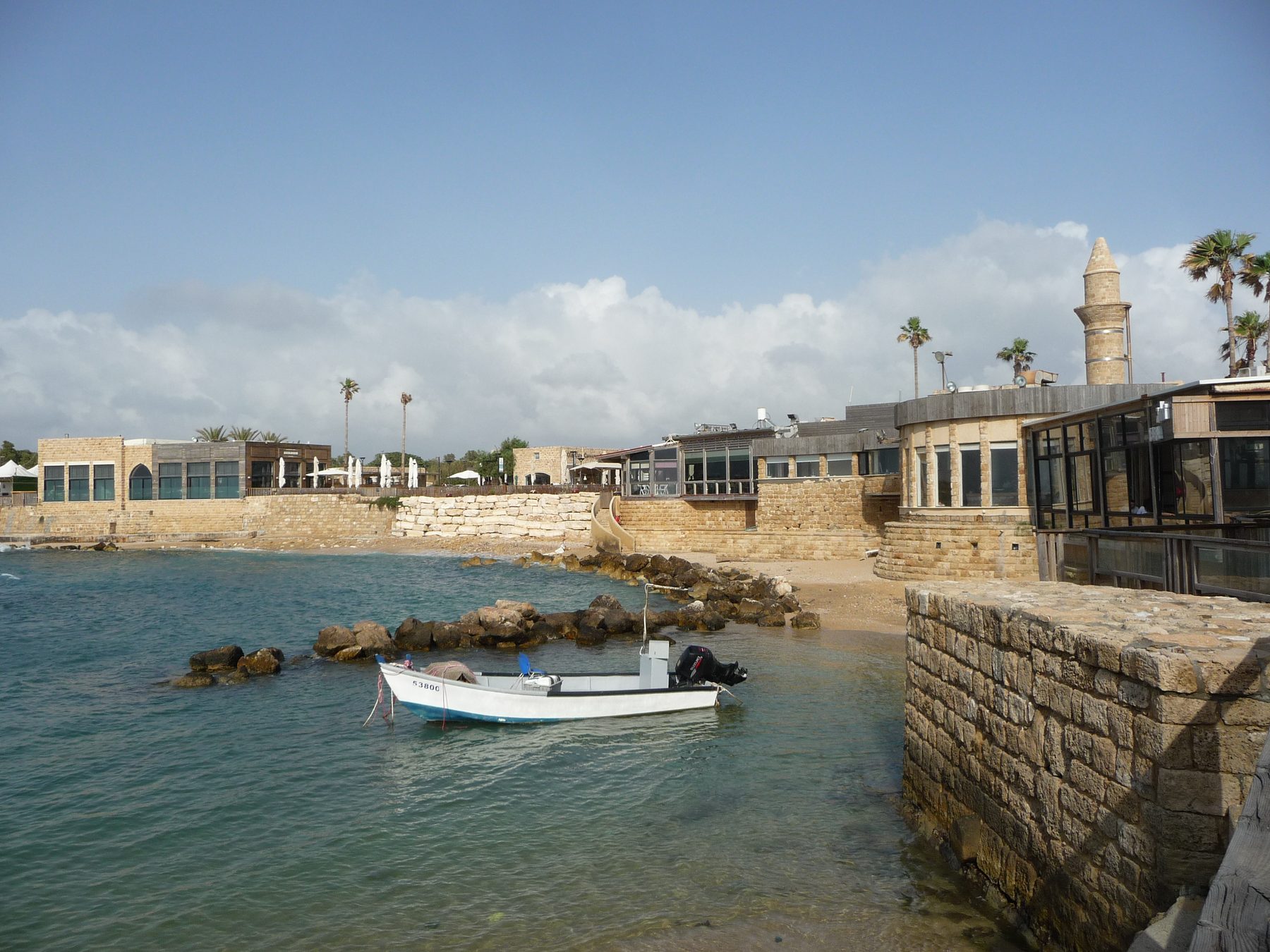
Caesarea was Rome's kind of place. Herod had built it big, polished and outward-looking, with harbour, theatre, palace and all the expensive confidence a client king could stage for an empire. Once Judaea became a Roman province, this was where governors based themselves. Jerusalem mattered for the Temple, the pilgrim traffic and the nerves of the country. Caesarea mattered for rule. If you wanted to feel how Rome preferred to see Judaea - ordered, coastal, taxable, under watch - this was the address.
So the stone was found in the right city. More than that, it was found in the right mood. The inscription was not a private scratch or a hurried docket. It belonged to a public dedication, probably set up between 31 and 36 CE, during Pilate's term. It referred to a Tiberieum - some structure named for Tiberius - and named the man responsible. That matters because inscriptions do not tell stories the way chronicles do. They announce. They record. They expect to be seen. Pilate was not being remembered by admirers or critics here. He was signing Roman presence into stone.
The Pilate Stone
A damaged limestone dedicatory slab from Caesarea Maritima, discovered in 1961 in secondary use in the theatre, where it had been repurposed as part of a stair. Its surviving inscription names Pontius Pilatus and gives his title as praefectus Iudaeae - prefect of Judaea. The original is now in the Israel Museum, Jerusalem; a replica stands at Caesarea. The only contemporary inscription naming the governor arrived face-down and late, which is often how the good evidence behaves.
Israel Museum; Inscriptions of Israel/PalestineWhat the letters changed
The stone did not reveal an unknown man. Pilate was already well attested in texts. What it did was tighten the record. Tacitus, writing in the early second century, used the term procurator. The Caesarea inscription gives Pilate's own title in his own administrative world: prefect. That is not a theological bombshell. It is something rarer and, for historians, more satisfying - a correction in office stationery.
That correction matters because titles are not decoration. A prefect in early Roman Judaea was a military-administrative governor. The word on the stone belongs to the machinery that actually ran the province in Pilate's day. Later writers, using later habits of language, smoothed the office into procurator. The stone did not argue. It simply sat there until somebody read it properly.
And then there is the deeper pleasure of it. Here is a man best known to the world because he appears in the story of another man. Here too, in Caesarea, is a line of evidence entirely uninterested in later fame. It is local, practical, Roman, bureaucratic. It says: this was built; this official did it; this was the name on the job. History often arrives dressed as administration.
The text itself is fragmentary, which is why responsible editions print it with brackets and gaps. Most reconstructions run along familiar lines: a dedication to the Divine Augusti, a reference to a Tiberieum, Pilate's name, Pilate's title, and a verb of making or dedicating. The brackets matter. The certainty belongs to the surviving letters. The confidence belongs to the pattern into which they fit. Those are not the same thing, and good history keeps the distinction visible.
The governor's monument became a step, and the step waited to be turned over. That is nearly the whole lesson.
The Partial Latin Text
The surviving inscription is incomplete. A cautious transcription preserves what remains: "...s Tiberieum / ...tius Pilatus / ...efectus Iudaeae...". Fuller editions commonly restore it as [DIS AUGUSTI]S TIBERIEUM / [...PONTI]US PILATUS / [...PRAEF]ECTUS IUDA[EA]E / [...FECIT D]E[DICAVIT]. The brackets are the point: Pontius Pilatus and praefectus Iudaeae are secure, while the rest is scholarly reconstruction built around the surviving cuts in the stone.
Inscriptions of Israel/Palestine; Frova 1961Story, then stone
Jewish history has a long acquaintance with this sort of delay. Texts carry memory across centuries. Stones emerge when they please. Sometimes they confirm what was already known. Sometimes they sharpen it. Sometimes, as here, they do both while offering a parable neat enough to make an editor suspicious. The prefect who oversaw Judaea in the days of the Second Temple left behind a monument to imperial order. Time demoted it to construction material. Archaeology restored not his glory but his paperwork.
That is why the Pilate Stone is more than a curiosity in a case. It is a small victory for plain evidence. The Gospels, Josephus and Tacitus were not waiting to be rescued. They were already there. But in Caesarea the written record acquired a hard edge, a date range, a title, a place of government, a block you could photograph. The story did not become true in 1961. It became heavier.
And the weight sits exactly where it should. Not in a palace. Not in a triumphal arch. In a reused step from the Roman capital of Judaea, turned over at last, still carrying enough Latin to remind us that empires build for permanence and history reads the salvage.
Further reading