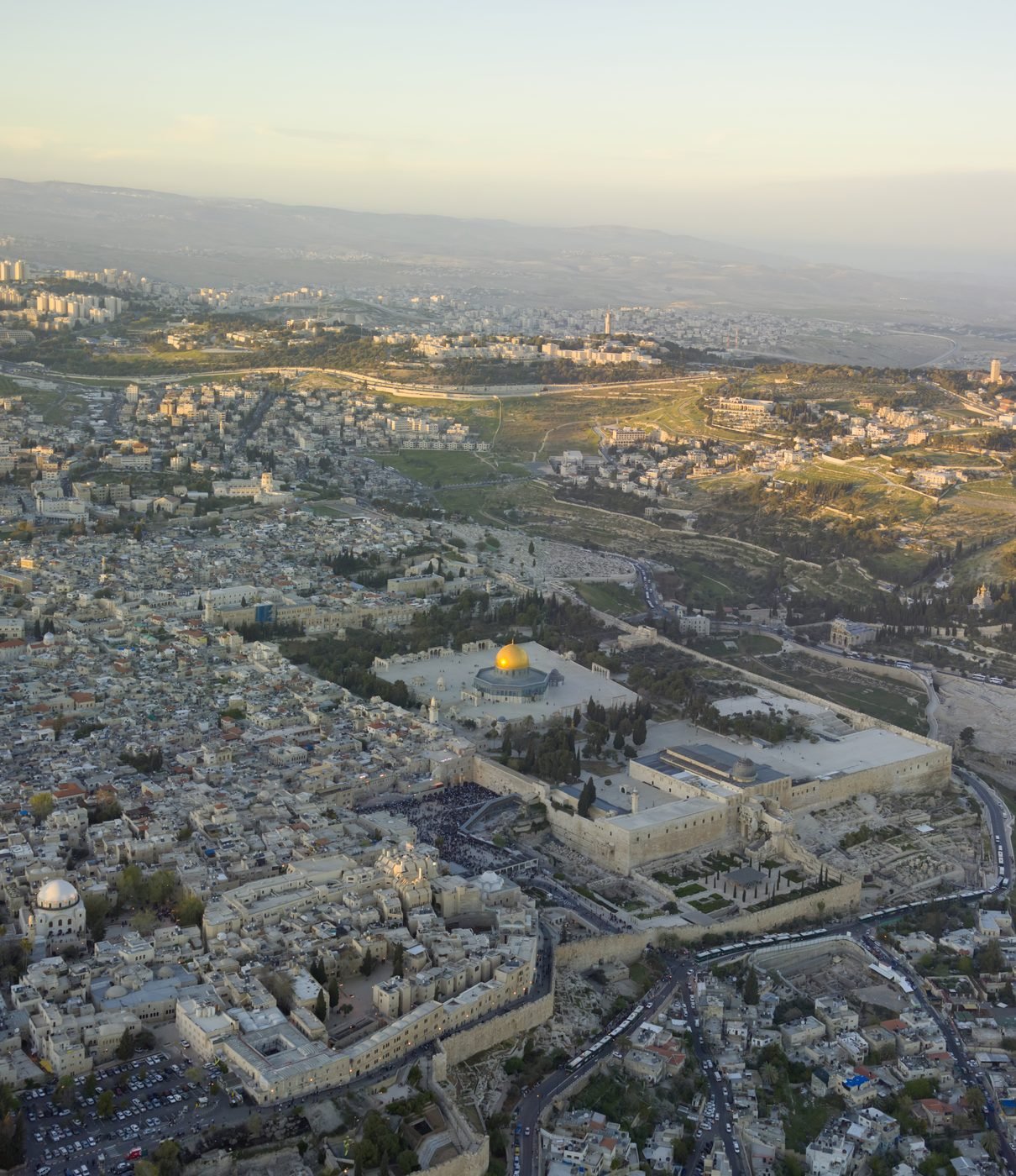
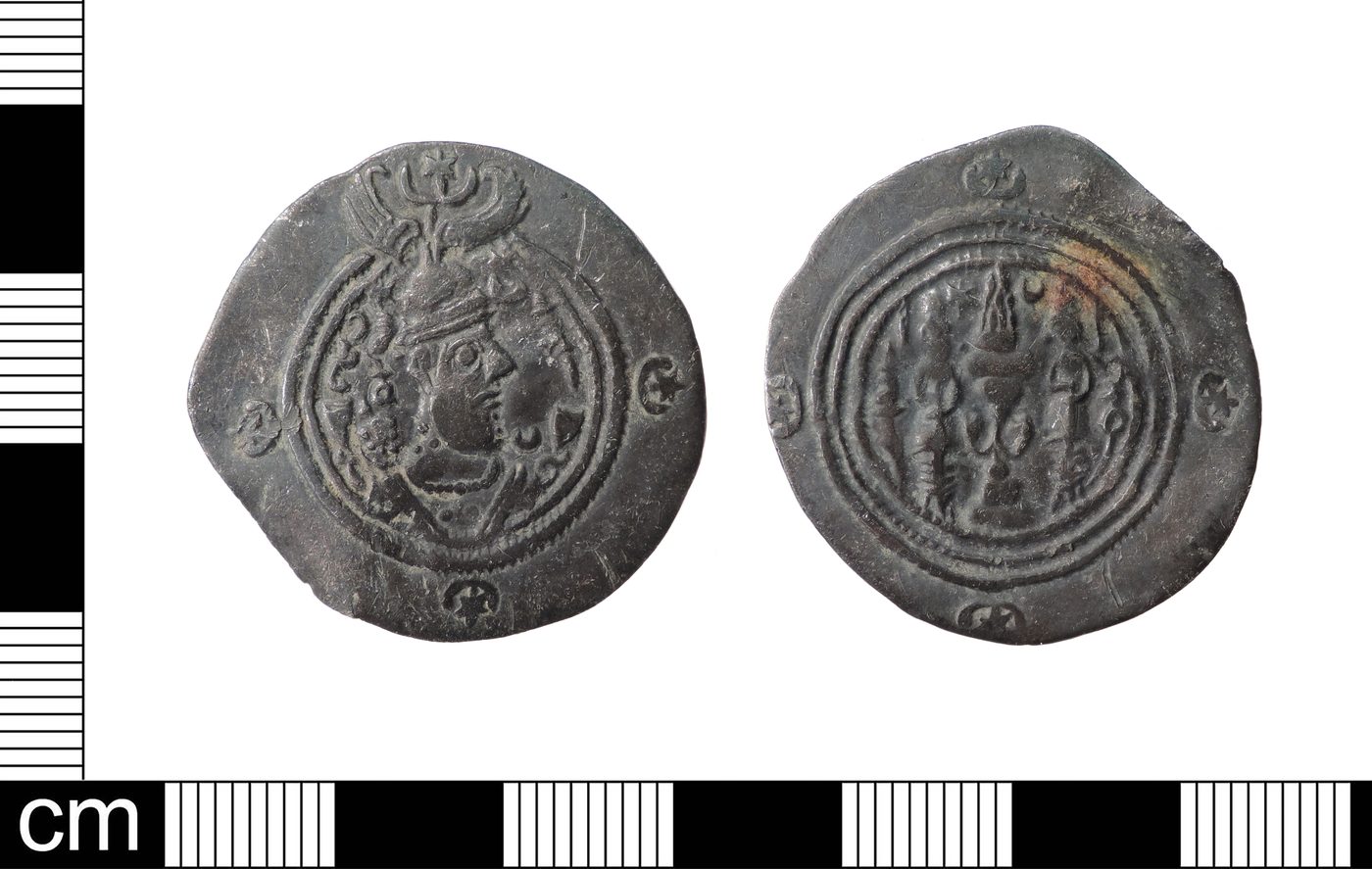
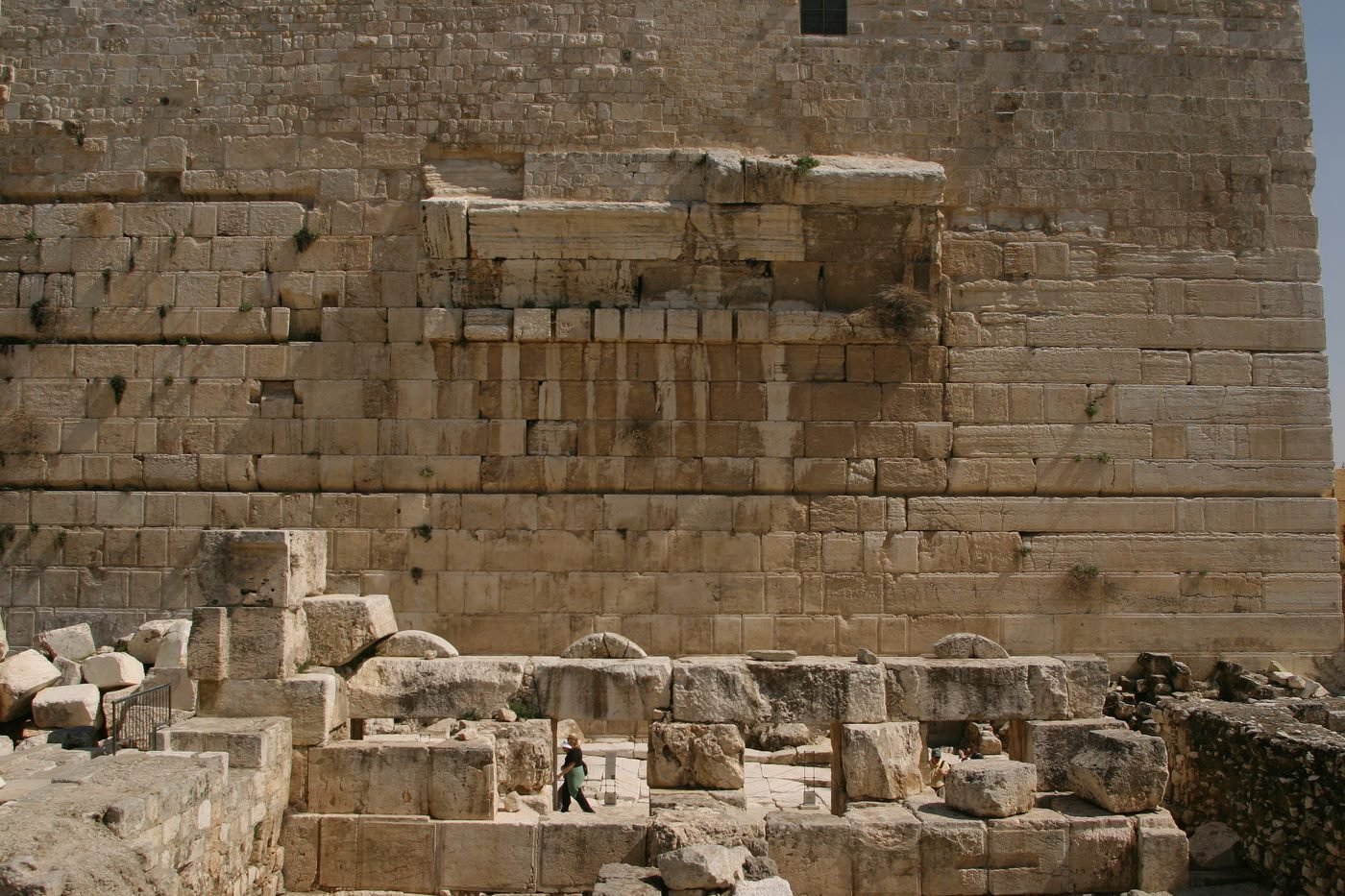
In the summer of 661 CE, a general named Mu'awiya ibn Abi Sufyan stood on the Temple Mount in Jerusalem and received the oath of allegiance there. He had not gone to Medina, the city of the Prophet. He had not gone to Mecca. He had come to Jerusalem - Iliya, as the Arabs then called it, the Roman name still clinging to the stones. The choice was deliberate. Jerusalem conferred a prestige that no Arabian town could match, and Mu'awiya, the consummate politician, knew it.
For the Jewish community still living in and around the city, the moment registered as one more turning of fortune's wheel. The Byzantines had barred Jews from the city for centuries, interrupted only briefly when the Persians took it in 614 and Jews had returned. The Arab conquest of 637-638 had at last reopened the gates under the Caliph 'Umar, and small Jewish settlement had resumed near the Temple Mount. Now the man who would found the Umayyad dynasty - the first great Islamic imperial house - was celebrating his authority on that same ground. Power had changed hands again, but the city's weight in the world had not diminished by an ounce.
The record
The seventh-century Armenian chronicle known as the History of Sebeos - composed close in time to the events it describes - records that Mu'awiya "went to Jerusalem and was there proclaimed king." This is one of the earliest non-Islamic sources to confirm the Jerusalem proclamation, and historians including Robert G. Hoyland (Seeing Islam as Others Saw It, 1997) treat it as reliable. The ceremony is dated to 661 CE, following the assassination of the Caliph 'Ali and Mu'awiya's consolidation of power over the fractured Islamic community.
Why did the city matter so much to a new Islamic ruler? The Temple Mount - the Haram al-Sharif - had already been swept of the Byzantine rubbish that had accumulated there during centuries of Christian disdain for the site. 'Umar himself had reportedly assisted in clearing it. Mu'awiya and his successors understood the ground in symbolic terms: whoever held and honoured Jerusalem held a claim to the whole inheritance of prophetic history. Within a generation his son and successor, 'Abd al-Malik, would commission the Dome of the Rock - completed in 691-692 CE - to plant that claim in stone and gold over the very rock that Jewish tradition identified as the Foundation Stone of creation and the site of the Temple's Holy of Holies. The Umayyads were not merely conquering a city. They were arguing about whose story the city belonged to. That argument, conducted in mortar and proclamation, was a direct response to the living Jewish memory of the Mount.
The record
The Jerusalem Talmud and contemporaneous rabbinic sources document a Jewish population in and around Jerusalem during the early Islamic period, and the Cairo Geniza (held at Cambridge University Library and the Jewish Theological Seminary, New York) preserves later documentary evidence of the organised Jewish community that sustained itself in the city through Umayyad and Abbasid rule. Scholars Moshe Gil (A History of Palestine, 634-1099, 1992) and Joshua Prawer have traced the continuity of Jewish settlement in Jerusalem from the Arab conquest onward, demonstrating that the reopening of the city under 'Umar in 638 created the framework within which Jews lived, however constrained, through Mu'awiya's reign and beyond.
The Umayyad proclamation of 661 is also the moment when Jerusalem formally entered Islamic dynastic politics as a prize and symbol - not merely as a holy site but as a capital of prestige. That elevation, paradoxically, made the city harder to erase from any map. Every new power that wished to be taken seriously would have to account for Jerusalem. For the tribe, whose longing for the city had already survived centuries of Roman and Byzantine exclusion, the Umayyad turn was not the end of hope. It was further evidence that the city's gravity was undeniable. You do not hold your proclamation ceremony in a place that does not matter. Mu'awiya chose Jerusalem because it mattered above all others - and in doing so, he confirmed, in the language of imperial power, what the tradition had said all along.
Empires come to Jerusalem to be legitimised. The tribe stays in Jerusalem - in memory, in prayer, in the long insistence that this city was not available for someone else's story to swallow whole.