Lyon’s Jewish story runs along the Rhône and Saône like the city itself. Merchants were there early, medieval charters protected them at points, and by the nineteenth century a visible community had enough confidence to build the Great Synagogue on the quai. The city’s Jewish life is one of return more than rupture.
That return matters because Lyon has also been a place of wartime concealment and postwar reassembly. It is not a museum city. It is a city that kept producing Jewish institutions after the worst century anyone could have designed.
From merchants to monument
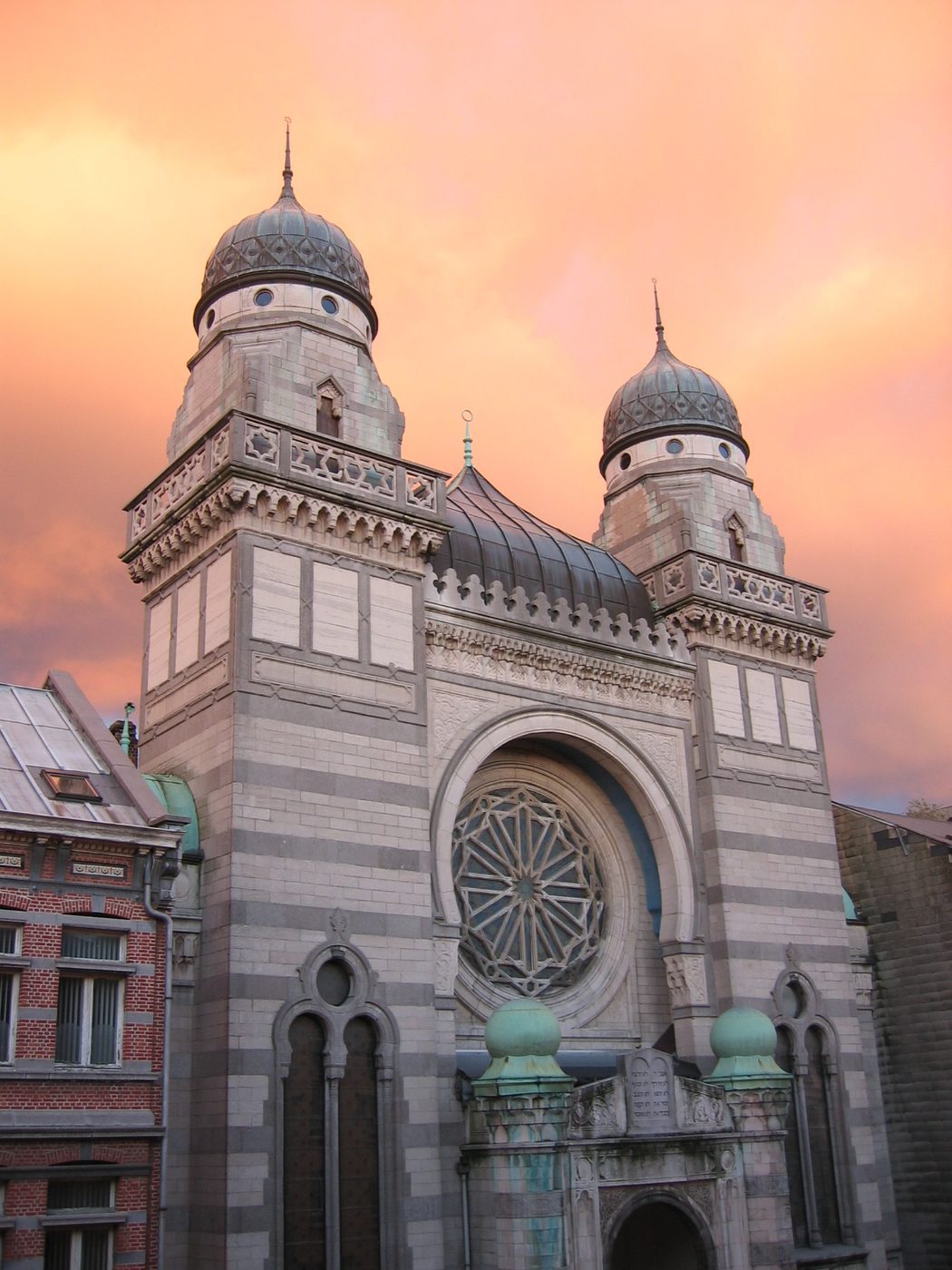
Medieval Lyon had Jewish merchants at its edges, then in the early modern and revolutionary periods a more durable communal structure appeared. The Great Synagogue of Lyon, completed in 1864 on quai Tilsitt, gave that community a public architectural face that still stands today.
The building is not merely decorative. It is a nineteenth-century assertion that Jewish life belonged on the city’s great riverfront, not off in some apologetic back street. Lyon made the claim in stone.
Great Synagogue of Lyon completed
Designed by Abraham Hirsch and completed in 1864, the Great Synagogue of Lyon remains the city’s major Jewish landmark. It was listed as a monument historique in 1984 and continues to anchor communal life on the quai.
Great Synagogue of LyonWar and the underground
During the occupation, Lyon became one of the cities where Jewish rescue, representation and postwar rebuilding had to be thought through in secret. The underground wartime network that grew into CRIF in 1943 is one sign of that. Lyon was not passive; it organised.
The postwar revival brought new families, including many from North Africa, and the city’s Jewish life grew back into public view. That recovery is part of Lyon too. It belongs beside the old synagogue, not after it.
Lyon kept rebuilding in the open and in secret. That is how a city stays Jewish.
The underground Jewish network behind CRIF
In occupied France, the Committee for Jewish Defence formed in 1943 and became the wartime base for what would soon be the CRIF. Lyon’s own role in wartime rescue and organisation makes it part of that founding landscape.
CRIF / French Jewish wartime historyA quay worth keeping
Lyon is often described through food, silk or the old city. Fine. But its Jewish life deserves the same treatment: a major city with a visible, durable communal spine.
The synagogue on the quay and the wartime network under the floorboards belong to the same story. Lyon knows how to keep going.