Jakarta is a small story, and small stories teach things the big ones cannot. A tiny Jewish community in the largest Muslim-majority country on earth, in a city of ten million, with no synagogue of its own and no diplomatic cover from Israel - and it never quite disappeared. It only thinned. The interest of Jakarta is not its scale. It is its stubbornness.
The wider Indonesian story begins with the Dutch. Jews came east with the Dutch East India Company from the seventeenth century, though the company officially barred them from settling, so the early presence is half-hidden. By the colonial heyday the community had three strands: Dutch and other European Jews, Baghdadi Jews out of Iraq, and Adeni Jews from the southern tip of Arabia. They clustered in Batavia - today's Jakarta - and in Semarang and, above all, Surabaya.
The colonial node
Batavia mattered, but it was never the centre of gravity. That was Surabaya, where the Baghdadi Jews were most numerous and most observant, and where the country's one purpose-built synagogue would eventually stand. Jakarta's Jews were merchants and clerks, a community of families rather than institutions, the sort of place that has a minyan when it needs one and a name in everyone's address book but not much carved in stone.
The hard number we have is the colonial census of 1930, which recorded 1,095 Jews across the Dutch East Indies - and contemporaries thought it an undercount, since many concealed their origins. Estimates for the late colonial period run closer to two thousand or more, spread thin across the islands but heavily on Java. It was a real community, larger than the later memory of it suggests, with Jakarta as one of its anchor cities.
The census counts the community
The 1930 census of the Dutch East Indies recorded 1,095 Jews, concentrated in Batavia, Surabaya and Bandung. Contemporaries regarded it as a likely undercount, since many Jews concealed or denied their origin; estimates for the late 1930s run to around two thousand or more. It is the firmest figure for the community at its colonial height.
1930 Dutch East Indies census; Inside IndonesiaThen came the catastrophe that found the community even here. After the Japanese occupation began in 1942, Jews were interned - first as Dutch civilians, and from 1943 increasingly as Jews specifically. Roughly two thousand were held in camps. The occupation broke the community's continuity, and what the war started, independence and emigration finished: through the 1950s most of Indonesia's Jews left for Israel, the Netherlands, the United States and Australia.
The remnant on Java
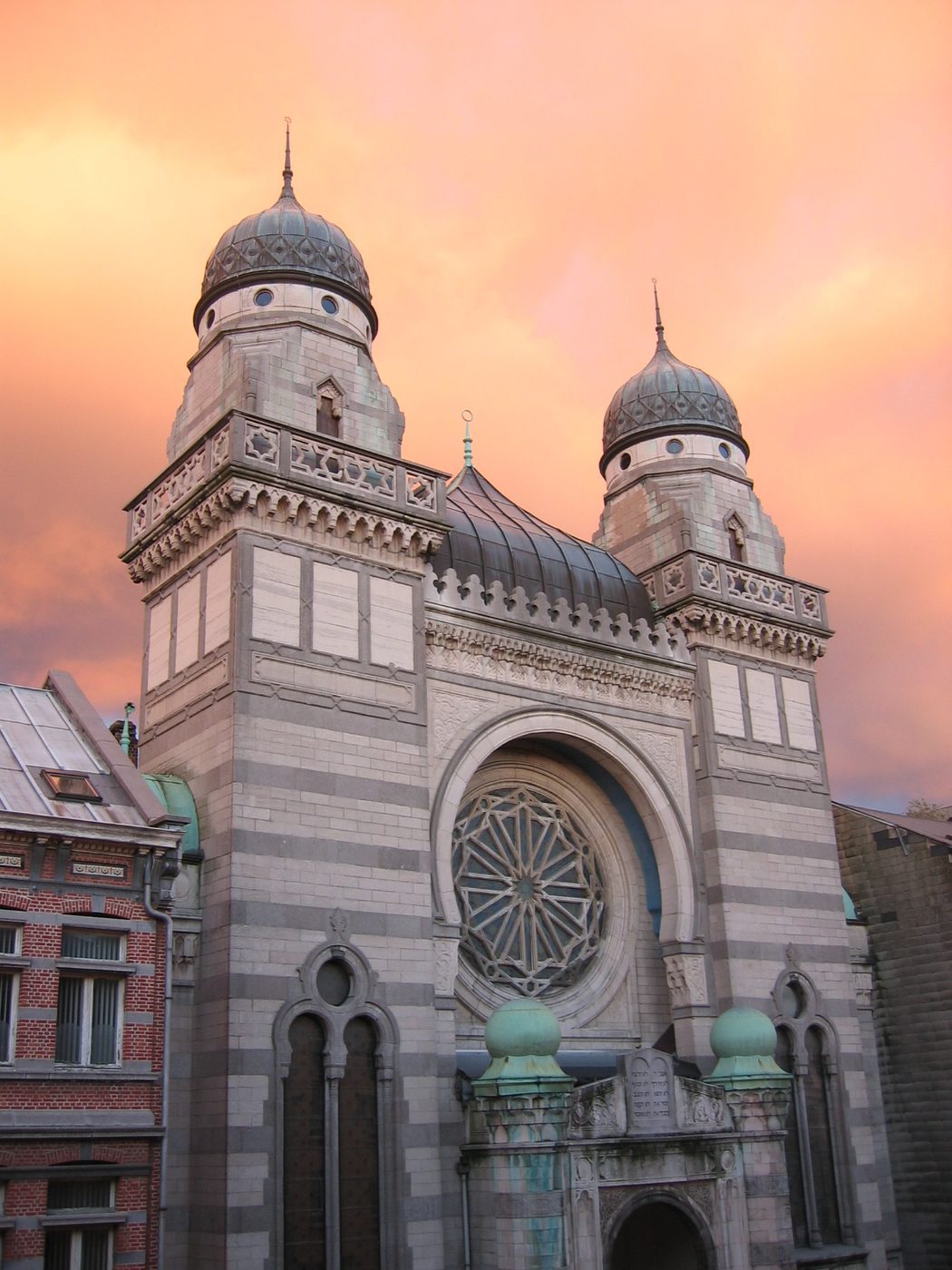
By the late 1960s the community on Java had shrunk to a handful: roughly twenty Jews in Jakarta and about twenty-five in Surabaya. The country's last purpose-built synagogue, Surabaya's Beth Shalom, established by Iraqi Jews in the 1920s, limped on for decades before being sealed off in 2009 and demolished in 2013. Java's open Jewish life all but ended; the centre of gravity shifted elsewhere.
History of the Jews in Indonesia; Surabaya SynagogueWhere the lamp still burns
The surprise is that the story did not end with Java. The one functioning synagogue in Indonesia today is not in Jakarta or Surabaya but in Tondano, in the Christian-majority highlands of North Sulawesi - Sha'ar Hashamayim, an Orthodox congregation established in the early 2000s. Nearby, a twenty-metre menorah stands on a hilltop above Manado, finished in 2009, claimed as the largest in the world. In 2010 a body called the United Indonesian Jewish Community was founded, affiliated with progressive Judaism. The map of Indonesian Jewish life has been redrawn, away from the old colonial ports and toward the mountains.
Jakarta, in all this, is the quiet node that refuses to be struck off. Its handful of Jews keep no grand building and seek little attention, in a country with no formal ties to Israel and a wary public mood. But the community is still on the map, still counted, still there. A remnant is not the same as an ending. Sometimes it is just a community waiting, with the patience the tribe has had three thousand years to learn.
The interest of Jakarta is not how few its Jews are. It is that, after everything, there are any at all.
Further reading