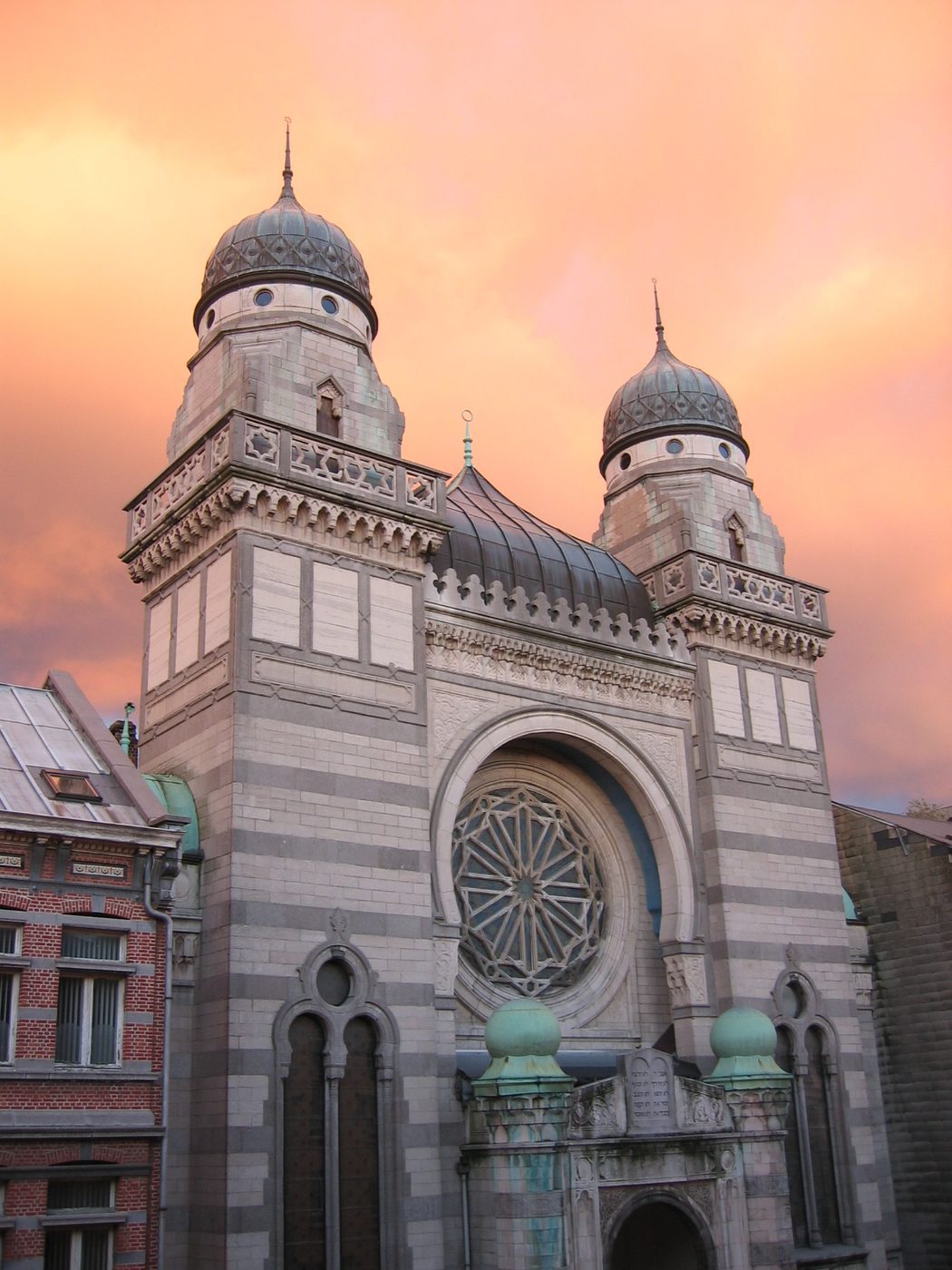
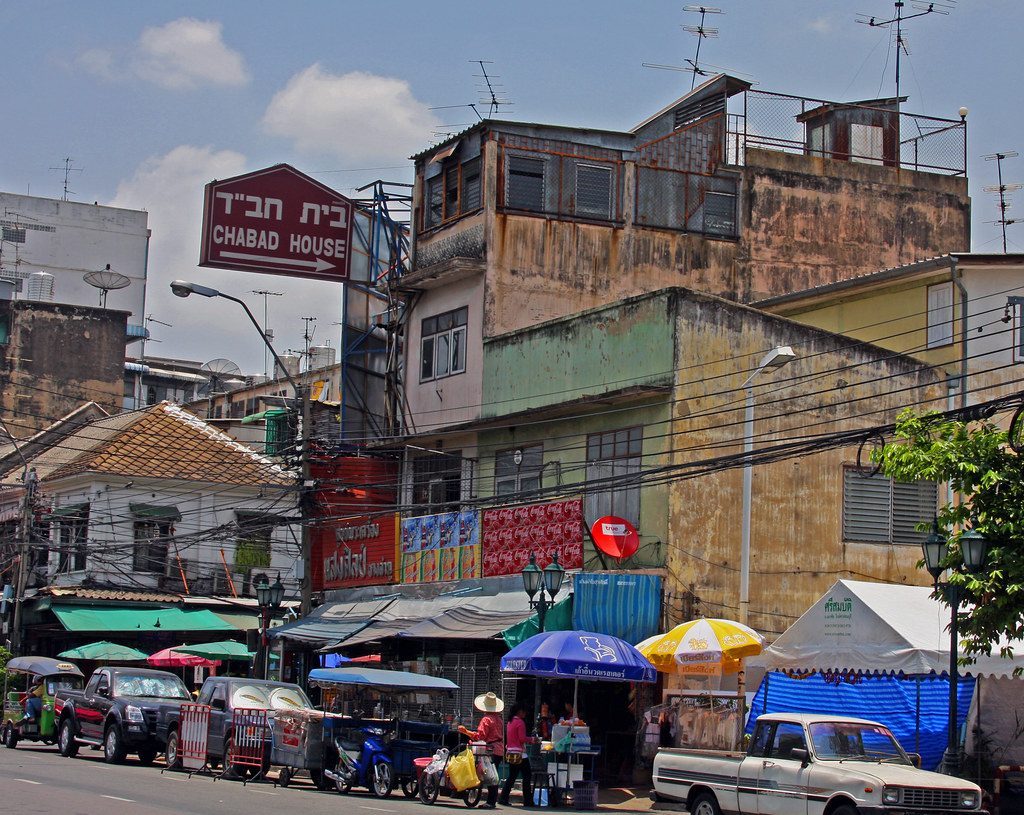
For most of a century, the easternmost regular synagogue in the inhabited world was a converted house on a street in Surabaya, a great port on the north coast of Java. It was the last functioning house of Jewish prayer in the largest Muslim-majority country on earth, and the people who kept it going were, by the end, very few. In 2013 a developer bought the building and knocked it down. The community that had carried Jewish life across the Indonesian archipelago lost its last public room. The story of how it got there is smaller than Baghdad's and just as worth telling.
The Jews of the Dutch East Indies were never numerous. They came as traders, soldiers and clerks under Dutch colonial rule, and the most durable thread among them was Baghdadi - Iraqi Jewish families who had spread east along the same Indian Ocean trade routes that carried the Sassoons to Bombay and Shanghai. Surabaya, the commercial capital of the colony's eastern half, became their main gathering point. It is where they built the institution that would outlast everywhere else.
A congregation on Java
The Israelitische Gemeente Soerabaia, the Israelite Congregation of Surabaya, was founded in 1923. At its height in the 1930s it counted around a thousand members, drawn from Baghdadi, Dutch and other Jewish families across the colony. This was never a Vilna or a Salonica. But for the Indonesian archipelago it was the centre, the place with a registered congregation, a rabbi when one could be found, and the ordinary apparatus of a functioning Jewish community.
Then history pulled it apart with unusual speed. A large group left for the new State of Israel around 1948 to 1950. The Suez crisis of 1956 turned Indonesian opinion sharply against anything read as connected to Israel, and the dispute with the Dutch over Western New Guinea brought further pressure on foreign nationals. Family by family, the community emigrated. By the time the congregation bought a former private residence on Jalan Kayoon in 1948 to serve as its synagogue, the long decline was already under way.
The Israelite Congregation of Surabaya
The Israelitische Gemeente Soerabaia was founded in 1923, largely by Baghdadi Jewish families, and reached around a thousand members in the 1930s. From 1948 its synagogue occupied a converted private house. It was the most enduring organised Jewish community in the Dutch East Indies and, later, independent Indonesia.
History of the Jews in IndonesiaThe last room closes
By the early twenty-first century the congregation had shrunk to a handful. The building fell into disrepair, used by a tiny remnant and increasingly a memory site rather than a living congregation. In 2013, against the backdrop of protests tied to the Gaza conflict, a real-estate developer purchased the property and demolished it, despite the synagogue having received some recognition as a heritage building. The easternmost synagogue in regular memory was gone.
That could be read as a simple ending, but it is not quite one. Indonesian Jewish descendants remain, some openly, some quietly, and a small community has more recently become more visible, including in Sulawesi to the north-east. Surabaya itself keeps the trace - in records, in family memory, in the photographs taken before the bulldozers came. A house of prayer can be demolished. The fact that it stood there, the furthest east the old Baghdadi network ever reached, is now part of the permanent record.
For most of a century it was the last working synagogue in Indonesia. A converted house on Java, the far eastern terminus of a line that began in Baghdad.
The synagogue is demolished
In 2013 the Surabaya synagogue building was bought by a developer and demolished, despite earlier heritage recognition and amid protests linked to the Israel-Gaza conflict. It had been the last functioning synagogue in Indonesia and one of the easternmost in the world.
Surabaya Synagogue · WikipediaWhat remains
What Surabaya leaves behind is a reminder of how far the Jewish map actually runs. The story is not only Europe and the Levant; it reaches the equator and the Java Sea, carried by merchants who took their prayer books wherever the trade went. The community was small and the ending was abrupt, but the scale of the journey was not small at all. That a Baghdadi congregation prayed on Java for ninety years is, in its own quiet way, an astonishing sentence to be able to write.
Further reading