Tiberias sits low, below sea level, pressed between the hills of the Galilee and the freshwater lake that gave the region its living. By the third century CE it was already a mixed city - the patriarch Judah ha-Nasi had shifted the Sanhedrin there from Sepphoris, making it the official seat of Jewish authority under Roman tolerance. The hot springs at Hammat drew visitors. The market drew traders. What the city lacked, until one particular sage decided it was where he would teach, was an academy that the whole diaspora would eventually look to for answers.
That sage was Rabbi Yochanan bar Nappacha - Yochanan son of the blacksmith - and the tradition says he studied under the last students of Rabbi Yehudah ha-Nasi himself, making him a living link to the world that had compiled the Mishnah. He was, by the account the Talmud gives him, almost devastatingly brilliant: the Jerusalem Talmud reports that his beauty was such that people would watch him pray simply to observe the sight. This is the Talmud's way of saying something serious - that his presence was arresting, that students came to Tiberias not only for the legal tradition he carried but for the force of the man who carried it.
The record
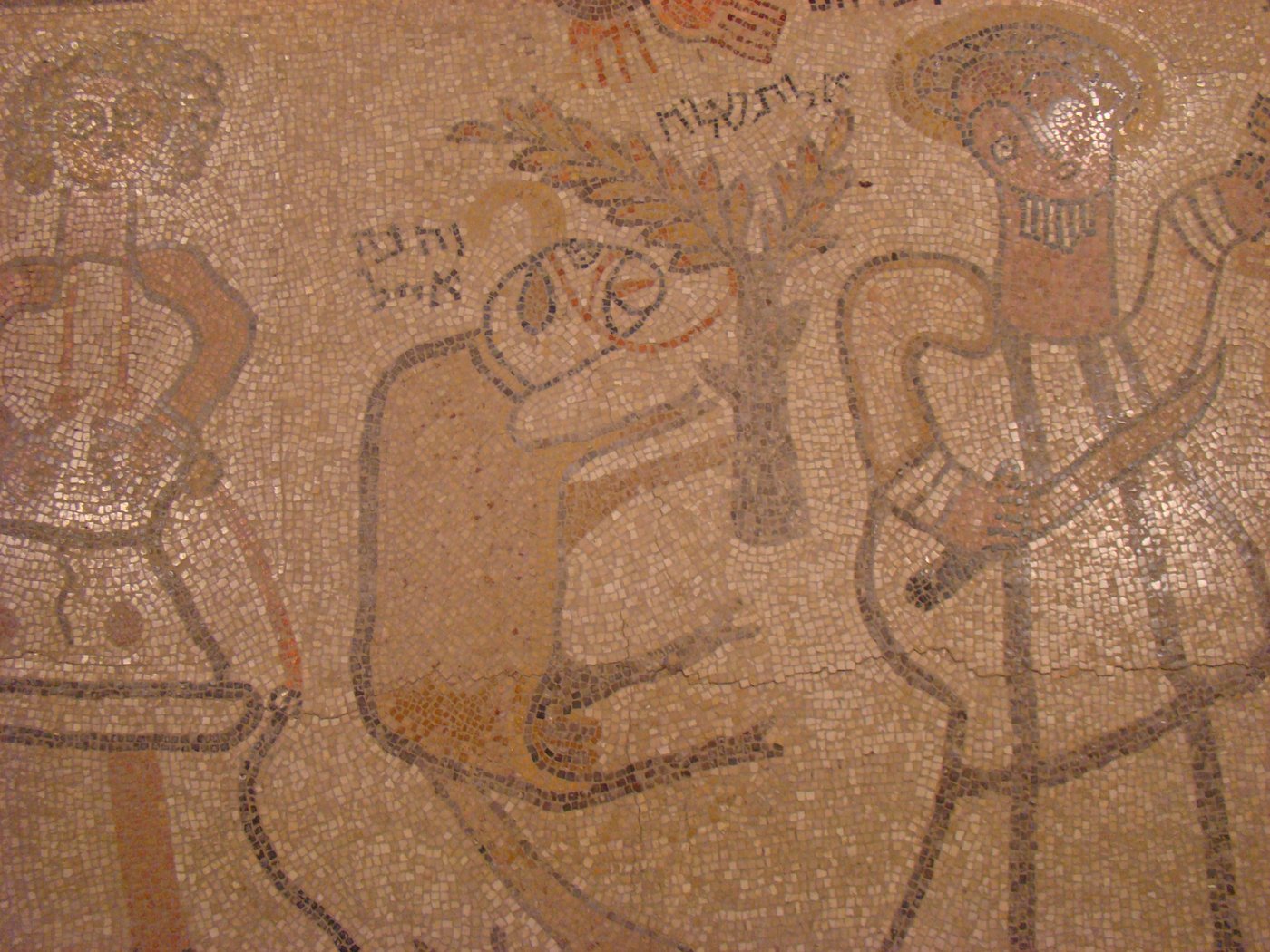
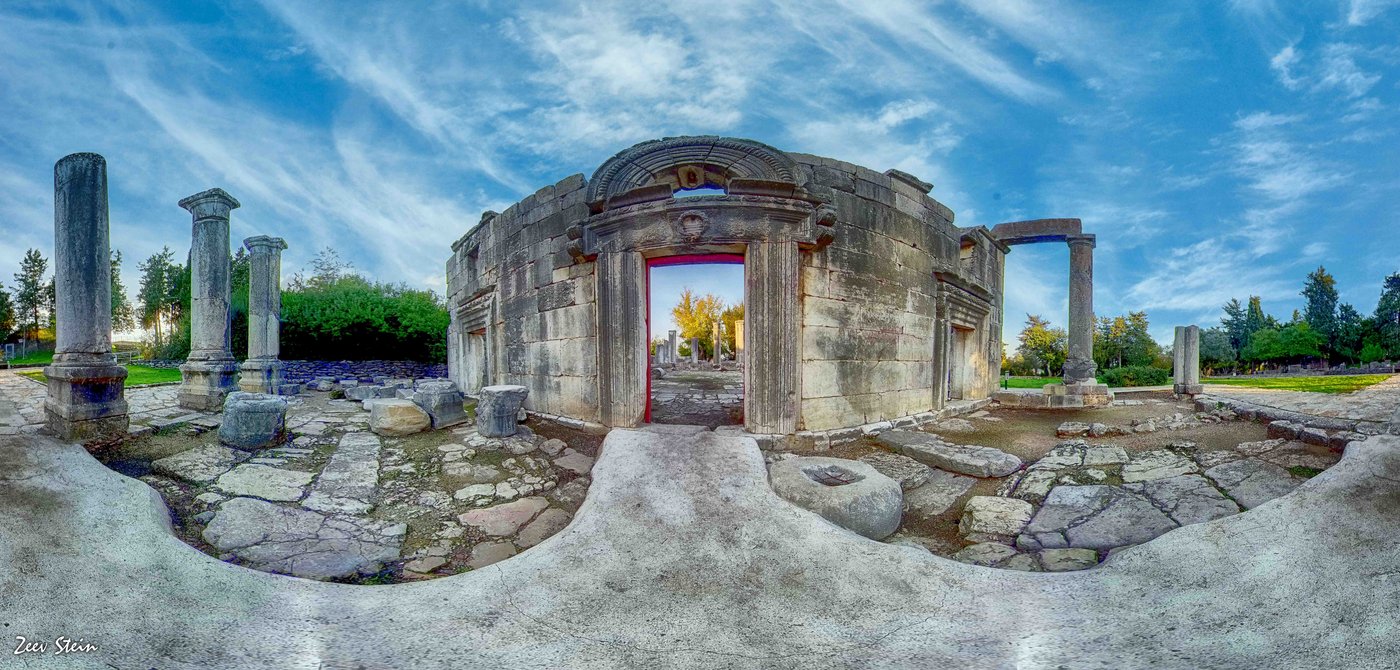
The mosaic floor of the ancient synagogue at Hammat Tiberias - just south of the city and excavated by the Israel Antiquities Authority in the 1960s and 1970s under the direction of Moshe Dothan - dates to the fourth century CE and belongs to the same world Rabbi Yochanan shaped. Its central panel shows a zodiac wheel with the Greek sun-god Helios at its hub; its upper panel shows the Torah ark (aron kodesh) flanked by menorot, a shofar, an incense shovel, and a lulav. The combination is startling by any later standard: classical pagan imagery sharing a floor with the vessels of Jewish sacred life. The Hammat Tiberias synagogue is now protected as a national monument; the mosaic is visible on site.
Rabbi Yochanan's academy at Tiberias was not a building, or not only a building. It was a method: a tradition of close argument about the Mishnah that Judah ha-Nasi had compiled around 200 CE, and which the Galilean academies were by now treating as their working text. Yochanan did not merely teach the Mishnah; he questioned it, pressed it, ruled on the questions it left open, and created the layer of discussion that would become the Jerusalem Talmud. Where Babylonian sages in Sura and Pumbedita were producing their own parallel commentary - larger, more digressive, more geographically insulated from the pressures of Roman and then Byzantine rule - Yochanan's school produced a leaner, more urgent record. The Jerusalem Talmud (Talmud Yerushalmi) is sometimes called the Palestinian Talmud or the Talmud of the Land of Israel, and it was shaped in his generation more than any other. The tractate Berachot of the Jerusalem Talmud (Yerushalmi Berachot) cites Yochanan's rulings more than any other named authority.
The academy also shaped who could participate in Jewish authority. Yochanan was involved in the ordination of sages - a laying-on of authority from teacher to student that the Talmud traces back, in an unbroken chain, to Moses on Sinai. He taught alongside his brother-in-law Shimon ben Lakish (Reish Lakish), and the disputes between the two men fill the Jerusalem Talmud. Reish Lakish, who had been a gladiator before returning to study - or so the tradition claims, with obvious delight - brought a particular directness to the argument. The academy at Tiberias was not a place where one voice prevailed. It was a place where the argument was itself the point.
The record
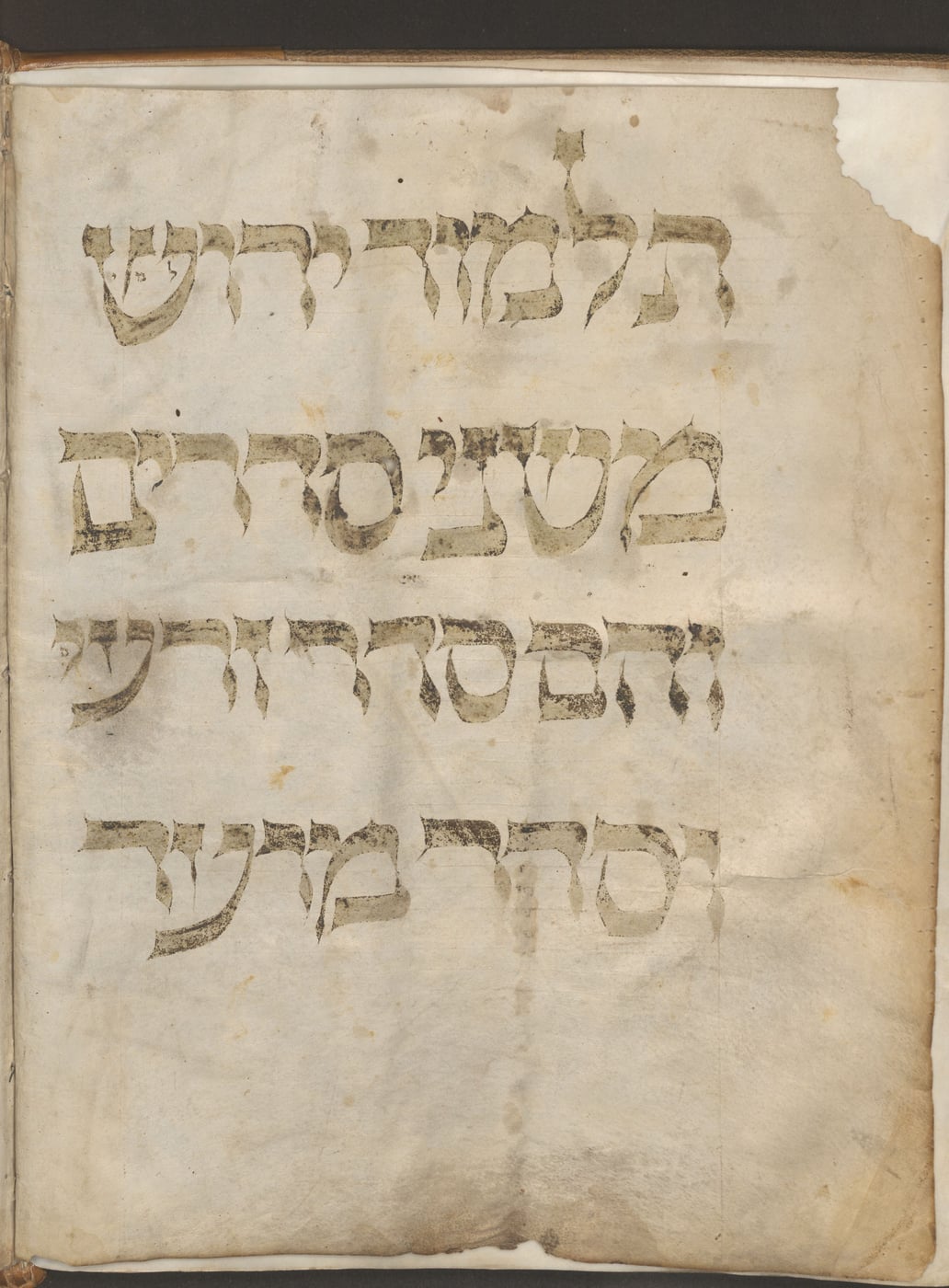
The Jerusalem Talmud (Talmud Yerushalmi) - the major product of the Galilean academies in the third and fourth centuries CE - survives in a single principal manuscript: Codex Leiden Scaliger 3, held at Leiden University Library in the Netherlands and dated to 1289 CE. This is the base text for all printed editions. The editio princeps - the first printed Jerusalem Talmud - was published in Venice in 1523-1524 by Daniel Bomberg, the same Christian printer who had produced the first complete Babylonian Talmud a few years earlier. The Venice printing established a page format that modern editions still follow. Where the Babylonian Talmud runs to roughly 2.7 million words, the Jerusalem Talmud is considerably shorter and covers only 39 of the Mishnah's 63 tractates - the Galilean academies ran out of time, or scholars, or both, before the project was complete.
There is something instructive about the Galilee as the setting for this moment. The Galilee was not Babylon. It was still the Land of Israel, still subject to Roman and then Byzantine rule, still the place where the patriarchate operated and where questions of who counted as an authorised judge actually mattered to local communities. Yochanan's rulings were not hypothetical. They governed real disputes - about markets, about inheritance, about when a sabbath boundary could be crossed. The mosaic floor at Hammat Tiberias, with its frank borrowing of Helios and the zodiac, is evidence of how much Roman visual culture the Jewish world of the Galilee was absorbing and redeploying, and it was Rabbi Yochanan's generation that navigated that contact zone. The academy at Tiberias was the institution that held the tradition stable while the culture around it shifted - a task harder, and quieter, than any military campaign.
Tiberias would remain the seat of the patriarchate until the institution was dissolved by the Byzantine authorities in 429 CE. The city's synagogue at Hammat kept its mosaic. The Jerusalem Talmud was never completed; it sits, half-finished, as the record of what the Galilean sages managed before history moved on. Rabbi Yochanan bar Nappacha died around 279 CE, probably in Tiberias. The Talmud records his students' grief in unusual detail. The argument he sustained for fifty years did not stop when he stopped - which is, in the rabbinic tradition, the best thing that can be said of any teacher.