In April 1852, twenty-one German Jewish men met in a house on Pennsylvania Avenue and founded a congregation. The city around them was barely a city: a swampy half-built capital, more plan than place, with the dome of the Capitol still unfinished. Four years later those same men did something no other synagogue in America has ever quite repeated. They went to Congress and got themselves chartered by an act of the legislature, signed by the president. The Jews of Washington did not ask the federal city for permission to exist. They asked it for paperwork, which in this town is the same as a blessing.
That is the small, telling fact at the heart of Jewish Washington: a community that learned, very early, to speak the native language of the place it lived in. The native language was law. The Jews became fluent in it.
The synagogue Congress chartered
Washington Hebrew Congregation was formed on 25 April 1852, the first Jewish congregation in the District of Columbia. Its early members worried about a genuine legal snag: it was not clear that District law let them buy land to build a synagogue. So in February 1856 a group of founders, led by Captain Jonas P. Levy, a naval officer who had served in the Mexican-American War, petitioned the 34th Congress. On 2 June 1856, President Franklin Pierce signed An Act for the Benefit of the Hebrew Congregation in the City of Washington, granting the community the same property rights already enjoyed by the city's Christian churches.
It is, to this day, the only synagogue in the United States chartered by an act of Congress. There is something fitting about a capital extending to its Jews, by statute, the identical "rights, privileges, and immunities" already held by everyone else. No more, no less. Equality written into the federal record, in a country still half a decade from civil war over a far larger question of who counted as fully human.
Founded, then chartered by Congress
Washington Hebrew Congregation was organised on 25 April 1852. On 2 June 1856 President Franklin Pierce signed an act of Congress securing its right to own property in the District of Columbia, conferring the same rights granted to the city's Christian churches. It remains the only synagogue ever chartered by an act of the United States Congress.
Capital Jewish Museum; Washington Hebrew CongregationA capital learns to keep two faiths of its own
From that charter the rest follows. The congregation reformed itself along the lines of American Reform Judaism in the later nineteenth century, moved through a series of buildings as the community grew, and in 1955 dedicated its grand temple on Macomb Street in the city's northwest. Around it grew the wider apparatus of a major metropolitan Jewish community: Orthodox and Conservative congregations, schools, federations, and eventually a metropolitan Jewish population numbering in the hundreds of thousands across the District, Maryland and Virginia.
Washington is a strange place for any private community to flourish, because the city's whole personality is the public business of the nation. Jewish Washington solved that the way it solved the property question: by making its institutions legible, civic and on the record. A capital is built to host the state. This one learned to host a synagogue with the same seriousness, and not as decoration.
The Jews of Washington did not ask the federal city for permission to exist. They asked it for paperwork, which in this town is the same as a blessing.
The temple on Macomb Street
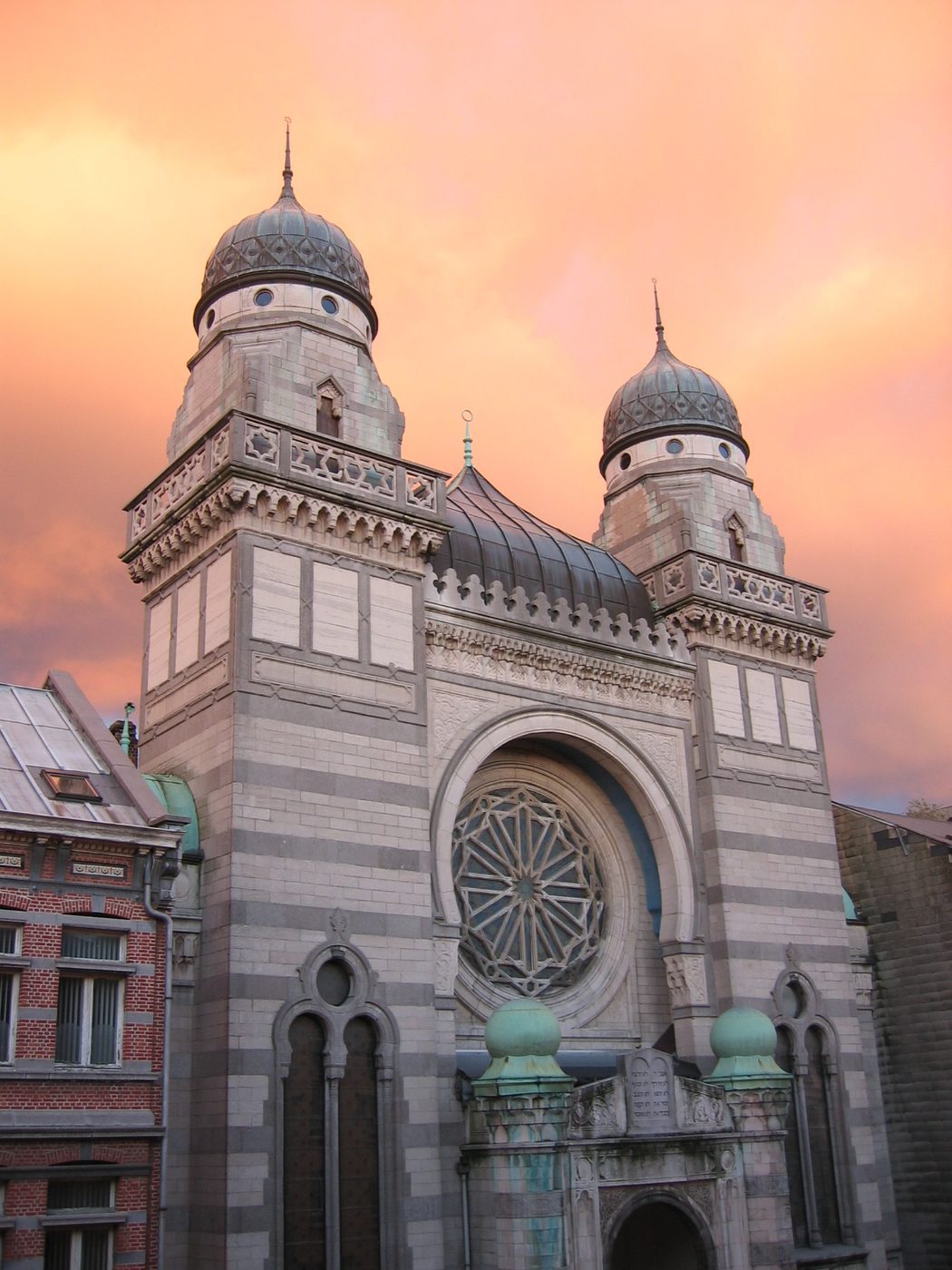
Washington Hebrew Congregation dedicated its monumental temple on Macomb Street, in northwest Washington, in 1955. The building marked the congregation's arrival as one of the largest Reform congregations in the country, and the community later opened a second, suburban campus across the line in Maryland as the Jewish population spread into the suburbs.
Washington Hebrew Congregation; DC Historic SitesWhat the capital still keeps
The federal city kept growing into a true Jewish metropolis: museums, advocacy organisations, a dense suburban Jewish life across the Beltway, and in 2023 a new Capital Jewish Museum to hold the whole story in public. The thread runs unbroken back to that house on Pennsylvania Avenue and the act of Congress that followed.
The charter of 1856 is the kind of document that could easily have become a curiosity, a framed antique on a vestry wall. It did not. It became a foundation. In a capital that understands symbols better than almost anywhere, the Jews chose the most durable one available, and built on it.
Further reading