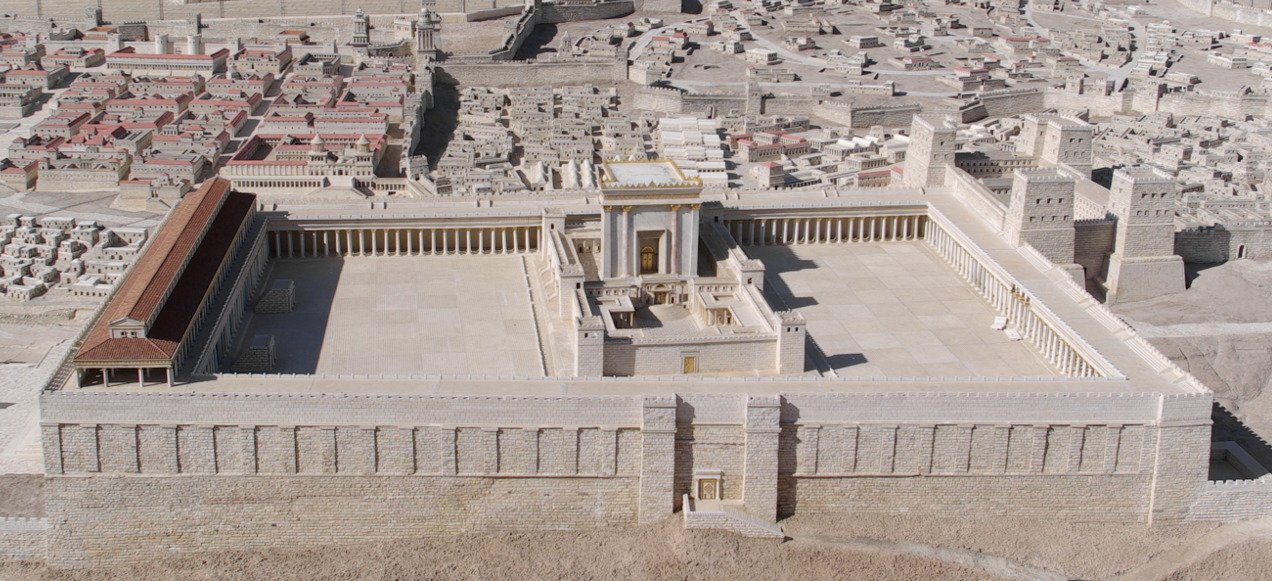
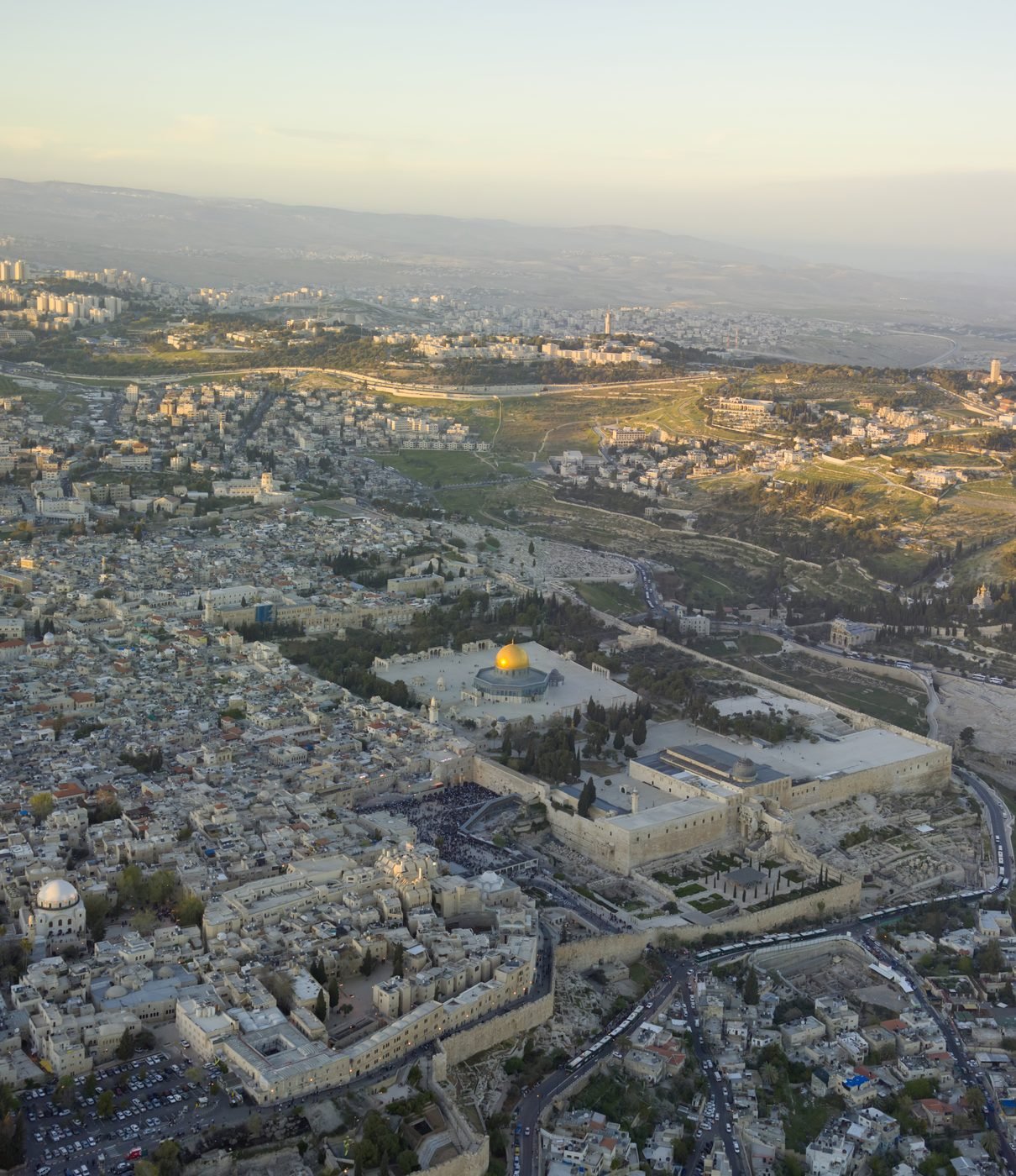
The caliph arrived at the city gates on a white camel, but dismounted before entering. He walked in. Byzantine Jerusalem - called Aelia Capitolina in the Roman tradition still maintained by the Christian empire - had kept Jews out for half a millennium. Hadrian's ban after the Bar Kokhba revolt in 135 CE had made it law: no Jew within sight of the ruined Temple. The law had been enforced with the zeal of people who wanted to bury a rival claim. And then, in 638 CE, Umar ibn al-Khattab, second caliph of the expanding Muslim empire, accepted the surrender of Patriarch Sophronius and changed everything.
The patriarch, to his credit, agreed to hand the city over only to the caliph in person - no subordinate would do. Sophronius reportedly wept as he handed over the keys, murmuring something about the abomination of desolation foretold in scripture. Umar, unimpressed by the theatre of defeat, asked to be taken to the Temple Mount. What he found there was a rubbish dump. The Byzantine Christians had deliberately used the sacred rock as a midden - an insult both to Jewish memory and, as Islam came to see it, to an earlier sanctuary. Umar, the sources say, knelt and began clearing it himself. His companions joined him.
The record
The primary account of Umar's entry is preserved in the early Islamic chronicle of al-Tabari (Ta'rikh al-Rusul wa al-Muluk, "History of Prophets and Kings," completed c. 915 CE) and corroborated by the near-contemporary Greek account of Patriarch Sophronius's sermon, delivered at Epiphany 638, which laments the fall of the city to "the Saracens." The treaty Umar is said to have granted - the "Covenant of Umar" (al-'Uhda al-'Umariyya) - guaranteed the safety of Jerusalem's churches and residents; a version of the text is preserved in multiple later Islamic legal compilations. The Yale historian Fred M. Donner, in Muhammad and the Believers (Harvard University Press, 2010), analyses the early community's attitude to Jewish and Christian subjects and notes the generally accommodating character of the initial conquests.
The change for Jews was not abstract. Under Byzantine rule, Jews had been legally excluded from Jerusalem except on one day each year - the ninth of Av, the fast of mourning for the Temple's destruction - when they were permitted to pay to enter the city and weep at the ruins. That was the sum of their access to the place they prayed toward three times daily. After Umar's entry, Jews were invited back. The caliph reportedly asked Ka'b al-Ahbar, a Yemenite Jewish convert to Islam with deep knowledge of scripture and tradition, to help locate the precise site of the Holy of Holies - and Ka'b's guidance shaped where the first Muslim prayer-house on the Mount was positioned. More immediately, Umar issued permission for seventy Jewish families from Tiberias to settle in Jerusalem. The number seventy is traditional and symbolic, but the fact of resettlement is not in serious doubt. After five hundred years, Jews could live in their city again.
It is worth sitting with that. Not as political commentary on what came later, and not as a score in an argument, but as a fact about what exile means and what return means. The people who had prayed "next year in Jerusalem" at the Passover seder, generation after generation, now had descendants who could actually go. Some of them went. The Temple Mount remained a ruin and would remain one - no one was rebuilding it - but the city itself was open. Jewish life, which had concentrated in the Galilee under Roman and Byzantine rule, began the slow rebalancing southward.
The record
The permission for Jewish settlement in Jerusalem following the Muslim conquest is documented in the Geniza fragments (the Cairo Geniza, a vast cache of medieval Jewish documents discovered in the Ben Ezra Synagogue in Fustat, Egypt, and now held primarily at Cambridge University Library) and in later rabbinic sources that track the re-establishment of Jewish communal life in the city. The historian Moshe Gil, in A History of Palestine, 634-1099 (Cambridge University Press, 1992, translated by Ethel Broido), provides the most thorough scholarly analysis of Jewish settlement patterns in Palestine under early Muslim rule, including the community at Jerusalem and the economic life that followed. Gil estimates that within a generation of the conquest, a recognisable Jewish neighbourhood had re-formed in the southwestern part of the city.
Umar did not stay long. He prayed on the Mount, declined the patriarch's invitation to pray inside the Church of the Holy Sepulchre (to avoid setting a precedent for its conversion), and left. Within a few decades his successors would build the Dome of the Rock over the sacred rock itself - that is a separate chapter. What Umar left behind in 638, beyond the new political order, was something the Jews of Palestine had not held in living memory: the right to call Jerusalem home. The city had been the protagonist of their longing for five hundred years. It was now, once again, a place they could actually stand.