For two hundred years, the Jews of Tunis were two peoples in one city. There were the Touansa, the long-settled Tunisian Jews, and there were the Grana, Sephardim who had come down from the Italian port of Livorno. They prayed apart, judged apart, married apart and were buried apart. Not as rivals exactly, and not as strangers, but as two communities who had decided, with the full machinery of rabbinic law, that they would not be one.
The word Grana is itself the clue. It is Tunisian Arabic for Livorno, by way of the Italian name Gorna, so the very label these Jews carried remembered the city they had left. From the seventeenth century onward, Livornese merchants and their families settled in Tunis, arrived with wealth, European trading connections and Italian manners, and kept all three. They did not dissolve into the older community. They built a parallel one beside it.
That sounds like a recipe for friction, and there was some. But the more interesting fact is the one the quarter actually demonstrates: that Jewish difference can be organised rather than erased. Two rites, two councils, two sets of synagogues, in one city, held in a stable arrangement for generations. It is pluralism with a Tunisian accent, and it lasted.
Two communities, by decree
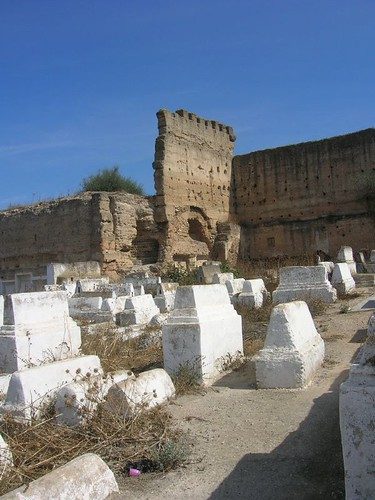
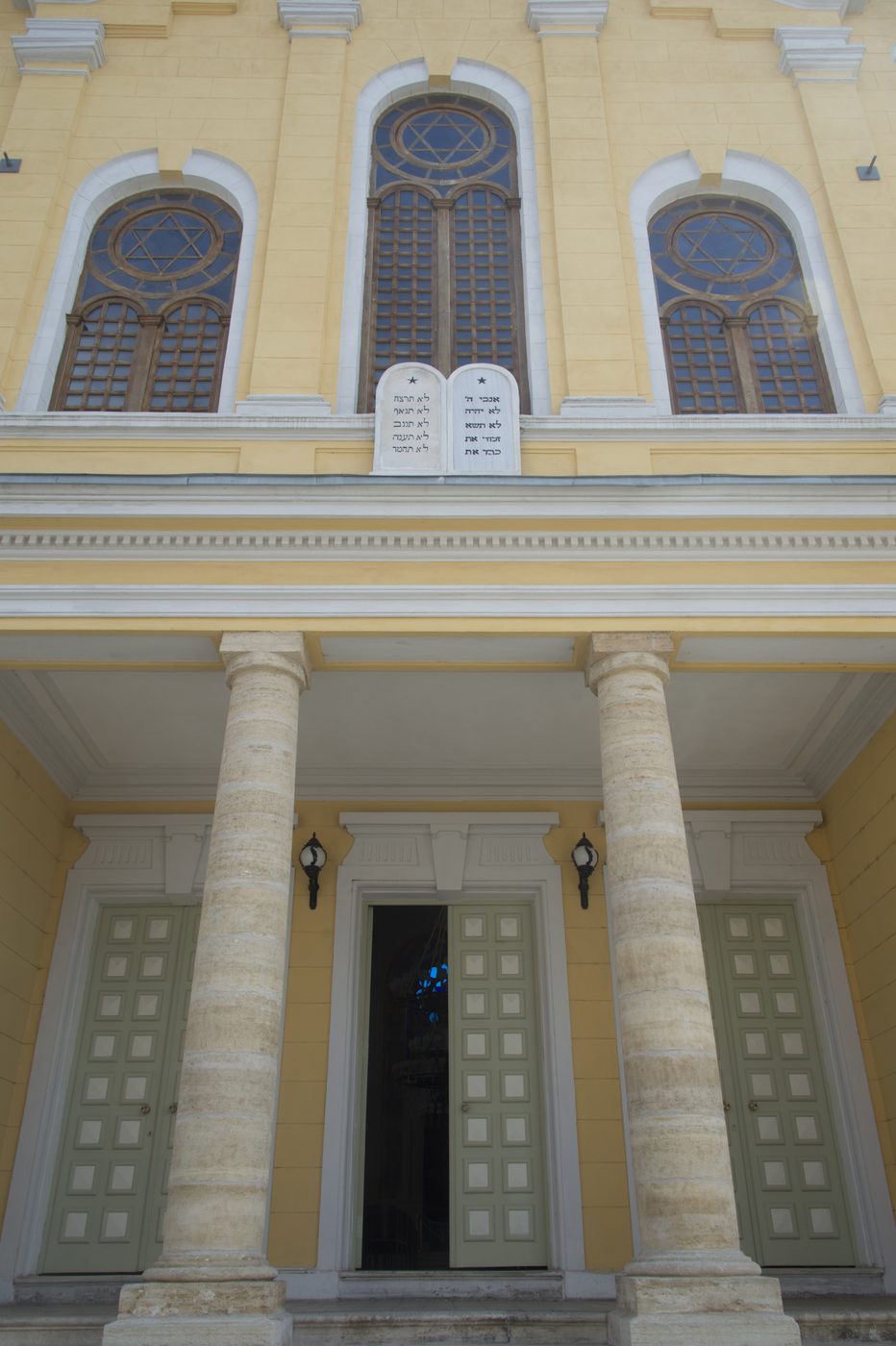
The split was not an accident of custom; it was written down. In July 1741 the leading rabbis of the two groups, Abraham Taïeb for the Touansa and Isaac Lumbroso for the Grana, signed a takkanah, a binding communal ordinance, that formally divided the Jews of Tunis into two distinct communities. From then on each had its own chief rabbi, its own rabbinical court, its own council of notables, its own synagogues and schools, its own kosher butcher and its own cemetery. A Jew of Tunis belonged to one or the other, and the line was inherited.
Behind the formality lay a real difference in the two groups' position. The Grana were generally wealthier and more outward-facing, plugged into the commercial networks of the Italian and wider Mediterranean world; many held the protected status of European subjects. The Touansa were the older, larger and more locally rooted community. The Livornese, it must be said, often looked down on the Tunisians, which is the unlovely part of the story and the reason the two communities found a formal separation easier to live with than a forced merger.
None of this made the Grana less Jewish or less at home. It made them a particular kind of Tunisian Jew, Italian in accent and cuisine and bearing, Sephardi in rite, and thoroughly settled in the life of the city. The quarter was not a waiting room. It was a community with its own weight, producing rabbis, merchants and, in time, a distinctively European-facing Tunisian Jewish bourgeoisie.
From Livorno to Tunis
Sephardi Jews from the Tuscan free port of Livorno settled in Tunis from the seventeenth century and became known as the Grana, after the Tunisian Arabic name for Livorno. Generally wealthier than the established Tunisian Jews, the Touansa, and often holding European protected status, they formed a distinct community alongside the older one rather than merging into it.
Encyclopaedia Judaica, "Tunis" · Encyclopaedia of IslamThe line that finally closed
The separation softened slowly and then ended outright. Through the nineteenth century, under the Husaynid beys and then the French protectorate declared in 1881, the legal and social walls between Grana and Touansa thinned. Intermarriage rose. The shared pressures of colonial rule, modern schooling and a common Jewish politics pulled the two communities together. In 1944 the long division was at last formally healed and the two were reunited, and in 1948 the World Jewish Congress helped fold Tunisian Jewry into a single Federation of Jewish Communities.
By then the clock was already running out on the whole community. Tunisian independence in 1956, the wars in the Middle East and the steady draw of France and Israel emptied the country of its Jews within a generation. The Grana quarter, like the Touansa world beside it, became a memory carried abroad, in Paris and Marseille and Tel Aviv, in surnames, recipes and a particular Livornese-Tunisian inflection. Two communities that had spent two centuries insisting they were separate ended, in the diaspora, as a single shared past.
Two communities, two courts, two cemeteries, in one city, for two hundred years. And the name they carried, Grana, was simply the Tunisian word for the harbour they had left.
Separation, then reunion
A takkanah signed in July 1741 by the rabbis Abraham Taïeb of the Touansa and Isaac Lumbroso of the Grana formally divided the Jews of Tunis into two communities, each with its own rabbinate, court, synagogues and cemetery. The division endured until 1944, when the two communities were reunited; in 1948 the World Jewish Congress helped establish a single Federation of Jewish Communities of Tunisia.
Encyclopaedia Judaica · World Jewish CongressFurther reading