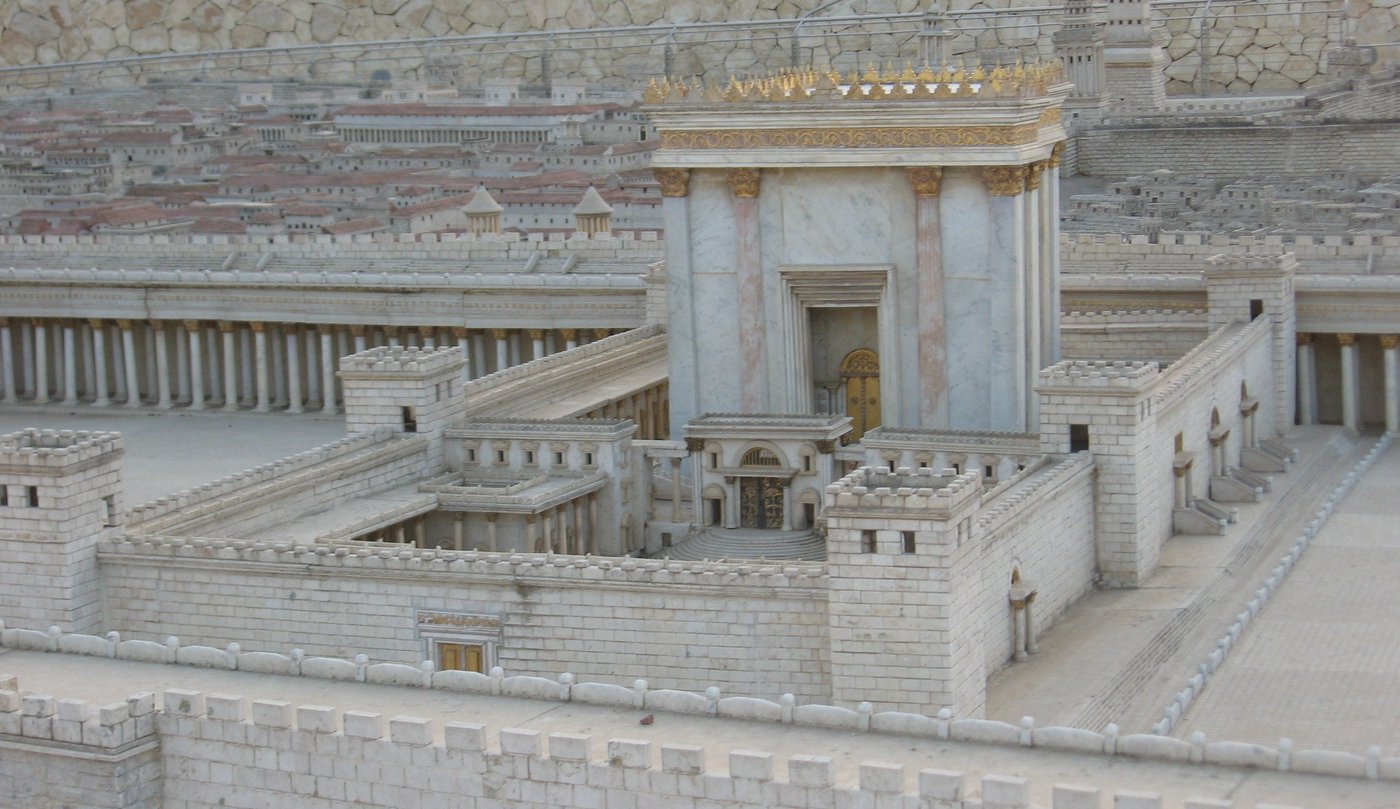
The Torah does not name the chosen mountain. It circles it, points toward it, insists that Israel must come to "the place that ה׳ your God will choose" - but leaves that place unnamed for book after book. When Deuteronomy was written, or at least when it reached its final shape, the argument was still live. Which mountain was it? For the people who became the Jews, the answer eventually settled on Zion, on the Temple Mount in Jerusalem. For the people who became the Samaritans, it settled somewhere else entirely - on Gerizim, the green mountain that rises above Shechem in the heart of the land. The disagreement sounds like a technicality. It was, in fact, the hinge on which two distinct traditions swung apart.
The rupture did not happen in a single moment. Its roots go back at least to the return from Babylon after 539 BCE. When the first exiles came back and began planning the rebuilding of the Temple, the people already living in the land - the population centred on Samaria, who traced their lineage to the northern tribes and who worshipped by Israelite custom - offered to join in. The offer was refused. The book of Ezra records the returnees' response in blunt terms: "You have nothing to do with us in building a house to our God; but we ourselves together will build to ה׳, the God of Israel" (Ezra 4:3). That refusal carried a stinging implication. We are the legitimate heirs. You are not.
The record
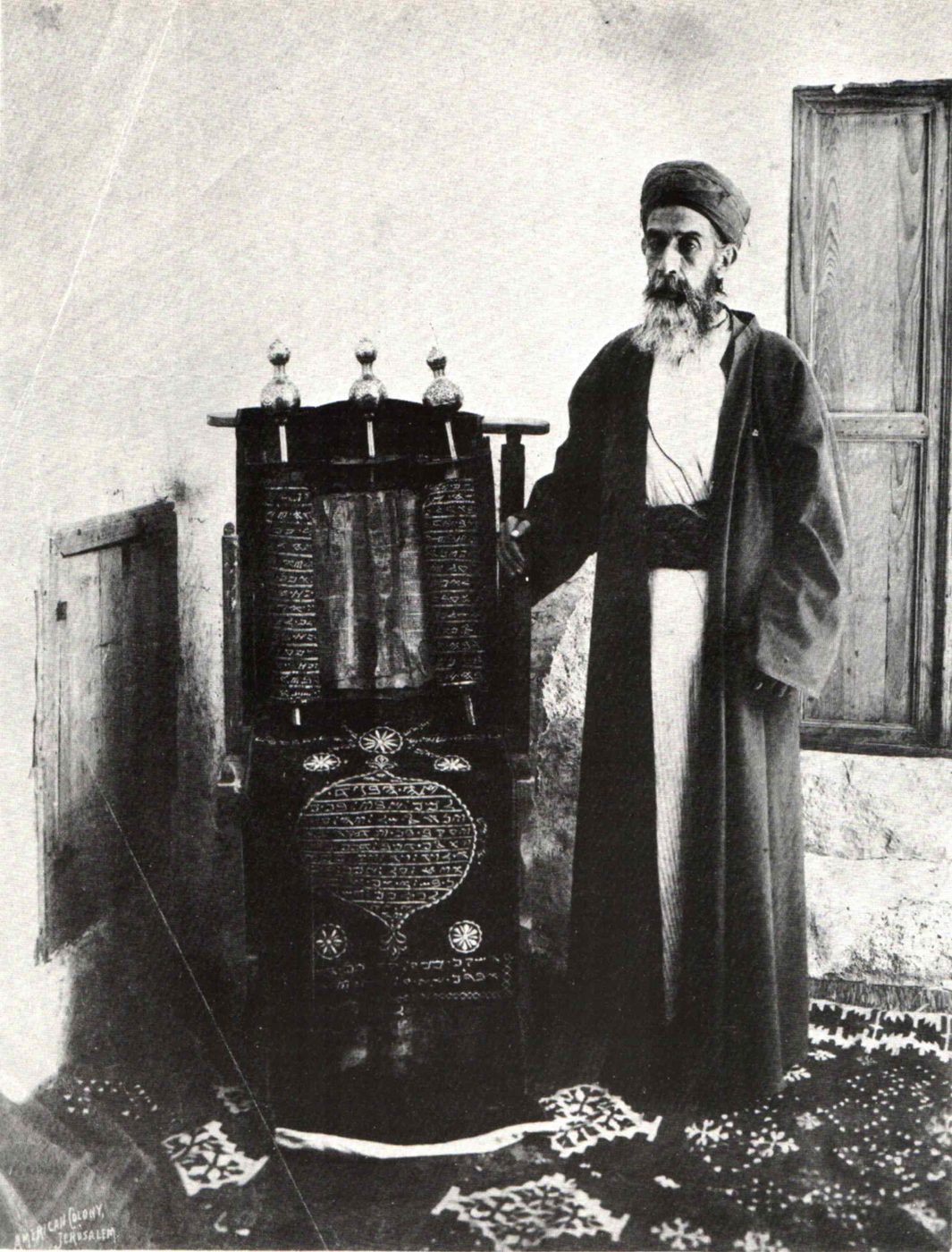
The Samaritan Pentateuch - the Torah as the Samaritan community has transmitted it - differs from the Jewish Masoretic text in approximately six thousand places, most of them minor. One difference is not minor at all. In Deuteronomy 27:4, where the Masoretic text instructs Israel to build an altar on Mount Ebal after crossing the Jordan, the Samaritan Pentateuch reads Mount Gerizim. This single-word substitution encodes the entire theological quarrel: it makes Gerizim, not Ebal or Zion, the mountain marked out from the beginning of the covenant. The oldest manuscript evidence for the Samaritan Pentateuch comes from fragments preserved by the Samaritan community itself; Dead Sea Scroll fragments show that a pre-Samaritan textual tradition existed in the Second Temple period, suggesting the divergence is ancient. (Dead Sea Scrolls, Israel Antiquities Authority; J. Charlesworth and the Princeton Theological Seminary Dead Sea Scrolls Project.)
The Samaritans did not think of themselves as a new religion. They thought of themselves as the authentic keepers of Mosaic faith, uncorrupted by the Babylonian exile's compromises and the returnees' innovations. Their canon stopped at the Pentateuch: no Prophets, no Writings, no Oral Torah. Moses was the prophet - the only prophet needed. And Moses, they insisted, had pointed to Gerizim. The woman at the well, in the Gospel of John, puts the argument with admirable economy: "Our ancestors worshipped on this mountain, but you say that the place where people must worship is in Jerusalem" (John 4:20). By the time John was written, around the end of the first century CE, the quarrel was already five or six centuries old. She says it as though it is the obvious question - because by then, it was.
The record
Archaeological excavations on Mount Gerizim, led by Yitzhak Magen for the Israel Antiquities Authority between 1983 and 2006, uncovered a substantial Samaritan temple complex beneath the later Roman-period remains. The earliest phase of construction dates to the fifth or fourth century BCE - placing the Gerizim sanctuary's founding within the Persian period, contemporary with or shortly after the rebuilding of the Jerusalem Temple. The excavations produced thousands of inscribed votive offerings in Aramaic and Hebrew, many of them dedicatory formulae to "ה׳ of the mountain of Gerizim," and the remains of a large altar. The physical evidence confirms that the Samaritan choice of Gerizim was not late invention or polemic: it was a living cultic reality from an early date. (Yitzhak Magen, Haggai Misgav, and Levana Tsfania, Mount Gerizim Excavations vol. I, Israel Antiquities Authority, 2004.)
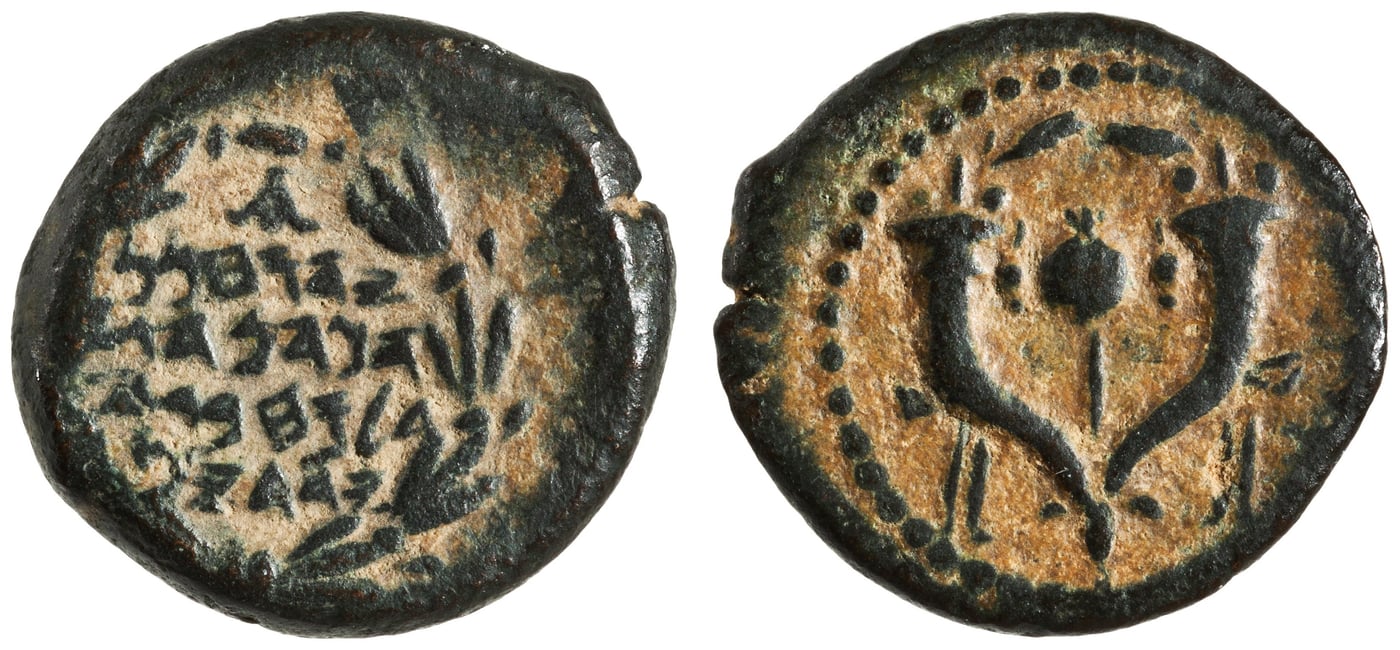
The sharpest moment in this long quarrel came around 128 BCE, when the Hasmonaean king John Hyrcanus marched into Samaria and destroyed the Gerizim temple. The Samaritans rebuilt. They always rebuilt. The community that survived Rome, Byzantium, Islam, the Crusaders, the Ottomans, and the twentieth century still gathers on Gerizim for Passover each year, still sacrifices the lamb as Moses commanded, still reads from a Torah that names this mountain as the chosen place. There are roughly eight hundred of them now, living in two communities - one on Gerizim, one in Holon near Tel Aviv. They did not become Jews. They did not stop being Israelites. They held their mountain, and they are still there.
The quarrel over the mountain was never purely about geography. It was about authority - who could define the centre, whose reading of the inherited text was binding, who belonged to the covenant on what terms. That argument recurs in Jewish history in many forms. The Samaritan version is the oldest that left a living community. They read the same five books. They kept Shabbat, observed the festivals, circumcised their sons. And they climbed a different mountain. The honest answer to the woman at the well may simply be that both mountains are real, and the question was always harder than either side admitted.