Alexandria had been a Jewish city for four centuries before the revolt. Not entirely Jewish - it had never been that - but Jewish in a way that mattered: a community of hundreds of thousands, a Delta quarter so dense with synagogues and scholars that the Talmud would later speak of its great basilica in tones usually reserved for the Temple itself. By the beginning of the second century CE, Egypt held one of the empire's largest Jewish populations, with Alexandria and the Fayum among its strongholds. They had built lives in the papyrus-trade towns of the Fayum, in the Nile-port settlements of the Delta, in Alexandria's merchant districts. They farmed, litigated, worshipped, argued theology in Greek. They were, in the way of the Roman diaspora, simultaneously deeply themselves and deeply embedded in the world around them.
Then, in 115 CE, with the Emperor Trajan deep in his Parthian campaign and the eastern legions stretched thin, something broke. The uprising that Romans would later call the Kitos War - after the general Lusius Quietus sent to suppress it - began in the Jewish communities of Cyrene (in modern Libya) and spread with extraordinary speed to Egypt, Cyprus and Mesopotamia. The sources are Roman and hostile, the casualty figures probably inflated, the Jewish perspective almost entirely lost. What is not lost is the result: when the killing was done, the Jewish communities of Egypt, of Cyprus, of parts of Cyrene, were shattered - expelled, destroyed, or reduced to fragments too small to restore their old scale.
The record
The principal ancient accounts of the diaspora revolt are Cassius Dio's Roman History (Book 68, sections 32-33, written in the early third century) and Eusebius of Caesarea's Ecclesiastical History (Book 4, chapter 2, written c. 313 CE). Dio records the uprising in Cyrene under a leader he names Lukuas, and reports the destruction of the Serapeum and other monuments in Alexandria, followed by violent reprisals. The Greek papyri of Roman Egypt provide independent corroboration: a series of documents from the Fayum dated to the years immediately after 117 CE show large tracts of Jewish-held land being redistributed to non-Jewish owners, with notarial formulae noting that former owners had "fled" or were "no longer present." This documentary archive is held in collections including the Rylands Papyrus collection at the University of Manchester and the Berlin Papyrus collection (Ägyptisches Museum und Papyrussammlung), and has been analysed in depth by the historian William Horbury in Jewish War under Trajan and Hadrian (Cambridge University Press, 2014).
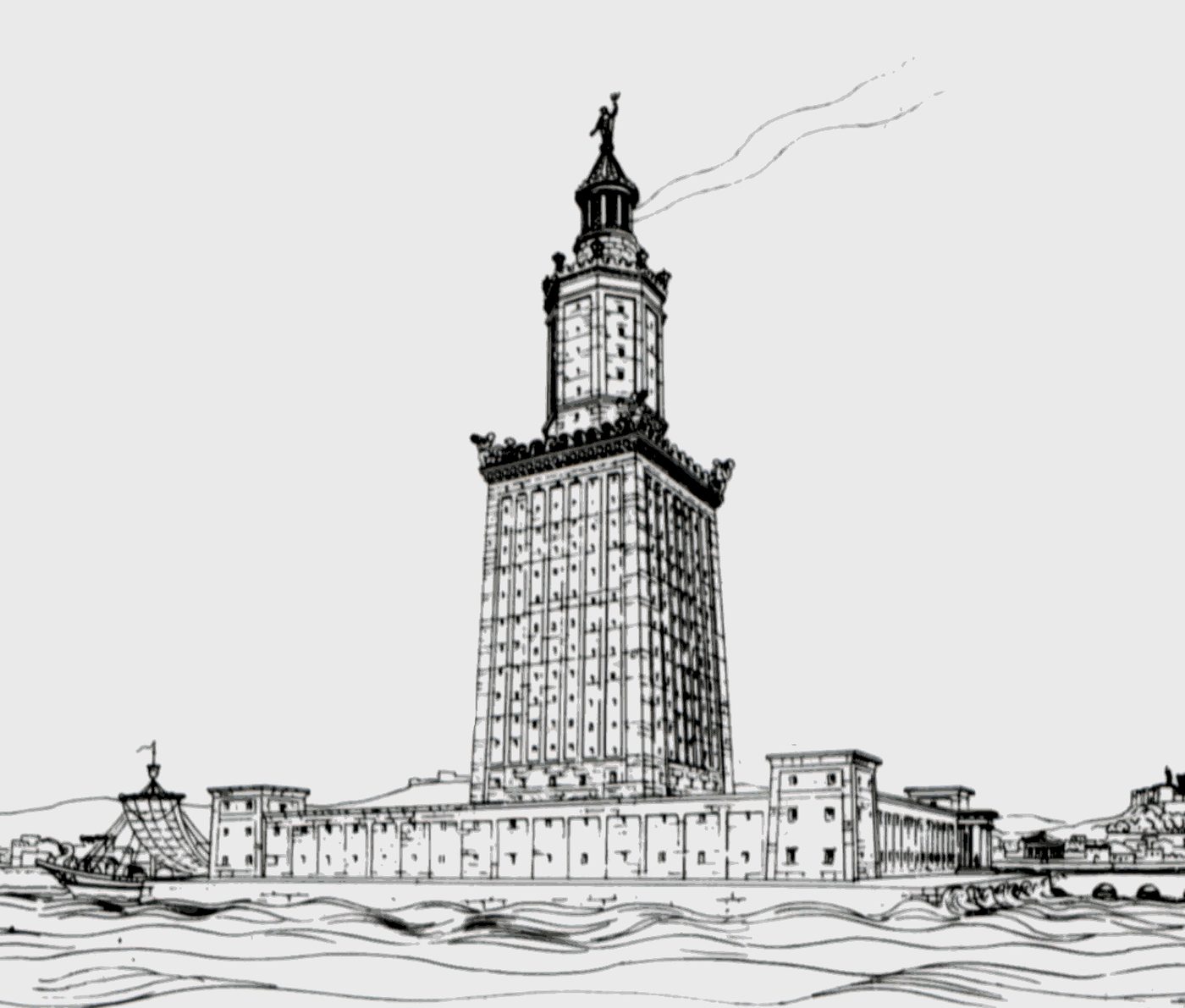
Why did it happen? Roman historians offered atrocity and madness as the explanation, as Roman historians typically did when provincials refused to stay provincial. Modern scholarship has proposed a more grounded set of causes: accumulated grievances from decades of civic violence between Jewish and Greek communities in Alexandria; the tax humiliation of the fiscus Judaicus, the special levy imposed on Jews after the destruction of Jerusalem in 70 CE; the absence of Roman military force while Trajan was east; and, underneath it all, a messianic undercurrent - the Cyrenaean leader Lukuas was reportedly hailed as "king" by his followers, a title charged with precisely the weight the Romans feared most. The revolt was not one thing. It was a generation of pressure finding a door left ajar. Whether the Jewish leadership sought to exploit a military window or were swept along by communities that had simply had enough, we do not know with confidence. What the papyri show is ordinary people - farmers, tenants, tradesmen - whose names disappear from the records and whose property passes to strangers. The community that had produced the Septuagint, that had debated Torah in the shadow of the Pharos, that had given the Hellenistic world its most ambitious Jewish philosophy, was broken as a civic force. The light did not go out gradually. It went out.
The record
Archaeological evidence for the destruction of Jewish communal life in Egypt is concentrated at Oxyrhynchus and in the Fayum region. Synagogue buildings attested in papyri before 117 CE do not appear in records afterwards; several sites show evidence of burning and abandonment in the relevant stratum. On Cyprus, the ancient sources - Dio in particular - report that the island's entire Jewish population was expelled following the revolt and that Jews were forbidden by law to set foot on Cyprus thereafter, a prohibition still reportedly in force in Dio's own day (early third century). The revolt in Mesopotamia was suppressed by Lusius Quietus, a Berber cavalry commander whose name gave the conflict its Latin designation, bellum Kitticum or the Kitos War. Quietus was rewarded with the governorship of Judaea, and his subsequent actions there - including the execution of rabbinic figures mentioned in the Seder Olam and connected traditions - placed him among the remembered enemies of the community. The revolt is discussed in detailed context in Miriam Pucci Ben Zeev's Diaspora Judaism in Turmoil, 116/117 CE (Peeters, 2005), the standard modern scholarly treatment.
The Jewish community of Alexandria never recovered its pre-revolt scale. Individuals and families filtered back over subsequent decades; a Jewish presence in Egypt continued, and would eventually flourish again - the Cairo Geniza, a thousand years later, overflows with evidence of a densely networked Egyptian Jewish world. But the specific civic community of the Delta quarter, the one that had translated the Torah into Greek and argued with Philo and built a basilica that dazzled visitors, was finished. The revolt of 115-117 CE does not fit easily into the standard Jewish historical narrative, in part because the sources are so relentlessly Roman and in part because Jewish power - the capacity to threaten Roman cities and kill Roman soldiers at scale - sits uncomfortably alongside the story of Roman persecution that follows. But the discomfort is itself instructive. The people who rose in Egypt and Cyrene were not victims waiting for rescue. They were a diaspora with numbers, grievances, organisation and, for a brief moment, an open door. They walked through it. The consequence was a migration that was not chosen - a dispersal from a dispersal - and the long work of building again, elsewhere, from the roots that survived.
The Kitos War is a reminder that the diaspora was never simply a condition of passivity. Egyptian Jewry had the largest Jewish population outside Judaea in the first century, and it produced one of the most serious armed challenges to Roman provincial order in the empire's eastern provinces. That the attempt ended in catastrophe is true. That it was made at all is also true, and matters to the telling.