Somewhere in the late Second Temple period, a family in the Judaean hills picked up their tools and started cutting. The rock they worked was the soft local limestone - the same chalk-pale stone from which they had already hewn the cisterns that held their water through the dry summers, the same stone that formed the walls of their courtyard and the benches of their reception room. But this cut was different. This was not for storing water. This was for stepping into it, under it, and coming up changed.
The mikveh - the immersion pool - is one of the most ancient and most intimate acts of Jewish domestic life. The word itself means a gathered body of water, and the biblical foundation lies in Leviticus, in the laws of purity that govern contact, flux, childbirth, and the transition between states of being. For a very long time those laws were observed in natural springs and rivers, in the Jordan or the Siloam or whatever running water the landscape offered. Then, in the late Second Temple period, Jewish families across Judaea began making their own. They cut the pools into bedrock, lined them with hydraulic plaster, built stepped descents so a person could walk in slowly, fully immersed, and walk out. They built them under houses, beside courtyards, next to the entrances to synagogues. They built them everywhere, and they built them small enough to be private and deep enough to work. Archaeology can show us this moment with unusual precision, because the mikveh - unlike a pot or a lamp - is a structure. It does not move. It stays where it was cut, and the stratigraphy around it dates it.
The record
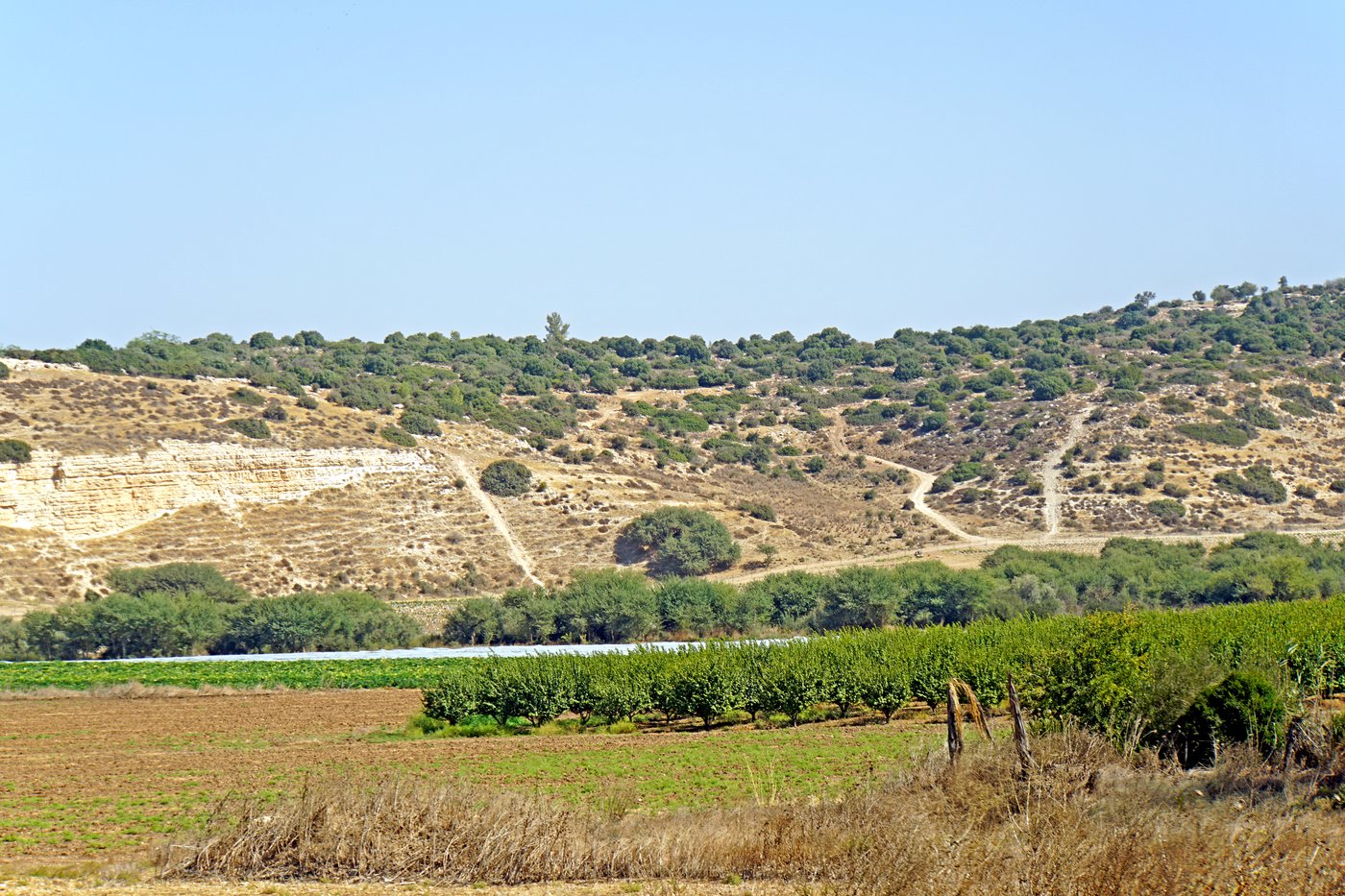
The earliest securely dated rock-cut mikva'ot (plural of mikveh) in the Land of Israel appear in the archaeological record of the Hasmonean period, from roughly the second half of the second century BCE. Ronny Reich, whose systematic study Miqwa'ot (Jewish Ritual Baths) in the Second Temple, Mishnaic and Talmudic Periods (published by the Israel Exploration Society and the Hebrew University of Jerusalem, 2013) is the definitive catalogue, documents over three hundred examples excavated across Judaea, Galilee, and the Jordan Valley. Reich's analysis establishes that the form became standardised - stepped descent, minimum volume, sealed-bottom construction - during the Hasmonean period, well before the Mishnaic tractate Miqva'ot codified the rules in writing. The pool at Khirbet Tibnah, a village site in the Judaean foothills, is one of hundreds of rural examples that demonstrate the practice was not confined to Jerusalem or to wealthy households.
What the archaeology keeps revealing is how deliberate this was. These were not improvised wash-basins. The builders understood the requirements - the gathered rainwater, the minimum volume (the Mishnah would later fix this at forty se'ah, roughly 575 litres), the sealed floor that prevented loss into the soil below - and they executed them with care. The hydraulic plaster that lines the pools is itself an act of intention: a grey-pink coat of crushed pottery mixed into lime, applied in multiple layers, waterproof and durable. You can still see it on the walls of pools cut two thousand years ago. The craftsmanship outlasted the builders by twenty centuries. What is striking is that this knowledge was transmitted not by a text that survives but by practice, from mason to mason, from mother to daughter, from community to community, across the hills of Judaea and Galilee at exactly the moment when Hasmonean political confidence was at its height. The mikveh is a domestic echo of a public assertion: we govern ourselves, we build our own institutions, we practise our own life in our own land.
The record
Excavations at the Jewish Quarter of Jerusalem by Nahman Avigad between 1969 and 1982 (published as Discovering Jerusalem, Shikmona Publishing, 1980, and in subsequent Israel Exploration Journal reports) uncovered more than fifty mikva'ot in the residential quarter that stood on the Western Hill during the late Second Temple period. These pools were found within private mansions and modest courtyard houses alike, frequently in pairs - a phenomenon that later Mishnaic law (tractate Miqva'ot, chapters 6-7) explains as an "otzar" arrangement, where a storage cistern of rainwater connects to the immersion pool to validate its water. The paired pools of the Jerusalem Jewish Quarter are the earliest large-scale physical evidence for this technical solution, suggesting that the legal thinking we later read in the Mishnah was already being applied in stone and plaster a century before the rabbis wrote it down.
The mikveh in use is an experience of total immersion - every part of the body below the water simultaneously, nothing between skin and water, no garment, no ornament, nothing held back. The legal requirement is total contact, which is also a way of saying: this is a threshold. You go in one thing and you come up another - not different in your history or your obligations, but different in your ritual status, returned to a state from which you can participate fully in the sacred life of the household and the community. That threshold is cut into the rock. It is as permanent as the hill it was made from. Finding one of these pools beneath a house excavated two thousand years after it was last used is like finding a door still hanging in the frame of a demolished wall. The family is gone. The door remains. It still opens.
The mikveh is sometimes presented as a mark of separation - Jews from non-Jews, pure from impure, in from out. It is all of those things, but it is also a mark of continuity so stubborn that it surprises even archaeologists. The same minimum volume, the same stepped descent, the same hydraulic plaster, the same paired-pool logic appear in a rock-cut pool in a Galilean village, in a mansion in Herodian Jerusalem, in a building at Masada, in a synagogue basement in Capernaum, and in the mikveh attached to a medieval Jewish community in Cologne. A practice that began to be built in stone around 100 BCE is still built in the same essential form today. That is a kind of architecture that most civilisations do not manage. The tribe cut it into bedrock and left it there.