When the Israeli singer Ofra Haza took a song called Im Nin'alu to the top of the European charts in the late 1980s, most of the dancers had no idea they were singing the words of a seventeenth-century kabbalist who had walked into the desert in chains. The poem was written by Shalom Shabazi, the greatest poet Yemenite Jewry ever produced, in the hills near Ta'izz in the south of Yemen. Three centuries later it was a club hit. That is one of the more remarkable journeys a Jewish prayer has ever taken, and it started here.
Ta'izz sits below Jebel Sabir, a great mountain in the Yemeni highlands, on the old caravan road toward the Red Sea. Shabazi made his home in its orbit, and the region became, through him, the heartland of Yemenite Jewish song. Yemenite Jews are one of the oldest and most distinctive of all the diaspora communities, and their liturgical poetry - chanted, drummed, danced - is among the treasures they carried out with them. Shabazi is the figure at its centre.
The poet of Jebel Sabir
Shalom ben Yosef, known as Shabazi after his ancestral town of Shabaz, was born around 1619. He moved near Ta'izz and built a small house of prayer and a ritual bath beneath the slopes of Jebel Sabir, living the life of a weaver and scholar in conditions that were often poor and frequently dangerous for Jews in Yemen. Out of that narrow, hard life came an enormous body of verse. His surviving collection runs to roughly 550 poems, written in a dazzling mixture of Hebrew, Aramaic and Judeo-Arabic, often within a single composition.
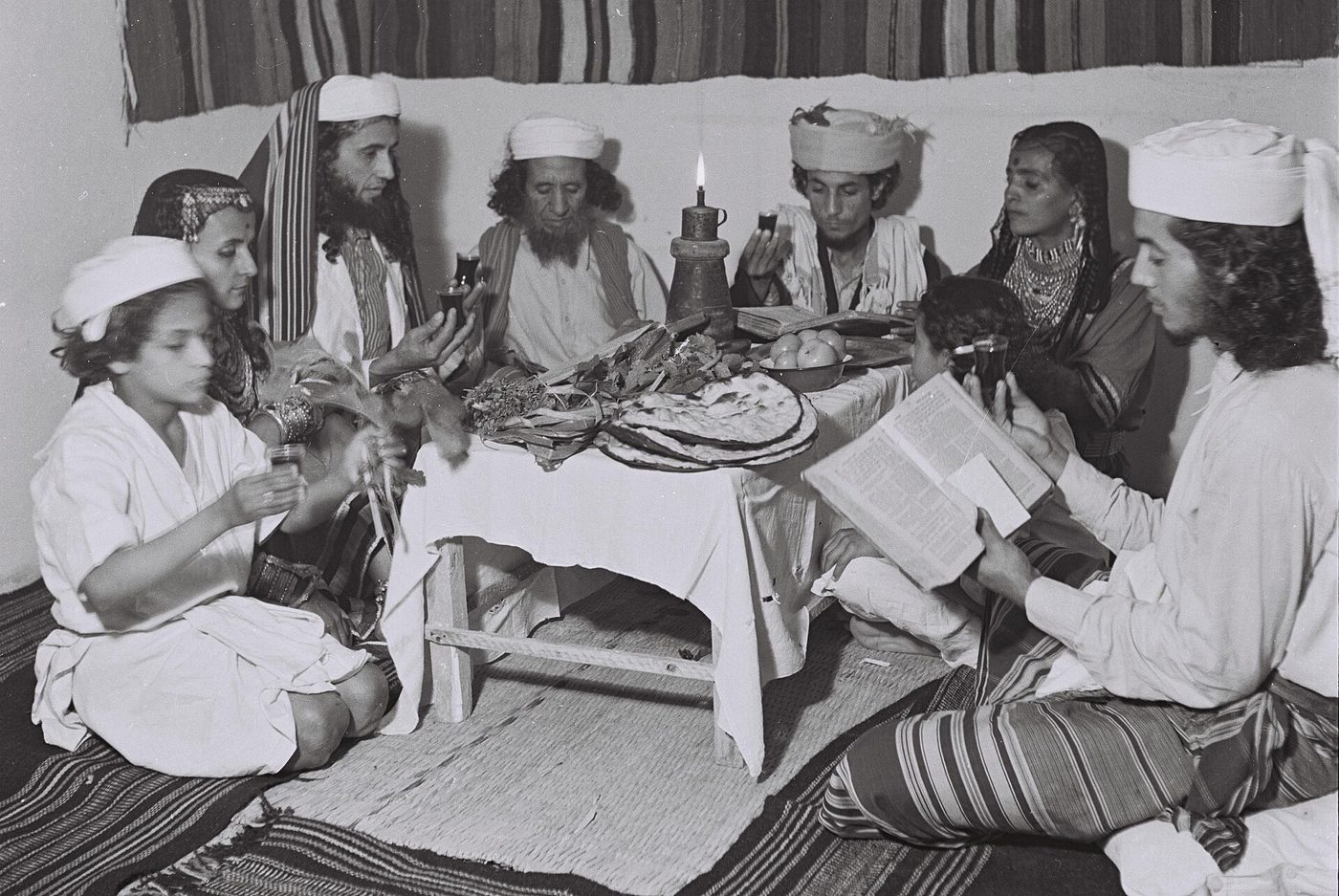
What made him the national poet of Yemenite Jewry was not only quantity but reach. He wrote in the high register of kabbalah and the intimate register of longing; he wrote wedding songs and laments, mystical hymns and verses of exile. The Jews of Yemen learned his poems by heart, sang them in their circles, and carried them in memory when they had little else to carry. When the community was airlifted to Israel in 1949 and 1950, Shabazi came with them - in the singing, before any book.
Shalom Shabazi of Ta'izz
Shalom Shabazi (Shalom ben Yosef) lived near Ta'izz, beneath Jebel Sabir, and became the foremost poet of Yemenite Jewry. His surviving diwan of about 550 poems, in Hebrew, Aramaic and Judeo-Arabic, was first published in full by the Ben-Zvi Institute in Jerusalem in 1977. His hymn Im Nin'alu entered global popular music through Ofra Haza.
Ben-Zvi Institute · JerusalemThe exile he wrote down
In 1679 the ruling imam ordered the expulsion of the Jews of Yemen to Mawza, a hot, malarial lowland near the Red Sea coast. It is remembered as one of the great catastrophes of the community: villages emptied, synagogues seized, and a large share of the exiles - by tradition around a fifth - dead before the survivors were permitted to return. Shabazi lived through it, and he did what poets of his tribe have always done with disaster. He turned it into liturgy. He composed a lament for the Mawza exile to be recited on the Ninth of Av, folding a specifically Yemenite grief into the calendar of national mourning.
That is the deeper reason a town near Ta'izz earns a place on the Jewish map. It is not only that a great poet lived there. It is that he showed, in real time, how the tribe metabolises suffering: not by forgetting it and not by drowning in it, but by setting it to music and singing it on the appointed day, year after year, until the wound becomes an inheritance instead of a complaint.
A weaver beneath a Yemeni mountain turned an exile into a song. Three centuries later the world was dancing to it.
The Exile of Mawza
In 1679 the Zaydi imam expelled the Jews of Yemen to Mawza, a lowland region near the coast. A large proportion died of heat and disease before the survivors were allowed back. The episode is recorded in Yemenite Jewish memory partly through Shabazi's own lament, written for the Ninth of Av.
Mawza Exile · Yemenite Jewish historyWhat travelled
Yemen has almost no Jews left today; the last of an ancient community has largely gone to Israel, and Ta'izz has been scarred by modern war. But Shabazi's verses are sung every week in Yemenite congregations from Rosh HaAyin to Brooklyn, and one of them, improbably, became a pop standard. The house of prayer beneath Jebel Sabir is long abandoned. The songs composed in its shadow are still in people's mouths. For a poet, that is the only kind of permanence that was ever really on offer, and he got it.
Further reading