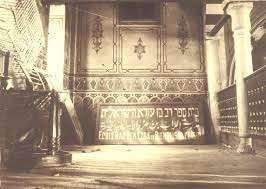
A geniza is a hiding place for worn-out words. Jewish law forbids throwing away anything that might carry the divine name, so for centuries the community in Old Cairo did the obvious thing: it stuffed its spent paper into a sealed chamber in the wall of the Ben Ezra synagogue and let it accumulate. Letters, contracts, prayer books, shopping lists, a child's alphabet practice, the draft of a poem, a merchant's bad news from the coast. Roughly a thousand years of it, undisturbed, in the dry air of Egypt. Then a Cambridge scholar with a sharp eye and sharper elbows walked in.
The Cairo Geniza is usually told as a story of discovery. The more interesting story is what happened next. Solomon Schechter did not just find the papers. He understood what they were for, hauled them home, and then spent the rest of his life, and recruited the rest of the field, into the slow work of reading them. The find was a moment. The afterlife is a century and counting.
And the afterlife is the gift. Most of medieval history reaches us through the people who could afford to be remembered: kings, councils, the famous dead. The Geniza is the opposite. It is the archive of ordinary people who never expected to be read, which is precisely why it tells the truth.

How the papers came to Cambridge
Schechter, then Reader in Rabbinics at Cambridge, was put onto the trail in 1896 by two Scottish sisters and biblical scholars, Agnes Lewis and Margaret Gibson, who had brought back fragments from Egypt. One of them, Schechter recognised, was a piece of the original Hebrew of the Book of Ben Sira, a work known for centuries only in Greek translation. That single identification told him what kind of chamber these scraps had come from. He went to Cairo at the end of 1896.
What he did there was less than tidy and entirely decisive. With the agreement of the synagogue and community authorities, he gathered an enormous quantity of the Geniza's contents, packed it into crates, and shipped it to Cambridge University Library. The bulk of what is now the Taylor-Schechter collection arrived in 1897. It runs to roughly 190,000 fragments. Charles Taylor, Master of St John's College, helped fund the work, which is why his name sits beside Schechter's on the collection to this day.
The removal was of its time, and modern readers may wince at a European scholar carrying off a community's papers by the crate. It deserves to be said plainly that the community consented and that the material has been conserved, catalogued and made freely available to the world, including in digital form. What it does not deserve is to be flattened into a morality tale. The papers were headed, by the logic of the geniza, for eventual burial. Instead they were read.
The Ben Sira clue and the crates
In 1896 Solomon Schechter identified a fragment brought from Egypt as part of the lost Hebrew original of Ben Sira (Ecclesiasticus), a text previously known mainly through Greek. Recognising the chamber it had come from, he travelled to Cairo late that year and arranged to bring the bulk of the Ben Ezra synagogue's geniza to Cambridge, where the material arrived in 1897. The recovery of Hebrew Ben Sira was, on its own, a landmark of biblical scholarship.
Cambridge University Library, Taylor-Schechter collectionA civilisation with its pockets turned out
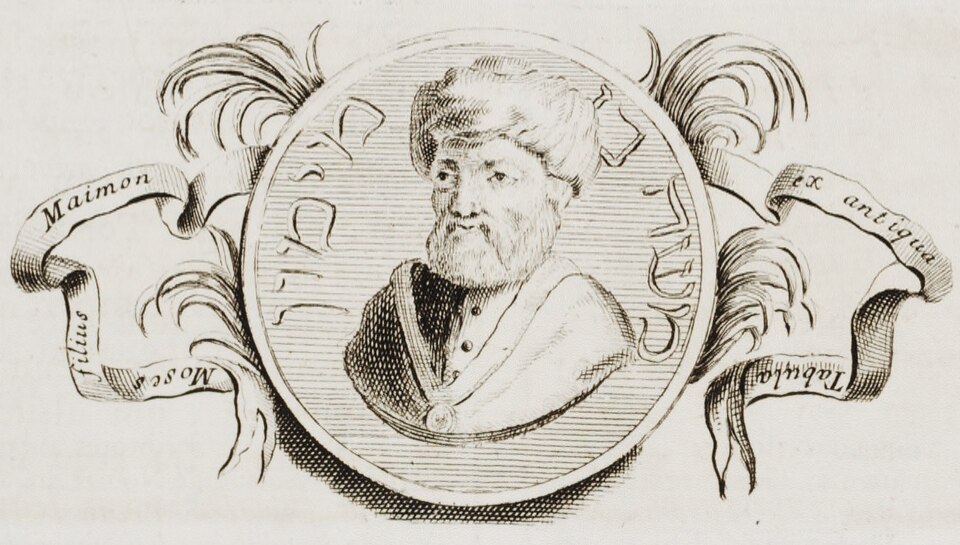
The literary finds alone would have made the Geniza famous: lost rabbinic texts, early piyyut, drafts in the hands of major authors, including documents connected to Moses Maimonides and his circle. But the deeper revolution was social. The Geniza preserved the documentary debris of everyday life among the Jews of the medieval Mediterranean: marriage contracts and divorce deeds, business partnerships, court records, communal accounts, begging letters and love letters, the receipts and quarrels of people who left no other trace.
The historian Shelomo Dov Goitein spent decades reading that documentary layer and turned it into a portrait of an entire society, published across the volumes of A Mediterranean Society. From the scraps emerged a connected world of Jewish traders running goods between Egypt, North Africa, Sicily and India; of women conducting business and going to court; of households worrying about dowries, schooling and the price of flax. It is the most intimate access we have to ordinary medieval life of any community, anywhere. That it happens to be Jewish ordinary life is a quiet kind of luck for the tribe, and an enormous one for everyone who studies the period.
Goitein reads the documents
S. D. Goitein's A Mediterranean Society, drawn principally from the documentary fragments of the Cairo Geniza, was published in five volumes by the University of California Press between 1967 and 1993, with a sixth index volume following. It reconstructed the economic, social, family and religious life of the Jewish communities of the medieval Arab Mediterranean from their own everyday papers. It remains the foundational work of Geniza social history.
S. D. Goitein, A Mediterranean SocietyMost of the medieval past survives because somebody important wanted to be remembered. The Geniza survives because nobody thought it mattered.
Further reading