Sanz is a name that outgrew its town. To the maps it is Nowy Sącz, a market town in the Galician foothills of southern Poland, no larger than dozens of others. To the Hasidic world it is the seat of one of the great rabbinic houses, the home of the Divrei Chaim, and a word still worn proudly by living dynasties in Jerusalem, Netanya, Antwerp and New York. The town gave the house its name. The house gave the town an afterlife.
What set Sanz apart from the princely courts to its east was its register. Where Ruzhin and its offshoots ruled by splendour, Sanz ruled by Torah. Its founder was a formidable scholar and a famously generous, famously combative man, and the court he built prized rigorous learning and open-handed charity over carriages and silver. That contrast was not incidental. It became, in the founder's own lifetime, one of the loudest arguments in Hasidism.
The Divrei Chaim
Chaim Halberstam was a rarity: a first-rank halachic authority who was also a Hasidic rebbe, respected even by the non-Hasidic scholars who distrusted the movement. He gave away so much in charity that his own household was often poor, a detail his Hasidim treasured and his biographers confirm. He was also fierce. In the 1860s he led a public, militant campaign against the Sadigura branch of the Ruzhin dynasty, denouncing its lavish court style as a corruption of true Hasidism. The Sanz-Sadigura controversy split communities across Galicia and beyond, and it was, at bottom, an argument about what a holy man should look like: a scholar in a poor coat, or a prince in a palace.
Halberstam died in 1876, and the dynasty multiplied rather than narrowed. His sons and sons-in-law founded a constellation of related courts, including Shinova (Sieniawa) through his eldest son Yechezkel Shraga, and through later descendants the great house of Bobov. Sanz did not stay one court. It became a family of them, all tracing back to the poor, learned, combative rebbe of one Galician town.
The founder of Sanz
Chaim Halberstam (1793-1876), the Divrei Chaim, was appointed rabbi of Sanz (Nowy Sącz) in 1830 and founded the Sanz Hasidic dynasty there. A leading halachic authority as well as a rebbe, he led the rabbinic opposition to Sadigura in the Sanz-Sadigura controversy of the 1860s. After his death his descendants founded numerous related courts, among them Shinova and, later, Bobov.
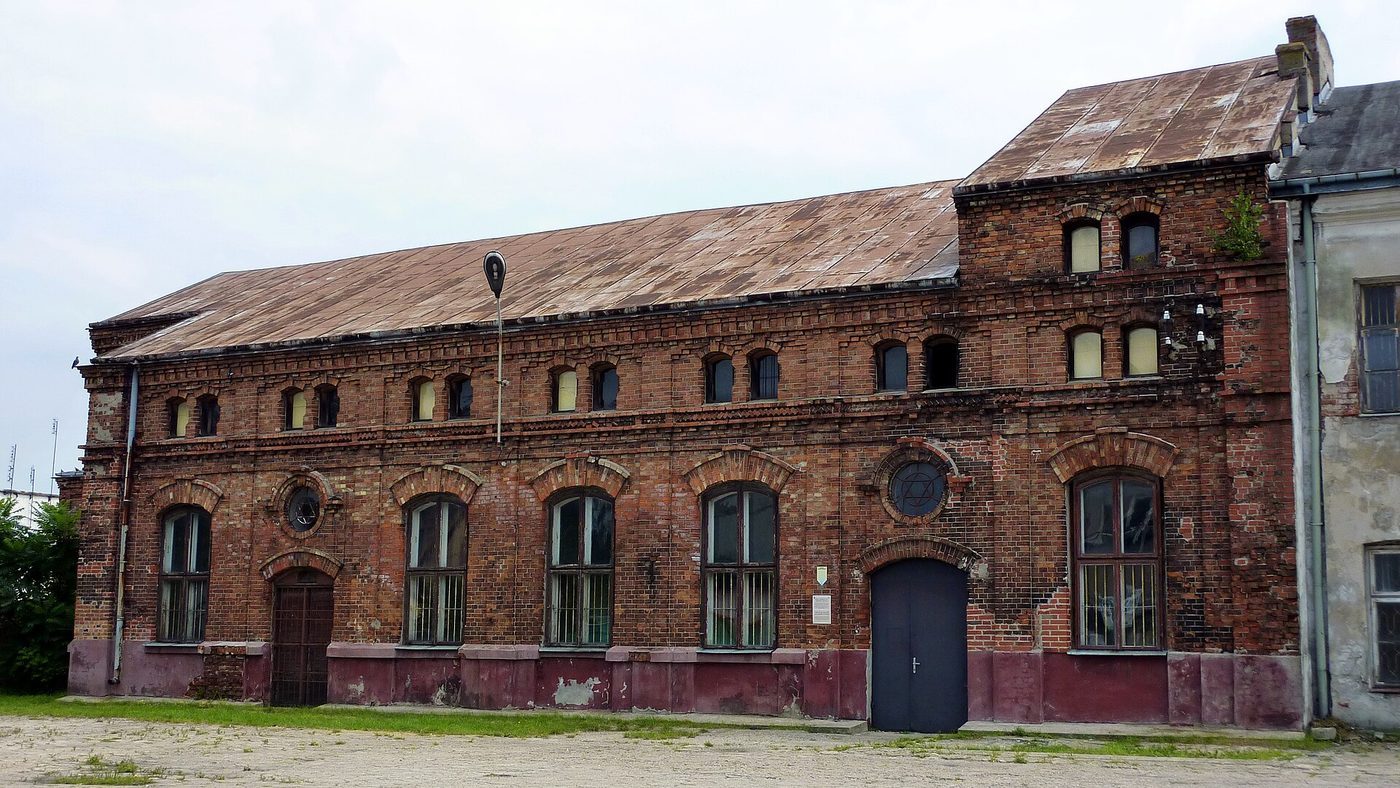
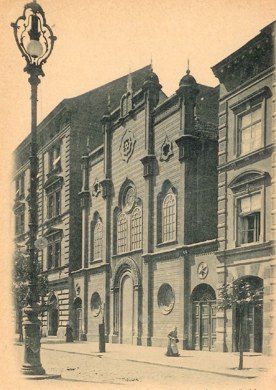
Chaim Halberstam · YIVO EncyclopediaThe modern chapter is darker and shorter. In August 1942 the Jews of Nowy Sącz, some twenty thousand people, were rounded up and deported, most of them murdered at the Belzec death camp. The old Jewish town, with its study houses and its memory of the Divrei Chaim, was annihilated. What had taken a century to build was destroyed in days.
A poor, learned rebbe in a Galician town founded a house that splendour could not match and murder could not finish. The street was destroyed. The name kept walking.
The town falls, the house rebuilds
The Jewish community of Nowy Sącz was destroyed in 1942, when its roughly twenty thousand Jews were deported, the great majority to Belzec. The Sanz line survived in its branches. In 1956 the Sanz-Klausenburg rebbe Yekutiel Yehuda Halberstam founded the Kiryat Sanz neighbourhood in Netanya, later home to the Laniado Hospital, re-establishing a public Sanzer centre in Israel.
Kiryat Sanz, Netanya · Yekutiel Yehuda HalberstamThe house outlives the street
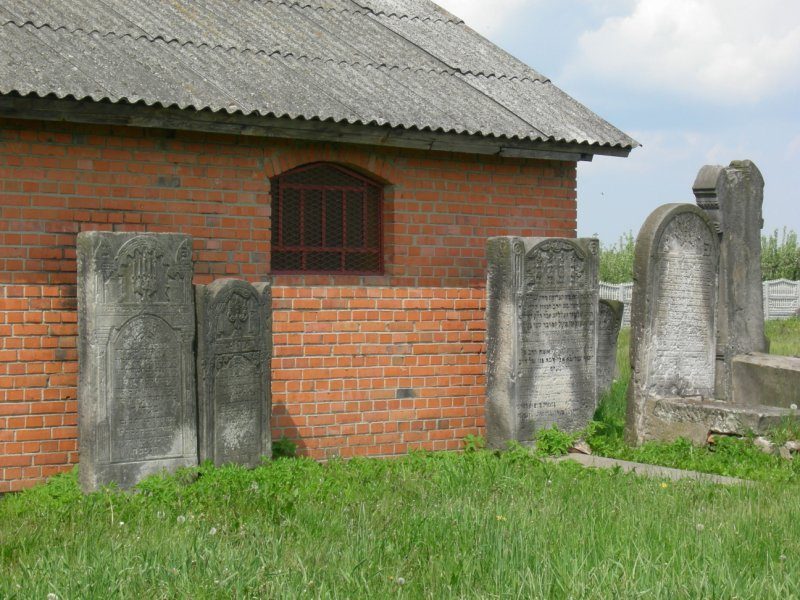
That is the shape worth holding onto. The town of Nowy Sącz still exists, and remembers; a restored cemetery and a handful of markers stand where a whole Jewish world once did. But the living continuation of Sanz is elsewhere. Kiryat Sanz in Netanya, built from 1956, grew into a neighbourhood with its own institutions and, eventually, a major hospital open to all comers, an unmistakably Sanzer expression of the founder's charity. Related courts carry the name in Jerusalem, in Antwerp, in Brooklyn.
So Sanz is not, in the end, a story of a lost town, though a town was lost and the loss is real. It is the story of a name that a great scholar gave to a small place, which then proved sturdy enough to survive the destruction of the place itself, and to keep its particular argument alive: that the deepest dignity is the one you carry in your learning and your giving, and that such dignity travels light.
Further reading
Story & Stone · Atlas Places Nº 1
Next on the shelf: Stamford Hill: The Orthodox District →