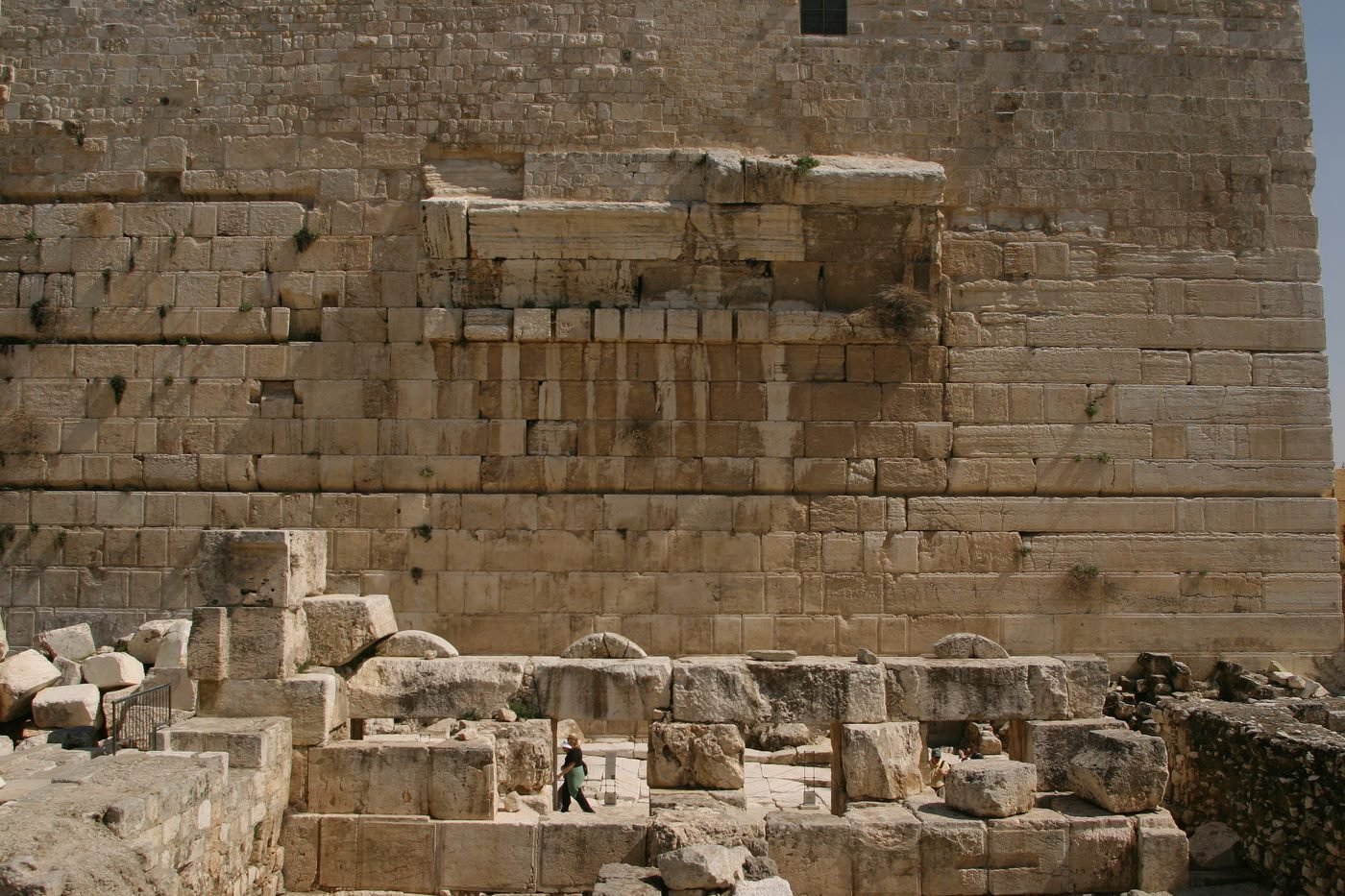
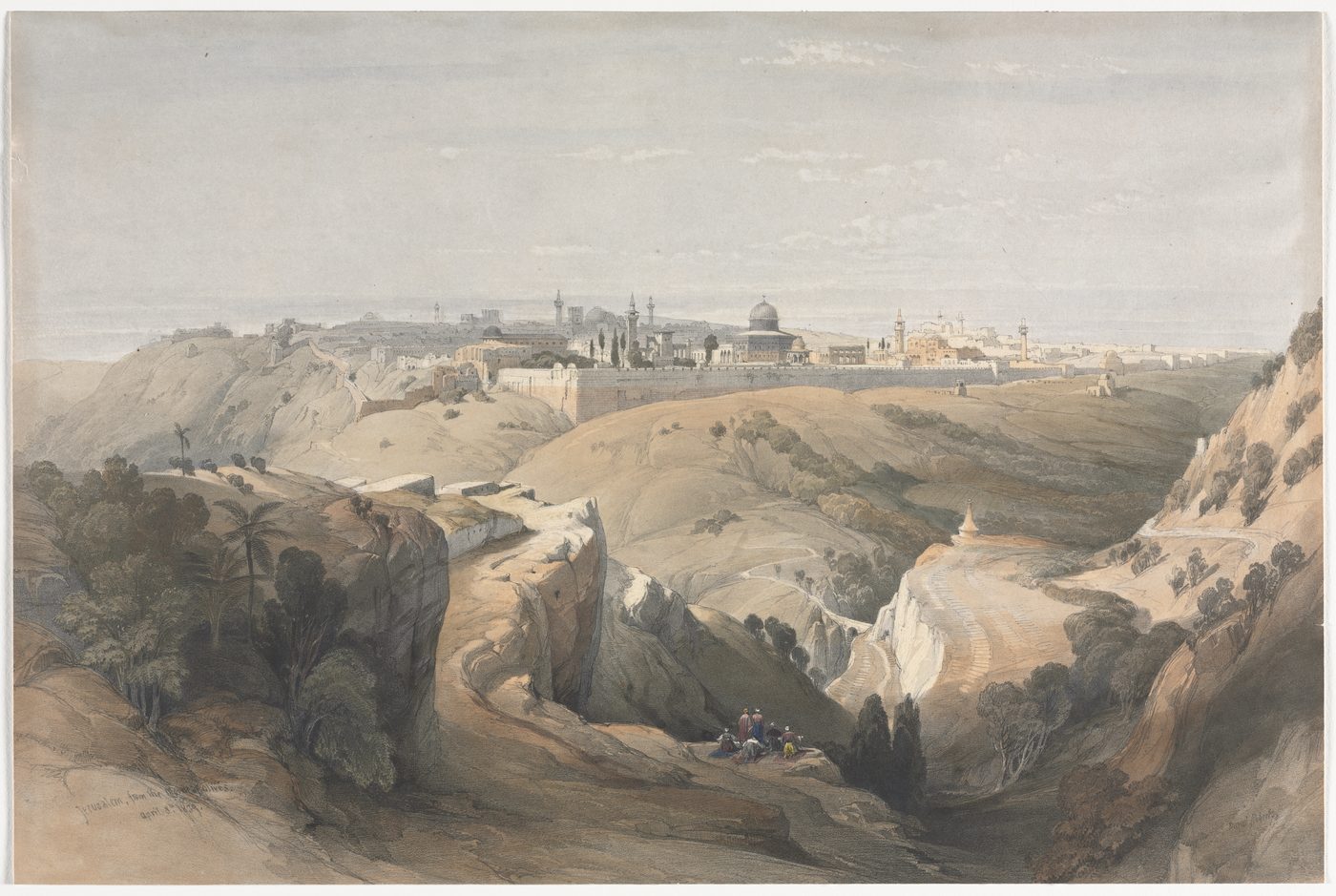
The Holy of Holies was empty, and it was meant to be. No image, no statue, no golden representation of the divine - only the ark's resting place, a cube of darkness behind a great curtain, entered once a year by one man, the High Priest, on Yom Kippur. That emptiness was the point. It said something about the nature of the God who dwelt there that no other ancient temple in the Mediterranean world was saying. Rome had its Jupiter enthroned in marble. Egypt had its animal-headed gods carved in granite. Jerusalem had nothing you could see, and called that nothing holiness.
Gnaeus Pompeius Magnus - Pompey the Great, conqueror of the East - had arrived in Judea not as an invader seeking conquest but as an arbitrator. Two brothers, Hyrcanus II and Aristobulus II, both claiming the Hasmonean throne, had done what the Hasmoneans did in their final decades: they had called in a Roman to settle what they could not settle themselves. Pompey chose Hyrcanus. Aristobulus refused to accept the verdict. The siege of Jerusalem followed, not as conquest but as the consequence of a family argument that had run out of family to contain it. When the walls fell, in the autumn of 63 BCE, Pompey walked up to the Temple Mount. And then he walked further.
The record
Josephus records Pompey's entry into the Holy of Holies in detail in both Antiquities of the Jews (XIV.4.4) and Jewish War (I.7.6), written in the first century CE. Josephus notes that Pompey's troops killed twelve thousand Jews in the taking of the city - priests among them, slaughtered at the altar while they continued the sacrificial service - and that Pompey then entered the inner sanctuary himself. He inspected the golden table, the lampstand, the spice vessels, the store of sacred money. He took none of it. The following day he ordered the Temple cleansed and the sacrifices resumed. Tacitus (Histories V.9) independently confirms the conquest and notes Roman surprise at finding the inner sanctuary empty of any divine image.
That restraint - the not-taking - was recorded by Jewish writers with a complex mixture of outrage and reluctant acknowledgement. Josephus notes it almost with surprise: the man was capable of not looting. The gold was there. The sacred vessels were there. He left them. What he did take was something harder to name. He entered a space where only one person was permitted, one day a year, and he did it because nobody could stop him. The curtain was not torn. The sacred objects were untouched. And yet something had been violated that could not be unfiled. The uncrossable had been crossed, not in fury or impiety, but in the calm confidence of a man who simply did not share the premise on which the boundary rested. The most unsettling profanation is the one performed without malice.
The record
The Psalms of Solomon - a collection of eighteen psalms composed in Hebrew or Aramaic in Jerusalem within a generation of Pompey's conquest, preserved in Greek translation, and now dated by scholars including Robert Wright (in The Psalms of Solomon, 2007, Mohr Siebeck) to c. 63-30 BCE - respond directly to the event. Psalm 2 describes a foreign leader who "set up a battering ram against our walls" and "the sons of Jerusalem defiled the sanctuary of the Lord, they profaned the gifts of God." The text reflects a community processing a trauma for which no adequate category existed: their holiest space had been entered, and the world had continued anyway. The psalms are not in the Hebrew Bible; they are in the memory of a people reckoning with what unconditional sacred space means when the condition turns out to be conditional after all.
Pompey left Jerusalem and went on to his triumph in Rome, where he displayed the Hasmonean prince Aristobulus and his children in chains. Judea became a Roman protectorate. The Temple continued - sacrifices, festivals, pilgrimage, the annual breath held on Yom Kippur - for another 126 years. But something had shifted that could not shift back. The Holy of Holies was no longer inviolable. It was merely unlooted. There is a difference, and the tradition felt it. When Crassus came in 54 BCE he did take the treasury. When Titus came in 70 CE he burned the building. Pompey's entry in 63 BCE was the first lesson in a sequence: that the protection of the sacred space depended, in the end, not on its sanctity but on the mood of whoever held the sword. The tradition that survived 70 CE drew the lesson. It stopped placing its bets on buildings.
The empty room at the centre of the Temple was always the strangest and most radical thing about it. That emptiness said: the divine cannot be contained, depicted, or bargained with through images. When Pompey walked in and found nothing, he reportedly told his companions as much - Josephus implies it; Tacitus states it. They expected a god. They found a room. The tradition would have said: exactly. You looked, and you did not see. That is not nothing. That is the whole point.