Nehemiah was a man who had done well. Cupbearer to Artaxerxes I of Persia - a role that combined taster, confidant, and something like a personal secretary to the most powerful king on earth - he had a position at court that most men in the ancient world would have considered the ceiling of ambition. Then a delegation arrived from Judah with news about Jerusalem: its walls were broken, its gates burned, and the people who had returned from exile were living there in disgrace. Nehemiah wept, fasted, and prayed. Then he asked the king for leave to go and rebuild it.
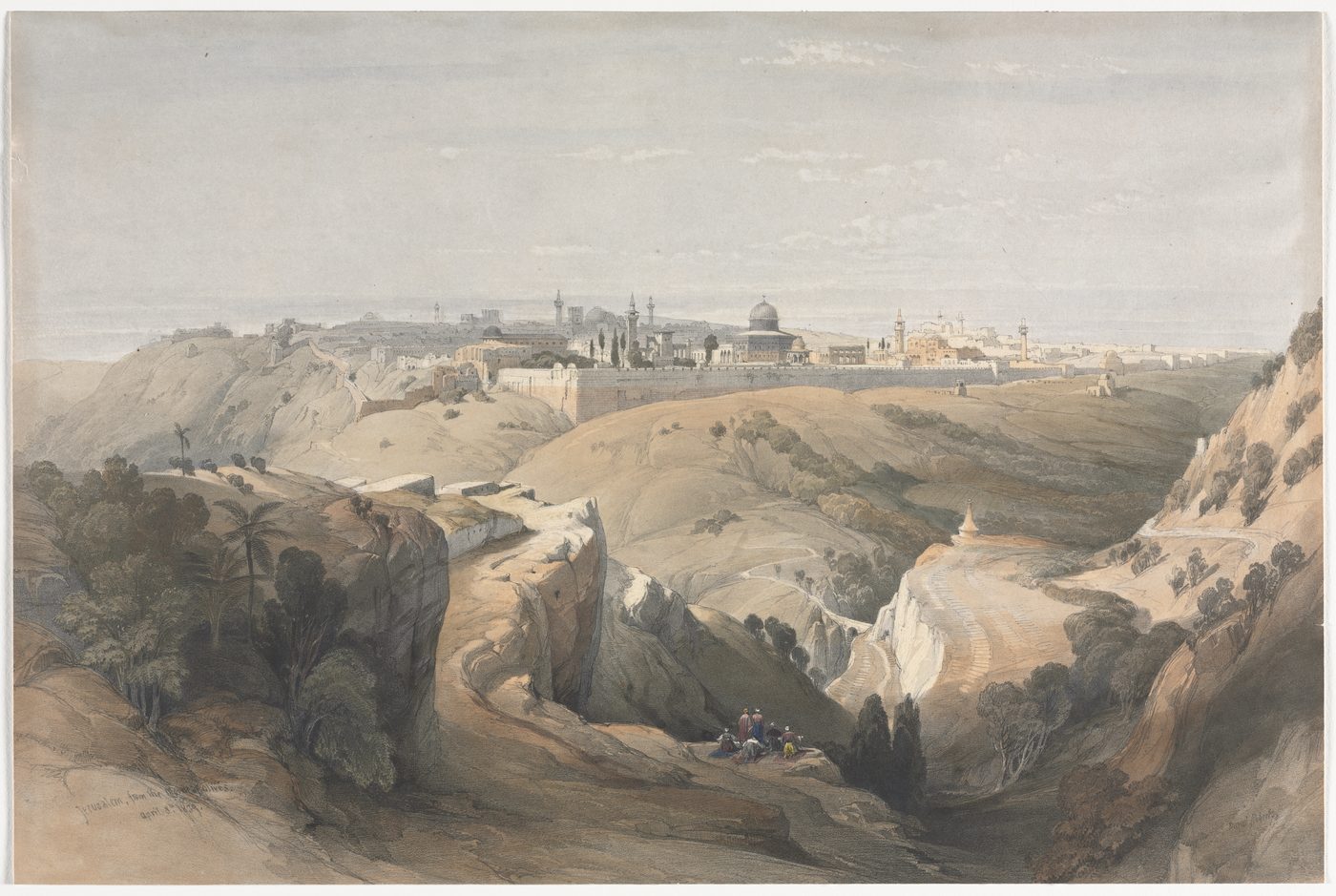
What followed was not a religious gesture. It was a construction project, a political manoeuvre, and a security operation running simultaneously. Nehemiah arrived in Jerusalem with royal letters authorising safe passage and timber requisitions from the king's forest. He made no announcement. On his third night in the city he rode out alone - or almost alone - to inspect the walls by moonlight, picking through rubble so thick his animal could not find a path at some points. He saw what needed doing. Then he gathered the city's leadership and told them: come, let us build.
The record
The Book of Nehemiah (chapters 2-6) preserves what scholars recognise as a first-person memoir, one of the oldest autobiographical documents in the Hebrew Bible. The text names Nehemiah's opponents - Sanballat the Horonite, Tobiah the Ammonite official, and Geshem the Arab - and records their attempts to halt the work: mockery, then a threatened military attack, then an invitation to parley that Nehemiah declined four times. The memoir's detailed register of building assignments in Nehemiah chapter 3, listing each family's section of wall by gate name, is consistent with Persian-period administrative practice. The Elephantine Papyri (a collection of Aramaic documents from a Jewish military colony in Egypt, fifth century BCE, now distributed among several collections including the Brooklyn Museum and the Staatliche Museen zu Berlin) independently attest to Sanballat as governor of Samaria and to his sons Delaiah and Shelemiah, corroborating the political landscape the Nehemiah memoir describes.
The opposition was real and the threat specific. Sanballat and his allies spread word that the Jews were fortifying Jerusalem against Persia - a charge that, if it reached Artaxerxes's ear in the wrong form, could have ended the project and Nehemiah's career together. Nehemiah's response was methodical: he split the workforce so that half stood guard while the other half built, assigned each family to the stretch of wall nearest their own house so the stakes were personal, and armed the builders so that men carrying loads did the work with one hand and held a weapon in the other. Trumpeters were stationed along the wall to sound a rally if any section came under attack. The work continued. The wall rose. It took fifty-two days.
The record
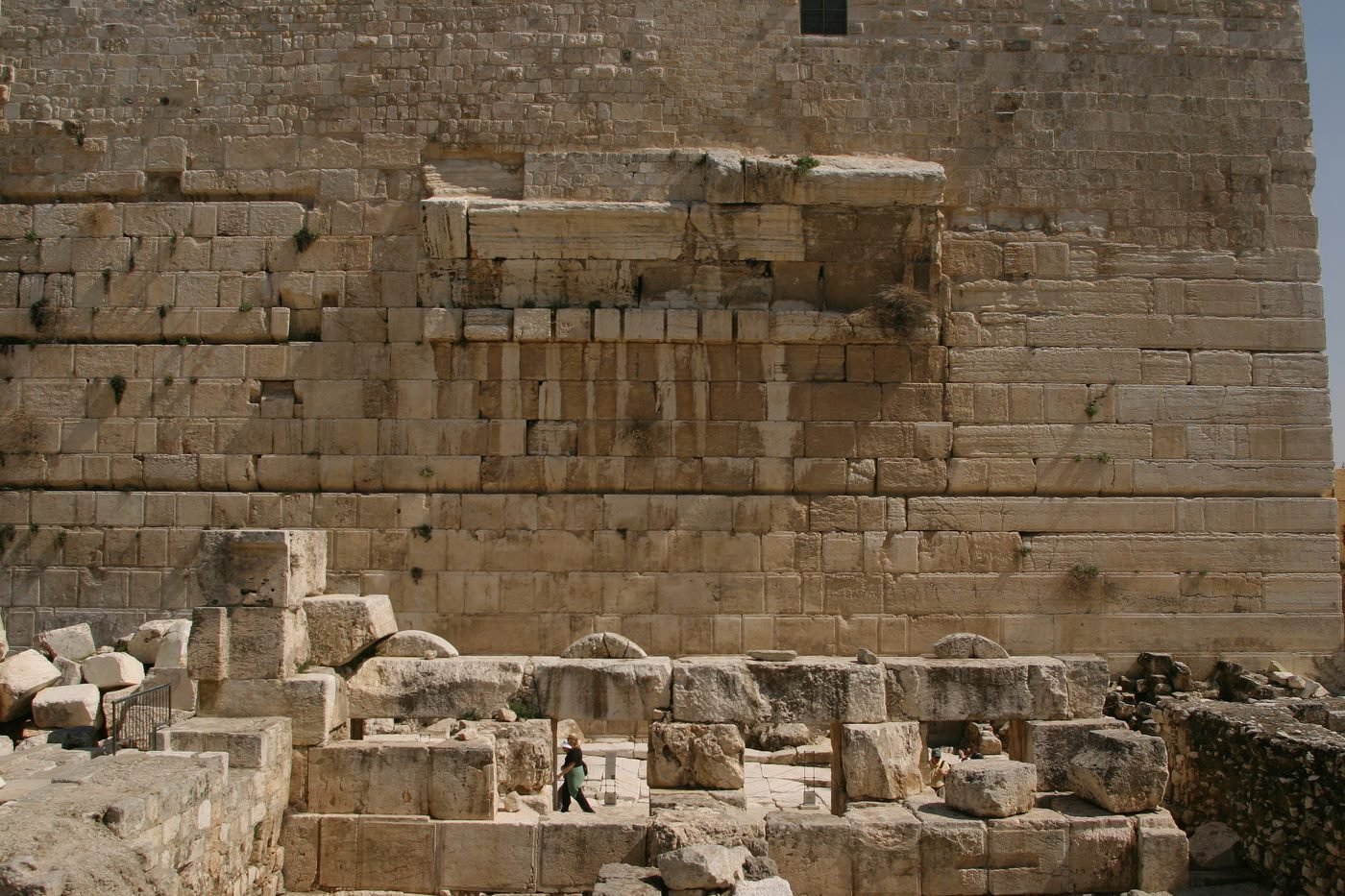
The fifty-two-day completion figure (Nehemiah 6:15) has attracted scholarly debate, but the timeline is not implausible for repair work rather than original construction: the Persian-period walls followed existing foundations, and the mobilisation of the entire resident population - Nehemiah 3 lists priests, merchants, goldsmiths, perfumers, district governors, and their daughters alongside professional builders - compressed a task that would otherwise have taken years. Archaeological excavations on the eastern ridge of Jerusalem by Kathleen Kenyon (1961-67) and subsequently by Nahman Avigad in the Jewish Quarter (1969-82) identified stretches of Iron Age and post-exilic construction consistent with the Nehemiah-period city. Avigad's excavations uncovered a section known as the "Broad Wall" (Nehemiah 3:8 mentions the Broad Wall, where the goldsmiths worked), now displayed in situ in the Jewish Quarter of Jerusalem's Old City. (Israel Antiquities Authority; see Nahman Avigad, Discovering Jerusalem, 1980.)
The wall was not the only thing Nehemiah rebuilt. The memoir that bears his name records a community that had fractured under the weight of debt and hunger: poorer families had been forced to mortgage their fields and sell their children into indentured labour to survive. Nehemiah called a public assembly, rebuked the creditors - including some of his own colleagues - and secured the cancellation of the debts and the return of the pledged property. It is a remarkable scene: a Persian-appointed governor using his authority not to extract taxes but to redistribute what had been taken. The wall gave Jerusalem a perimeter. The debt cancellation gave it something to defend.
The record
Nehemiah served as governor of Judah for twelve years under Artaxerxes I (c. 445-433 BCE), returned to Persia, and then came back for a second term. The account of his second term (Nehemiah 13) records a set of reforms - enforcing Sabbath closure of Jerusalem's markets, expelling traders who camped outside the walls to transact business on the holy day, and addressing intermarriage with neighbouring peoples - that show a governor still operating within the Persian administrative framework while pressing a distinctly Judahite social programme. The Persian Achaemenid Empire's policy of supporting local religious and cultural institutions in its provinces, well attested in Cyrus's cylinder inscription (British Museum, BM 90920) and in the Ezra narrative, gave Nehemiah the political cover to do what he did. He used it.
Nehemiah did not rebuild Jerusalem out of nostalgia. He rebuilt it because a people without a defended city is a people that can be dismissed, and he knew it. The night ride through the rubble, the split shifts with weapons in hand, the four refusals to parley - these are the moves of someone who understood that presence requires maintenance, that a city does not stay a city on its own. The walls he raised have been raised and destroyed and raised again many times since. The impulse that drove them up in fifty-two days has lasted rather longer.