Somebody, somewhere, is on the same page as you right now. Not metaphorically. Literally. A man on a train into Tel Aviv, a woman at a kitchen table in Antwerp, a student in Lakewood, a grandfather in Melbourne who has done this every day for forty years - all of them are turning the same folio of the Babylonian Talmud today, the way they turned the one before it yesterday and will turn the next one tomorrow. The idea is so simple it sounds like nothing. One page a day. The whole Talmud, in order, by everyone, together. It is one of the largest study programmes in human history, and it runs without a head office.
The genius of it is the synchronisation. There have always been Jews studying Talmud; there is nothing new about a page. What was new, in 1923, was the decision that the entire dispersed people should study the same page on the same day, so that a traveller could walk into a study hall anywhere on earth and join the lesson already in progress. It made the diaspora into a single classroom. The folio became a meeting point that needs no building, no border crossing and no permission - just a book everyone already owns and a willingness to keep pace.
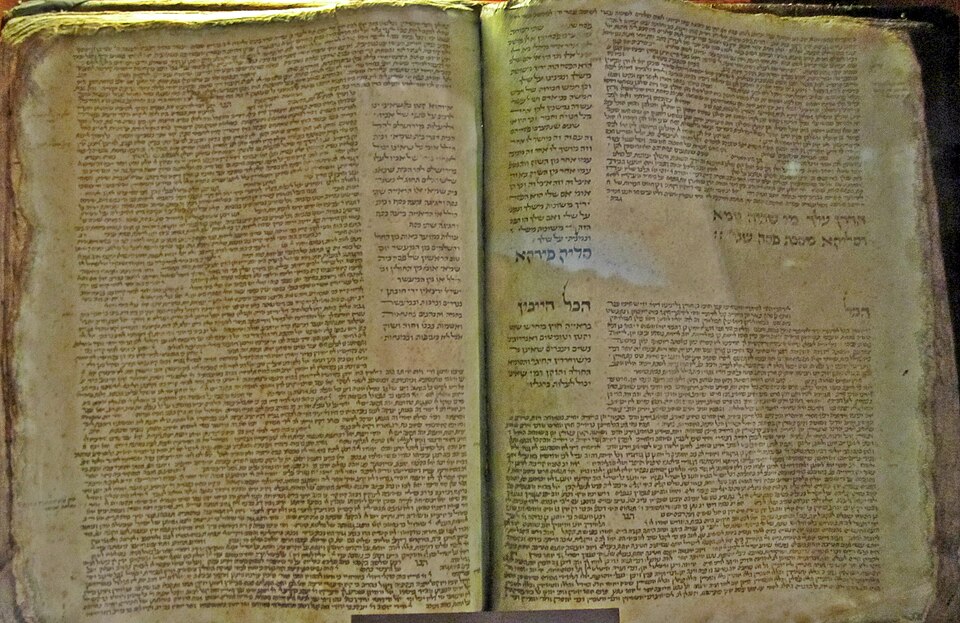
That is a particular kind of ambition. It does not try to make the Talmud shorter or easier. The Talmud stays exactly as long and as hard as it has always been, a sea of Aramaic argument with no shoreline in sight. What changes is the calendar. A page a day is a current laid across the sea, and the cycle is the route. You are not asked to swim the whole thing at once. You are asked to show up today.

The man with the idea
The plan had an author and a date. At the First World Congress of the Agudath Israel movement, held in Vienna in 1923, a young Polish rabbi named Meir Shapiro stood up and proposed that Jews everywhere study one page of the Talmud each day, in a fixed order, beginning together. Shapiro was already building the great yeshiva of Lublin; he was a man who liked large, buildable ideas. The Daf Yomi was the largest and the most buildable of them. It cost nothing, required no institution, and could not be confiscated. You needed a Talmud and a tomorrow.
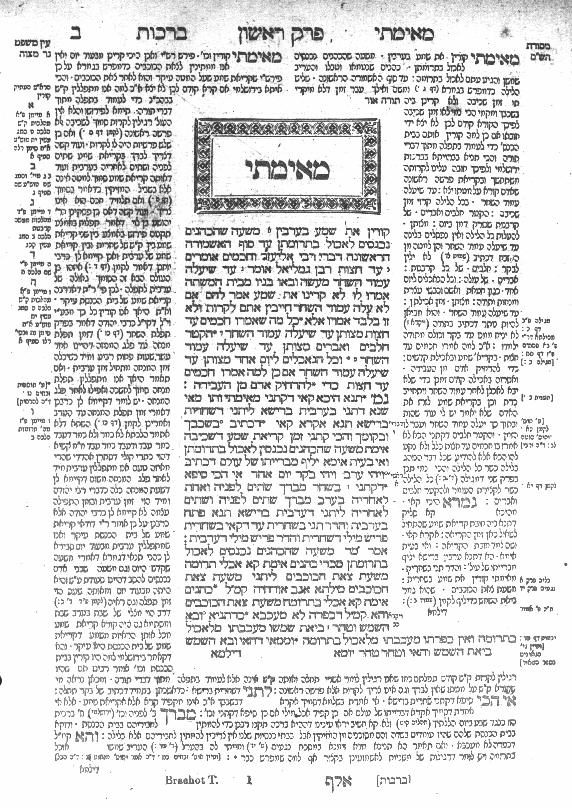
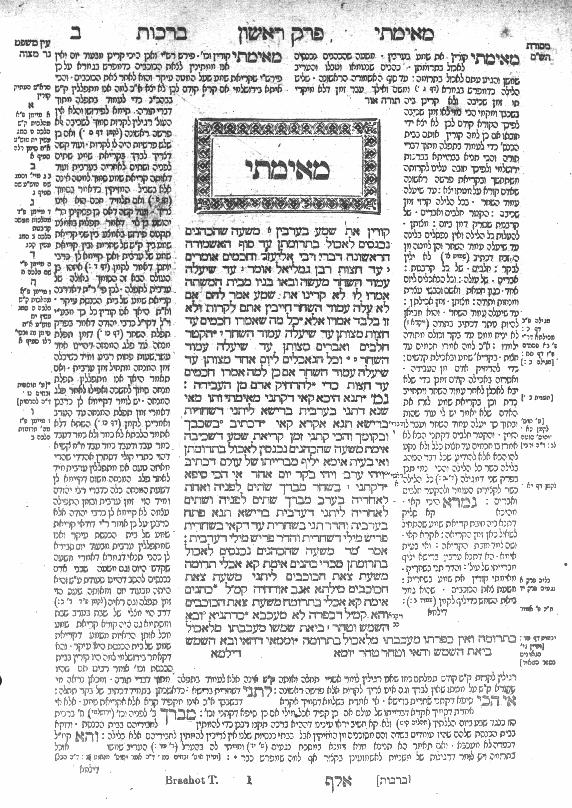
The first cycle began that year, on the first day of the Hebrew month after the congress, with the opening folio of tractate Berakhot - the tractate on blessings, which is a fitting place to start anything. Shapiro himself did not live to finish even one full cycle; he died in 1933, before his fortieth birthday. The cycle he started did not need him to continue. That is the point of building something that runs on a calendar rather than on a person. The calendar does not get tired, and it does not die.
What he understood, and what makes the thing so durable, is that consistency beats intensity. A scholar who reads for ten hours and then stops has read for ten hours. A baker who does one page before the shop opens, every day, for seven and a half years, has read the entire Talmud. The Daf Yomi is built for the second person, which is to say for almost everybody. It democratised a text that had been the preserve of full-time scholars, and it did so without lowering the text at all.
One page, one people, one day
Rabbi Meir Shapiro of Lublin proposed the Daf Yomi programme at the First Knessiah Gedolah of Agudath Israel in Vienna in 1923. The first cycle began on the 15th of Tishrei that year with the opening folio of tractate Berakhot. The scheme covers the entire Babylonian Talmud, one folio (daf) per day, in a fixed sequence followed identically by every participant worldwide.
First Knessiah Gedolah, Agudath Israel, Vienna 1923Seven and a half years to the end, then back to the start
A complete cycle takes about seven and a half years, because the Babylonian Talmud runs to roughly 2,711 folios across its tractates. Then, having reached the last page, the world turns straight back to the first and begins again. There is no graduation and no retirement. The finish line is also the starting line, which is a very Jewish arrangement: the reward for completing the text is the privilege of completing it once more, a little wiser this time.
Each completion is marked by a celebration called the Siyum HaShas - the conclusion of the whole Talmud - and over the decades these have grown from modest gatherings into some of the largest assemblies in Jewish life. The thirteenth cycle ended on the first day of 2020, and tens of thousands of people filled stadiums to mark it, with MetLife Stadium in New Jersey among the venues. A page read alone in a kitchen, multiplied by a hundred thousand kitchens and seven and a half years, turns out to fill a stadium. That is what the synchronisation was for.
The programme has also outgrown the printed page without abandoning it. There are now daily shiurim - lessons - delivered in person, by telephone hotline, by podcast and by app, in Hebrew, Yiddish, English and more. A commuter listens to today's folio on headphones; a night-shift nurse reads it before sleep. The book stays the same. The means of keeping pace with it have multiplied to meet every kind of life. None of this was foreseen in 1923. All of it was made possible by the single decision that the page should be shared.
The thirteenth cycle and the stadium
A complete Daf Yomi cycle runs about seven and a half years, covering the roughly 2,711 folios of the Babylonian Talmud. The completion of each cycle is celebrated as a Siyum HaShas. The thirteenth cycle concluded on 1 January 2020, marked by mass gatherings, including tens of thousands of participants at MetLife Stadium in New Jersey.
Siyum HaShas, 13th cycle, 2020Why it lasts
The Daf Yomi has survived because it asks for so little and gives back so much. It does not require you to be clever, only present. It does not require a teacher in the room, only a book in your hands. It cannot be banned, because it lives in private and moves with the person. And it carries the deepest of Jewish convictions almost without saying it: that the argument is the inheritance, that the text is studied not to be finished but to be lived in, and that a people scattered across every continent can still gather, every single day, on a single page.
It made the diaspora into one classroom with no walls, no fees and no register. You needed a Talmud and a tomorrow.
Further reading
Story & Stone · Learning - The Tribe of Learning
Next: the sea itself, the Babylonian Talmud →