On the second night of Passover, before the seder table is fully cleared, something begins. A blessing is said, a number is spoken - "today is the first day of the Omer" - and a forty-nine-day count is underway. It will end at nightfall on the eve of Shavuot, the Feast of Weeks, when the count reaches forty-nine and the fiftieth day arrives. The Hebrew word omer means a measure of grain, and the original ceremony was an agricultural one: on the day after the first Passover sacrifice, a sheaf of the barley harvest was brought to the Temple as a wave-offering, the first fruits of the land given before the land's produce could be eaten freely. From that offering, the count began.
But the Omer has never been only about barley. The rabbis mapped a second meaning onto those forty-nine days: the interval between the Exodus and the giving of the Torah at Sinai. The Book of Exodus does not specify how many days the Israelites travelled before reaching the mountain in the third month, but the rabbinic tradition settled on forty-nine, and the arithmetic became the calendar. To count the Omer is to re-enact the journey - not as memory, but as lived time. Each evening a person lifts the count one notch closer to the revelation. The waiting is not passive. It is practice.
The record
The biblical source for the Omer count is Leviticus 23:15-16, which instructs: "You shall count for yourselves - from the day after the sabbath, from the day when you bring the wave-sheaf offering - seven complete sabbaths. You shall count fifty days to the day after the seventh sabbath, and you shall present a new grain offering to the Lord." (The precise meaning of "the sabbath" here - whether the weekly Sabbath or the first day of Pesach - was disputed between the Pharisees and the Sadducees; the rabbinical interpretation, anchoring the count to the first day of Passover, prevailed.) A parallel instruction at Deuteronomy 16:9-10 frames the same period as "seven weeks" from the first harvest. Both passages pre-date the Second Temple period; the ceremony is among the oldest calendrical obligations in the biblical corpus.
When the Temple stood, the Omer ceremony was a public and priestly act - the sheaf cut with ceremony after nightfall, brought in with torches, reaped to a crowd-spoken refrain: "Is the sun set? Has the sickle been sent? Into this vessel?" and answered three times before the reaping began (Mishnah Menachot 10:3). The counting that followed was woven into the rhythm of the agricultural year: barley first, wheat next, the land and the people moving together toward the summer festival. The destruction of the Temple in 70 CE removed the physical harvest ceremony but could not remove the count. The rabbis preserved it as an obligation of speech - said aloud, said at night, said on each of the forty-nine days without interruption. A person who forgets a single night's count may continue counting without a blessing on subsequent nights; the integrity of the sequence is that important.
The record
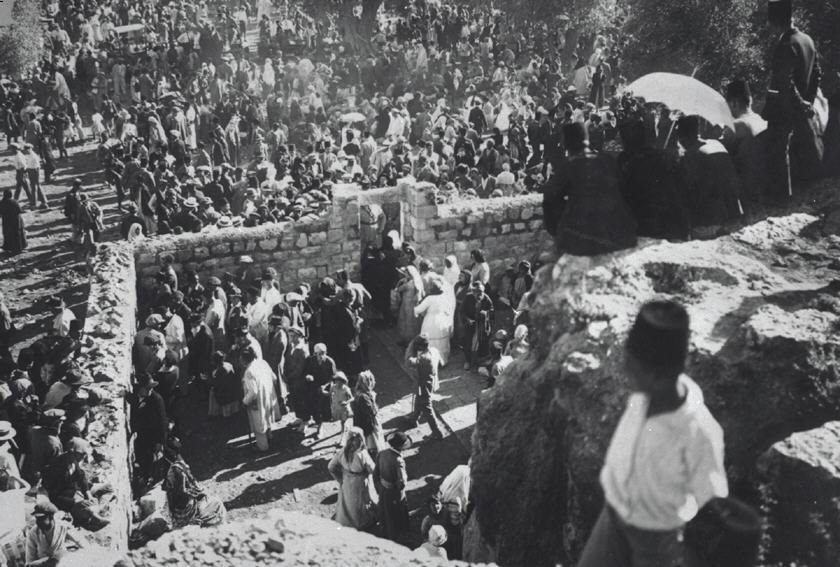
The tractate Menachot in the Babylonian Talmud (chapters 10 and 11) records the Second Temple-era Omer ceremony in detail, including the public reaping at the village of Motza (near Jerusalem) after the conclusion of the first day of Passover. The Mishnah's account (Menachot 10:3) preserves a call-and-response liturgy used for the reaping - one of the few glimpses of a popular crowd ritual in the Temple-period sources. The halakhic obligation of individual counting in the absence of the Temple is codified by Maimonides in the Mishneh Torah, Laws of Temidim u-Musafim 7:22-24 (composed in Egypt, c. 1180 CE), where he rules that the count is a positive biblical commandment incumbent on every individual. The two-stage development - Temple ceremony and then personal obligation - is the model by which much of Jewish practice survived the catastrophe of 70 CE.
Over the medieval period the Omer acquired a character of semi-mourning: no weddings, no haircuts, no celebrations - a tradition the Talmud (Yevamot 62b) associates with the deaths of 24,000 students of Rabbi Akiva between Passover and Shavuot during the period of Roman persecution in the second century CE. Mystics of the sixteenth-century Safed school, Kabbalists such as Rabbi Moshe Cordovero and the Ari (Rabbi Isaac Luria), gave the forty-nine days an inner architecture: each day corresponds to a combination of two of the seven lower divine attributes - chesed (lovingkindness), gevurah (strength), tiferet (beauty), and four others - so that the count becomes a programme of spiritual self-examination, one pairing per day. Lurianic Omer-count charts, showing each day's attribute-pair alongside the count formula, were printed in prayer books from the seventeenth century onward and are still used today. The sheaf is long gone. The counting goes on.
There is something quietly extraordinary about a ritual whose sole requirement is to say a number aloud, every night, for seven weeks, without missing. No object is needed, no special room, no particular gathering - only the spoken count and the darkened sky. On the forty-ninth night the count reaches its end, and on the fiftieth day the tribe celebrates the giving of the Torah: the destination for which all the walking was preparation. The Omer is the only Jewish ritual that consists entirely of anticipation. It teaches, perhaps, that arrival is only possible if someone was counting the whole way there.