Most people now hear the word Chernobyl and think of a reactor. Jews heard it first as the name of a court. Long before 1986, the small Ukrainian town on the Pripyat had given its name to one of the most prolific dynasties Hasidism ever produced - a family that took a place and turned it into a lineage, and then turned that lineage into a dozen more. The reactor and the rebbes share a name and almost nothing else. The Jewish Chernobyl had already moved on, west and south, decades before the sirens.
The court was founded by Menachem Nachum Twersky, a disciple of the Baal Shem Tov and, after the master's death, of the Maggid of Mezritch. He settled in Chernobyl as the town's preacher, its maggid, which is precisely why the dynasty wears the town's name rather than the family's. His homilies on the weekly Torah portion were gathered into Me'or Einayim, "Light of the Eyes," one of the earliest printed books of Hasidic thought and still in print today. A man who leaves a book leaves a door open behind him.
His son Mordechai - remembered as the Maggid of Chernobyl - did something rarer. He turned a modest devotional circle into a large, wealthy, public court, one of the best known in the Ukraine of the early nineteenth century, and it was he who formally took the surname Twersky. Then he did the thing that made the dynasty famous. He had eight sons, and he sent nearly all of them out to found courts of their own.
One town, a dozen courts
This is the part that repays attention. Mordechai's sons did not simply inherit Chernobyl. Each carried its style to a new place and founded a line named for that place. David went to Talne and became the celebrated Talner Rebbe. Yitzhak went to Skvira and founded the Skver dynasty. Yochanan founded Rachmastrivka; Avraham founded Trisk; others took Makarov, Korostyshev and the Hornsteipl line. The eldest, Aaron, stayed and held the original court at Chernobyl itself. From one preacher's grandchildren came a constellation of dynasties, so that a remarkable share of the Hasidic world traces some thread of its lineage back to that single Ukrainian town.
It is worth pausing on the oddity of this. The town never grew large. It did not need to. What Chernobyl exported was not population but authority, melody, a way of running a court, a name to be proud of. Hasidic geography often works this way: a place becomes a family, and the family becomes a map. The Twerskys simply did it more thoroughly than almost anyone, branching and re-branching until the genealogists lost count and started keeping ledgers.
Menachem Nachum, maggid of Chernobyl
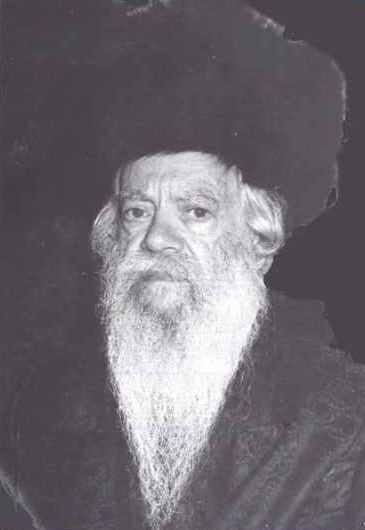
Menachem Nachum Twersky, born about 1730 and died in 1797, was a disciple first of the Baal Shem Tov and then of the Maggid of Mezritch. He served as preacher of Chernobyl, which gave the dynasty its name, and his collected homilies, Me'or Einayim, became a foundational text of early Hasidism. Some traditional sources place his death in 1798; the difference is a quirk of the Hebrew calendar, not a real dispute.
YIVO Encyclopedia of Jews in Eastern EuropeMordechai and the branching of the line
Mordechai Twersky, 1770 to 1837, built the small circle into one of the great courts of early-nineteenth-century Ukraine and adopted the Twersky surname. His sons fanned out to found their own dynasties - among them Talne, Skver, Rachmastrivka, Trisk, Makarov and Hornsteipl - while his eldest, Aaron, held the original court at Chernobyl until his death in 1871.
YIVO Encyclopedia of Jews in Eastern EuropeA town that never grew large gave its name to a constellation of courts. Chernobyl exported not people but authority, melody and a name worth keeping.
The town empties, the name travels
The town's own Jewish history followed the bleak arc of the region. Jews had lived in Chernobyl since the sixteenth century, and by the 1897 census they were a clear majority of its people. Then came the twentieth century's machinery of harm: pogroms in 1905 and again in the civil war of 1919, Soviet decline between the wars, and finally the Holocaust. In November 1941 the few hundred Jews who remained were marched to the town's Jewish cemetery and shot. The community that the Twerskys had built their court upon was gone forty-five years before the reactor ever failed.
But the dynasty was not in Chernobyl by then, and that is the whole point. The courts had already moved - to Israel, to the United States - carrying the name with them the way a family carries a melody. The main Chernobyl court sits today in Bnei Brak. The Skver line built an entire village, New Square, in New York State in 1954, an anglicising of "Skver" that hid a Ukrainian town inside an American place-name. Rachmastrivka, Talne, Trisk and the others continue with rebbes in Jerusalem and Brooklyn.
So the river town is quiet, and the cemetery keeps its dead, and the reactor keeps the headlines. None of that is the Jewish Chernobyl. The Jewish Chernobyl is a living name, said every day in courts that never saw the Pripyat, by people who inherited a town the way others inherit a crown - and kept it, because a name that has carried this much is not a thing you put down.
Further reading