Ancient Qatzrin sits on a basalt outcrop in the central Golan, a short walk from the modern town that took its name. The village was built almost entirely from the dark volcanic stone that covers the plateau: walls, door lintels, roof beams, oil presses and grinding stones, all cut from basalt because there was little else nearby to build with. What makes the site unusual is not simply that it was excavated but that several of its houses were then reconstructed above their own foundations, with original stone furniture put back in place, so that a visitor walks through rooms rather than reading about them from a ruin. Qatzrin is not a monument to a king or a battle. It is a record of a working Jewish farming village of the Mishnah and Talmud period, and that ordinariness is exactly its value as evidence.

A village rebuilt, not just uncovered
The ruin was surveyed and then excavated across the later twentieth century, once the Golan came under Israeli administration after 1967, revealing a compact village of basalt houses arranged around courtyards, with a synagogue near its centre. What set the project apart from most excavations was the decision to restore rather than merely stabilise: several houses were rebuilt on their original footprint, using their own recovered stones wherever possible, and furnished with the kinds of objects the excavation itself produced - stone tables, grinding installations, storage jars, an oil press. The result functions as an open-air house museum built directly on the excavated remains, rather than a reconstruction made elsewhere from a plan.
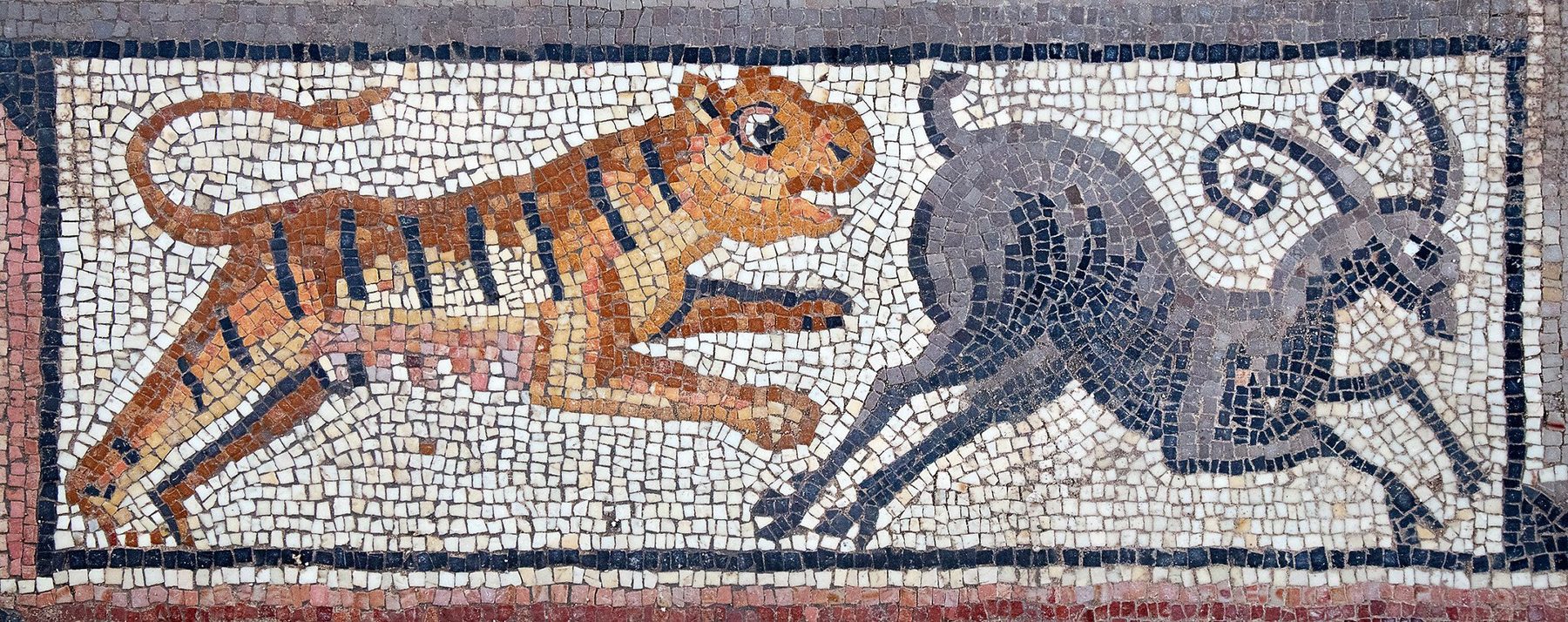
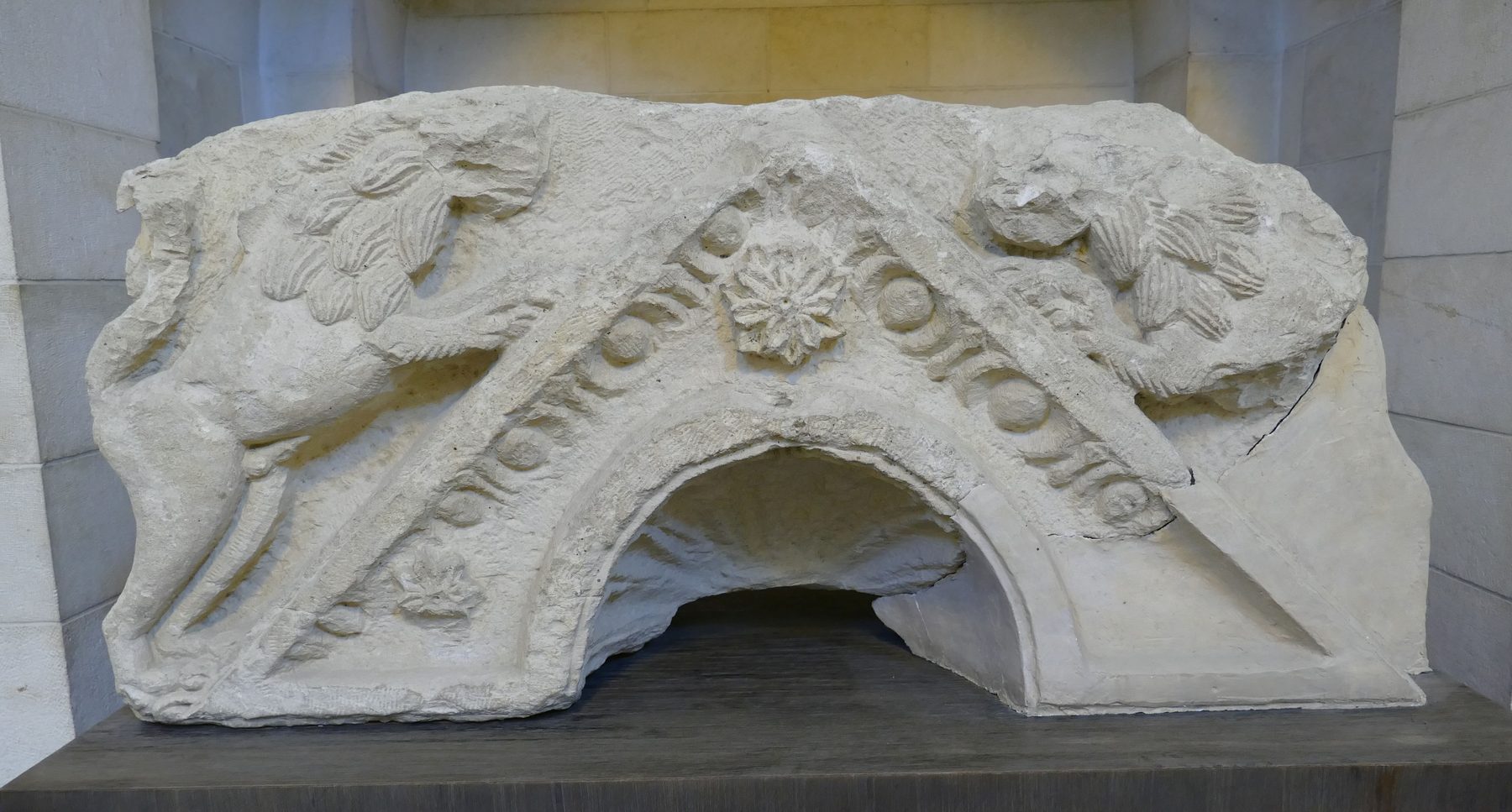
The village's basalt synagogue, with its own carved architectural fragments and a Greek and Aramaic dedicatory inscription among the finds from the site, anchors the settlement's date to the Talmudic period - roughly the fourth to eighth centuries CE, spanning the late Roman and Byzantine centuries when Jewish life in the Golan and the Galilee produced the bulk of the Mishnah and the Jerusalem Talmud. The domestic quarter around it shows a village that carried on farming, pressing oil and living an unremarkable agricultural life through that same span, largely undisturbed by the political upheavals of the wider empire.
Ancient Qatzrin
A Jewish farming village of the Golan built in dark basalt, excavated across the later twentieth century and partly rebuilt on its own foundations, with several houses restored and furnished using stone objects recovered from the site itself. A basalt synagogue near the village centre anchors its main occupation to the Mishnah and Talmud period. Presented today as the Qatzrin Ancient Village, in situ in the Golan Heights.
In situ, Qatzrin Ancient Village, Golan HeightsThe house behind the law
The Mishnah and the two Talmuds are full of rulings about domestic life: how a courtyard is shared between neighbours, where an oven may be placed relative to a wall, what counts as a proper partition, how olive oil is pressed and stored, what makes a room fit to eat a festival meal in. Read on the page, these rulings can feel abstract, argued over centuries by scholars who never quite tell you what the rooms themselves looked like. Qatzrin closes that gap. Its houses are built around a shared courtyard onto which several dwellings open, exactly the kind of arrangement the rabbinic sources argue about when they discuss rights of way and shared walls. Stone benches, grinding installations and storage niches sit where daily use put them, not where a modern designer thought they ought to go, because in the restored houses many of those elements are the original basalt pieces the excavation recovered.
The oil press is a useful case in point. Olive oil was a staple of Galilee and Golan agriculture in this period, and the Talmudic sources discuss its production and its ritual purity in detail. At Qatzrin the physical apparatus for making it - a stone crushing basin, weights, and a beam-and-screw press reconstructed from surviving basalt components - stands in the same building where the household lived, letting the industrial and the domestic be read together rather than as separate categories of evidence.
The Qatzrin synagogue
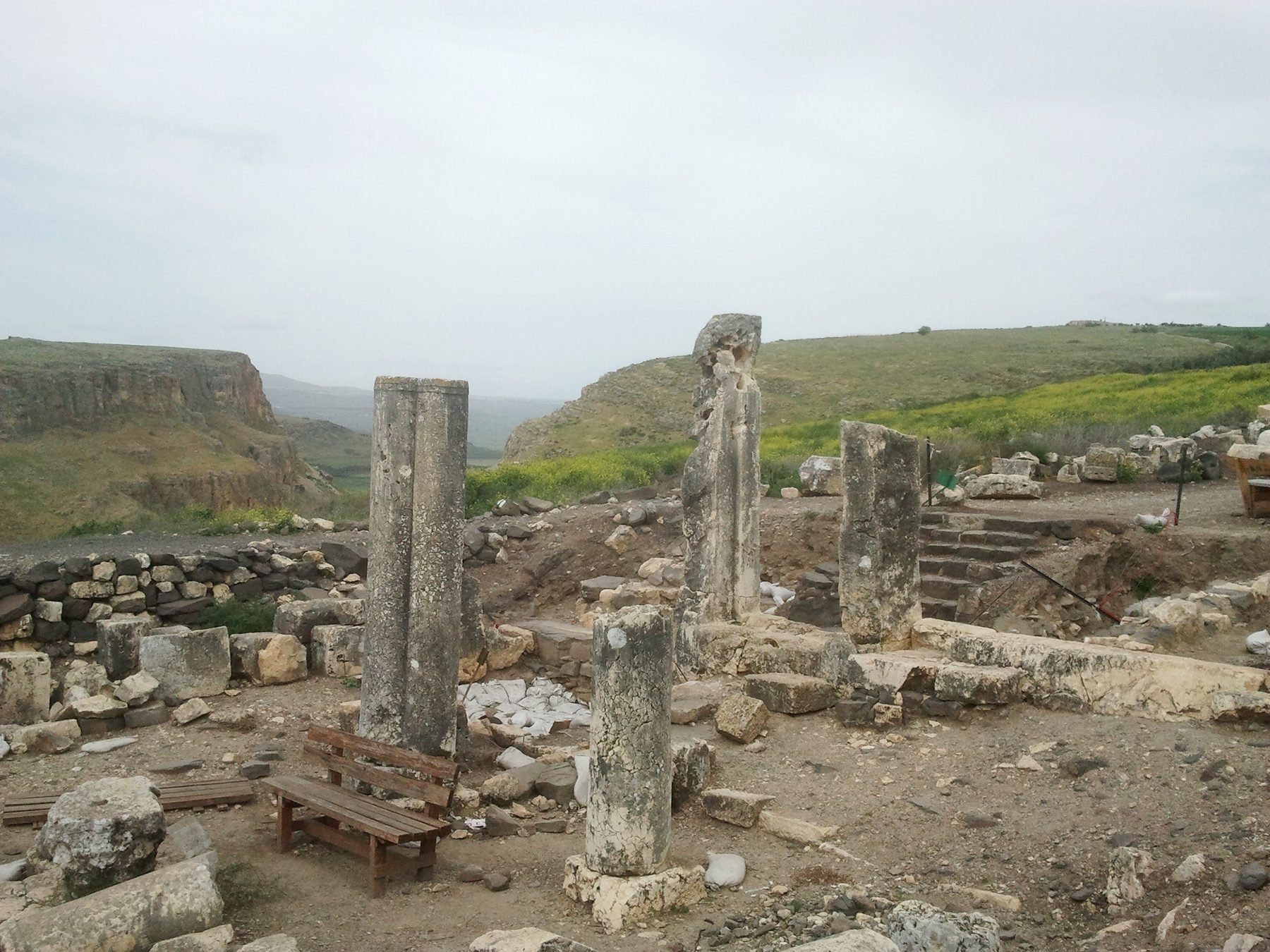
A basalt public building near the centre of the village, built and used across the Talmudic period, with carved architectural fragments and dedicatory inscriptions recovered during excavation. It stands alongside the domestic quarter as the village's communal and religious focus, and its remains are displayed in situ together with the reconstructed houses.
In situ, Qatzrin Ancient Village, Golan HeightsWhat ordinariness proves
No single spectacular find drives Qatzrin's importance. Its evidence is cumulative: a whole settlement pattern, a domestic and agricultural economy, and a community's religious building, all recovered together and left legible in the ground rather than dispersed to separate museum cases. That combination is what lets the site corroborate the rabbinic law rather than merely illustrate it in the abstract. The Mishnah's courtyard rulings, the Talmud's discussions of presses and purity, the ordinary rhythm of a farming year in stone-built rooms - Qatzrin shows the physical world those texts were written to govern, on the plateau where a Jewish community actually lived through the centuries that produced them.
Further reading