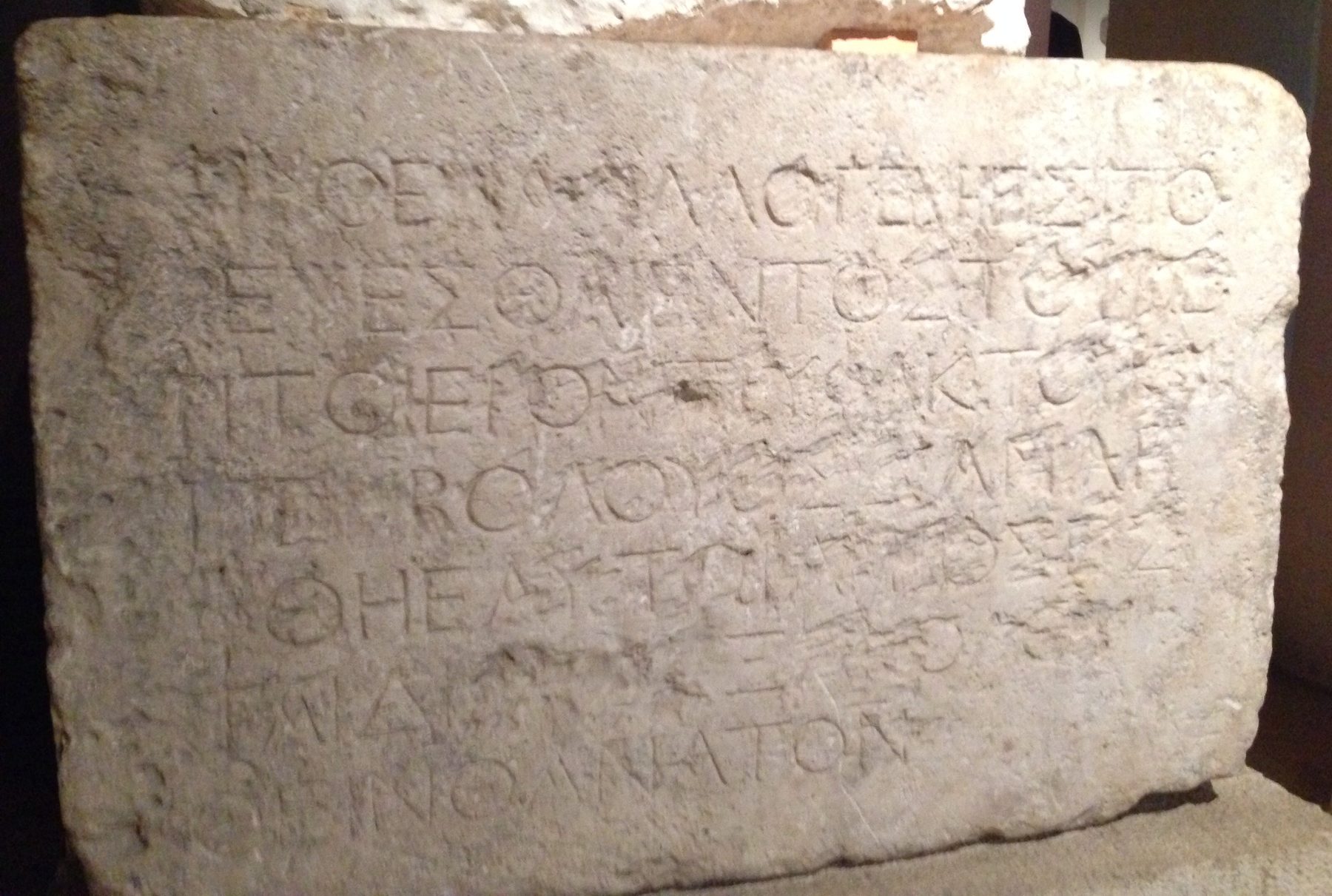
The tablet is not large, and it is not old in the way its own words claim to be old. It is a rectangular slab of soft limestone, inscribed with a single line of Hebrew in a square Aramaic-derived script - the letterforms Jews had adopted generations after the Babylonian exile, not the older paleo-Hebrew script the kings of Judah would have used in their own lifetimes. The inscription reads, in translation: "Here were brought the bones of Uzziah, king of Judah - do not open." Uzziah, also called Azariah in the Book of Kings, ruled Judah in the eighth century BCE. The stone that names him was carved roughly seven hundred years after he died. That gap is not a flaw in the object. It is the object's entire point.

A king who could not be buried with kings
The Book of Chronicles tells a specific story about Uzziah's death. He had reigned for decades, strengthened Jerusalem's fortifications, and built up the kingdom's army - and then, in the account, he was struck with a skin affliction, tzara'at, after overstepping his authority in the Temple. He spent his final years living apart, in a separate house, with his son governing in his place. When he died, Chronicles says he was buried "with his fathers" but specifically in a field belonging to the burial ground of the kings, not inside the royal tombs themselves, "for they said, He is a leper." The distinction mattered enough to the biblical writer to record it precisely: honoured, but kept apart, even in death.
The tablet does not tell that story. It doesn't need to. It records something that happened afterwards - long afterwards - to whatever remained of Uzziah once his original resting place had been disturbed. A separate burial field near a growing, rebuilding city was exactly the kind of ground that got dug into as Jerusalem expanded in the centuries that followed. When older graves were opened, unexpectedly or by design, the practice of the period was not to scatter what was found but to gather the bones respectfully and rebury them elsewhere, marking the new resting place so it would not be reopened again. The tablet is that marker.
The Uzziah Reburial Plaque
A small limestone slab inscribed in Hebrew, in the square Aramaic-derived script used by Jews from the Second Temple period onward, reading "Here were brought the bones of Uzziah, king of Judah - do not open." Identified in 1931 in a collection held by a Russian Orthodox convent on the Mount of Olives, Jerusalem, by the archaeologist Eleazar Sukenik. The letterforms date the inscription itself to the late Second Temple period, centuries after Uzziah's eighth-century-BCE reign - evidence, most read it, of a later reburial rather than an original grave marker. No controlled find-spot survives.
Israel Museum, JerusalemWhat it can and cannot prove
Set the claim fairly. The tablet does not prove that the bones beneath it, wherever they once lay, were genuinely Uzziah's. No skeletal remains survive with it to test, and there was never a way to verify a reburial inscription against the body it describes, then or now. What the tablet does show, reliably, is something narrower and still significant: by the late Second Temple period, someone in Jerusalem believed - and cared enough to record in stone - that a particular set of disturbed bones belonged to a king named in the biblical history of Judah, a king who by that point had been dead for the better part of a millennium. The inscription is a window onto how living memory, or received tradition, treated the deep past of the monarchy, rather than a primary record of that past itself.
It is also, on its own narrow terms, unique. No other inscription naming Uzziah as king of Judah has been recovered anywhere. The Bible names him repeatedly, in Kings, Chronicles, and the opening of the Book of Isaiah, which dates a prophetic vision "in the year King Uzziah died." The tablet is the only object outside those texts that puts his name in stone at all - even if it does so centuries after the fact, and even if the honest reading treats it as testimony to later tradition rather than proof of eighth-century fact.
None of that caution makes the object less worth keeping. A city that troubles to relocate, rewrap, and formally mark the bones of a king dead seven centuries earlier - rather than simply clearing the ground and moving on - is a city that has not let go of its own history. The instruction carved across the front, do not open, has now held for roughly two thousand years. Whoever cut those words got exactly the outcome they asked for.
The original burial, as Chronicles records it
The biblical account states that Uzziah was buried "with his fathers in the field of the burial which belonged to the kings; for they said, He is a leper" - honoured with burial near the royal line, yet kept apart from the royal tombs proper because of his affliction. That detail, recorded centuries before the tablet was carved, is the reason the later reburial inscription reads as coherent rather than arbitrary: a king already buried apart, in ground more likely to be disturbed by later building than the sealed royal tombs themselves, is exactly the kind of grave a growing city might eventually reopen.
Hebrew Bible, Book of ChroniclesFurther reading
Story & Stone · The Tribe in Objects
Read another object: The Words That Outlasted Everything →