Walk the floor of the Kidron Valley, in the gorge that separates the Temple Mount from the Mount of Olives, and three carved monuments still rise from the rock: a tall structure with a conical roof known as Absalom's Pillar, a plain pyramid-capped block known as the Tomb of Zechariah, and a columned facade cut into the cliff face known as the Tomb of the Sons of Hezir. None of them was built by stacking stone. Each was carved downward and outward from the bedrock itself, so that the monument and the hillside are, structurally, the same object. They have stood in the open air, visible to anyone walking the valley, for more than two thousand years.
The popular names are old but not original. Jewish and Christian visitors from late antiquity onward attached them to biblical figures - Absalom, the rebellious son of David; the prophet Zechariah - because a striking monument invites a story. The architecture tells a different, more checkable one. The Doric friezes, the Ionic-style capitals, and the Egyptian-derived cavetto cornices cut into these facades belong to the international vocabulary of Hellenistic funerary architecture that spread through the eastern Mediterranean after Alexander's conquests. That puts the carving centuries after David and Zechariah, in the last two or three centuries before the Second Temple's destruction, when Jerusalem's elite families were building themselves monuments in a style borrowed from the wider Hellenistic world and adapted to a Jewish city.

Cut from the hill, not built on it
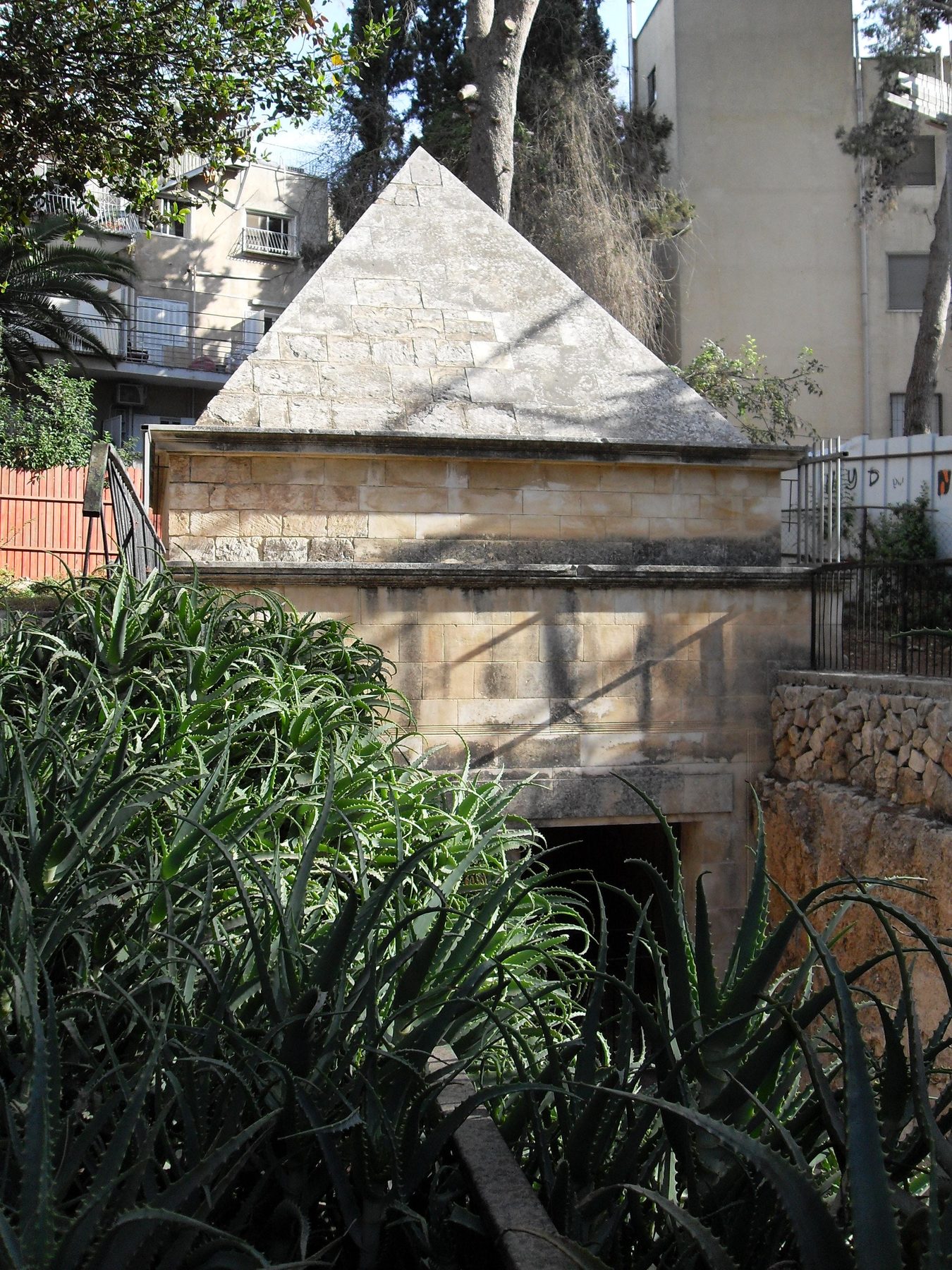
Absalom's Pillar is the most theatrical of the three: a square, rock-cut base carrying a built drum and a conical stone roof, the whole thing standing free of the cliff behind it because the masons quarried away the surrounding rock to isolate it. The Tomb of Zechariah, a short distance south, is simpler and in some ways more impressive as engineering - a solid block of bedrock, isolated on all sides and carved into a pyramid-roofed monument with no internal chamber at all, a monument that is entirely solid stone rather than a tomb you could enter. Between them, cut into the living cliff face rather than freed from it, is the facade of the Tomb of the Sons of Hezir, its columns and architrave carved directly into the rock and its burial chambers running back into the hillside behind.
What makes the third of these more than an elegant facade is an inscription cut into its architrave, naming it as belonging to the sons, or descendants, of a family called Hezir - a name that also appears in the Hebrew Bible as one of the priestly divisions organised for Temple service. Whether the inscribed family is the same priestly line named there is a reasonable question rather than a settled fact, but the inscription itself is not in doubt: it is a genuine Second Temple-period text, cut in the stone by the people who built the tomb, naming an actual family who buried their dead in Jerusalem while the Temple still stood on the ridge above them.
Three rock-cut monuments, one valley
Absalom's Pillar, the Tomb of Zechariah and the Tomb of the Sons of Hezir stand in a row along the western slope of the Kidron Valley, carved wholly or partly from the bedrock rather than constructed from quarried blocks. Their architectural detail - Doric friezes, Ionic capitals, Egyptian-style cavetto cornices - places their carving in the Hellenistic and early Roman centuries, when such hybrid styles were current across the eastern Mediterranean. All three remain in situ, exposed to the open air, exactly where they were cut.
In situ, Kidron Valley, JerusalemThe inscription on the architrave
Cut into the architrave above the columned facade of the Tomb of the Sons of Hezir is a Hebrew inscription naming the family to whom the tomb belonged. It is one of very few surviving in-place Second Temple-period tomb inscriptions from Jerusalem naming an identifiable family, rather than a text copied, translated or summarised by a later author. The rock, the carving and the family it names have not moved since the tomb was cut.
In situ, Kidron Valley, JerusalemWhy the inscription matters
Inscribed, dateable, in-place evidence from Second Temple Jerusalem is not abundant. Most of what is known about the city's final pre-70 CE centuries comes from literary sources - Josephus, the New Testament, rabbinic memory - written down later or elsewhere and filtered through those authors' concerns. The Tomb of the Sons of Hezir gives something different: a family that carved its own name into its own monument, in its own city, while the Temple still stood on the ridge above it. It corroborates, in the plainest way stone can, that Jerusalem in this period had wealthy, literate families organising elaborate burial for themselves in a shared architectural language with the wider Hellenistic world - not an isolated backwater, but a city fluent in the visual grammar of its age and confident enough to write its own name on the hillside.
The tombs also corroborate something about how memory works on a landscape. The names Absalom and Zechariah are wrong, in the narrow archaeological sense, and yet they are not simply an error to be corrected and discarded. They record a much later community's need to fill a visible monument with a story worth telling, using the biblical names that meant something to them. The stone gives one date. The naming gives another kind of history entirely - of how a city keeps talking to its own ruins long after the people who cut them are gone.
Further reading