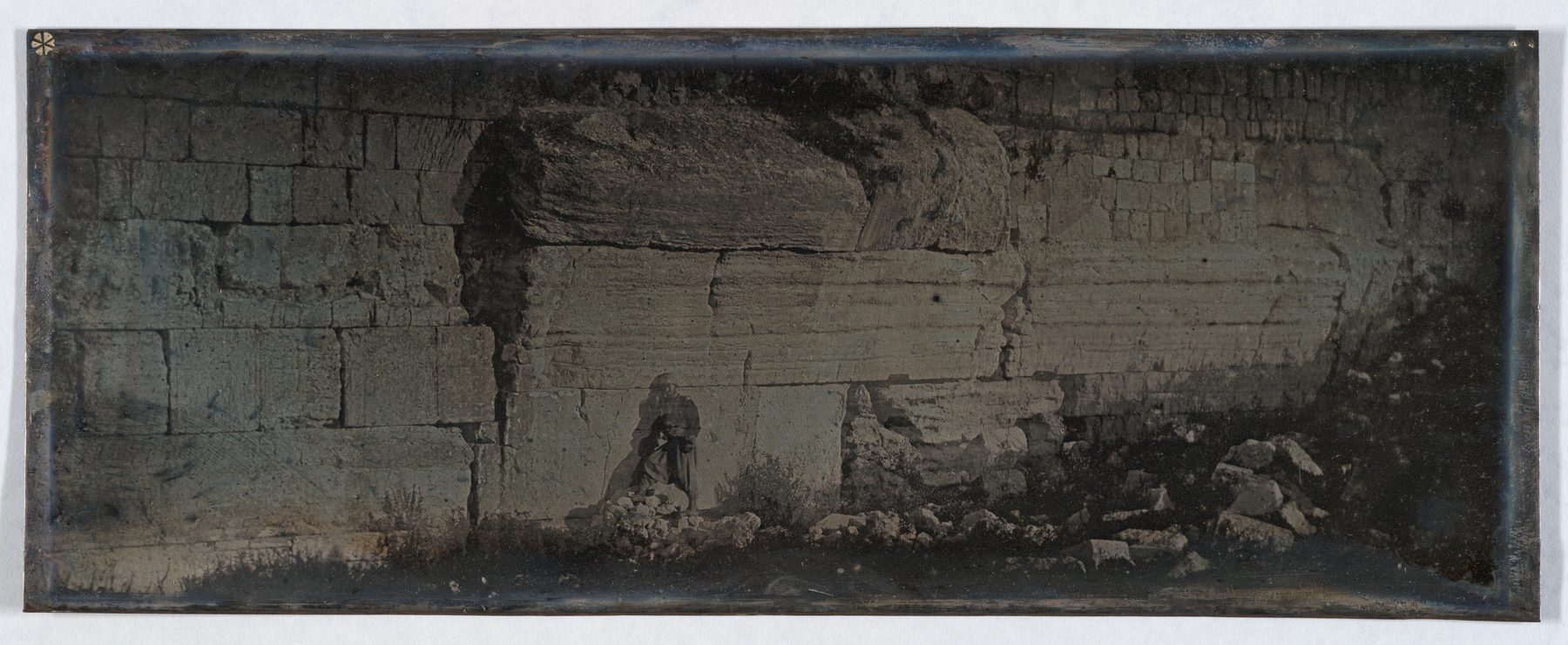
A few hundred metres north of Jerusalem's Old City walls, a broad staircase cut into the rock drops into a sunken courtyard, wide enough to have served a royal funeral. At the bottom, a carved doorway once framed with columns leads into a burial complex hollowed from the bedrock, and in the wall beside it a great disc of stone still sits in the groove built to hold it - a rolling stone, the kind the Gospels describe outside a very different tomb, here one of the few such doors anywhere in the region still standing where it was cut. This is the site long called the Tomb of the Kings. It was not built for kings of Judah. It was built for a queen who was not born Jewish, and who became so by choice.
The written source is Josephus. In his account of the Jewish War and of the period leading into it, he describes Helena, queen of Adiabene - a kingdom on the upper Tigris, in what is now northern Iraq - who converted to Judaism along with her son Izates, the king, and much of the royal household. Helena moved to Jerusalem, where she is said to have supported the city through a famine in the mid-first century CE by sending for grain from Egypt and figs from Cyprus. Josephus records that she was buried in a monument of her own building, three stadia from the city, and that her son Izates and other family members were later brought there too. The monument he describes matches, in scale and in position, the tomb complex that stands today.

A queen who became a Jew by choice
Adiabene was a small client kingdom under Parthian influence, its court far from Jerusalem in both distance and culture. That its royal family converted to Judaism at all is remarkable; that its queen then left her own capital to live out her life in Jerusalem, and asked to be buried there rather than at home, says something sharper still. Conversion in the ancient world was rarely a private decision - it reordered political loyalties, dynastic marriages, everything a royal house depended on. Helena's household made that choice anyway, and the tomb is the physical proof that it was not a passing gesture. A monument on this scale, built years in advance and stocked with sarcophagi for a family that had no ancestral claim on the land, is not what a nominal or symbolic conversion produces. It is what a genuine one does.
The tomb's scale also tells its own story about how a first-century observer would have read it. The sunken courtyard alone required moving a serious quantity of bedrock, and the facade above the entrance was carved with a frieze of grapes, wreaths and triglyphs in a mixed Hellenistic-Judaean style typical of wealthy Jerusalem tombs of the period, including those built for members of the Herodian court. Whoever built this expected it to be read as belonging to Jerusalem's own elite - not as a foreign curiosity parked on the city's edge, but as a family monument in the idiom the city's own aristocracy used for theirs.
Built, buried in, misnamed, excavated
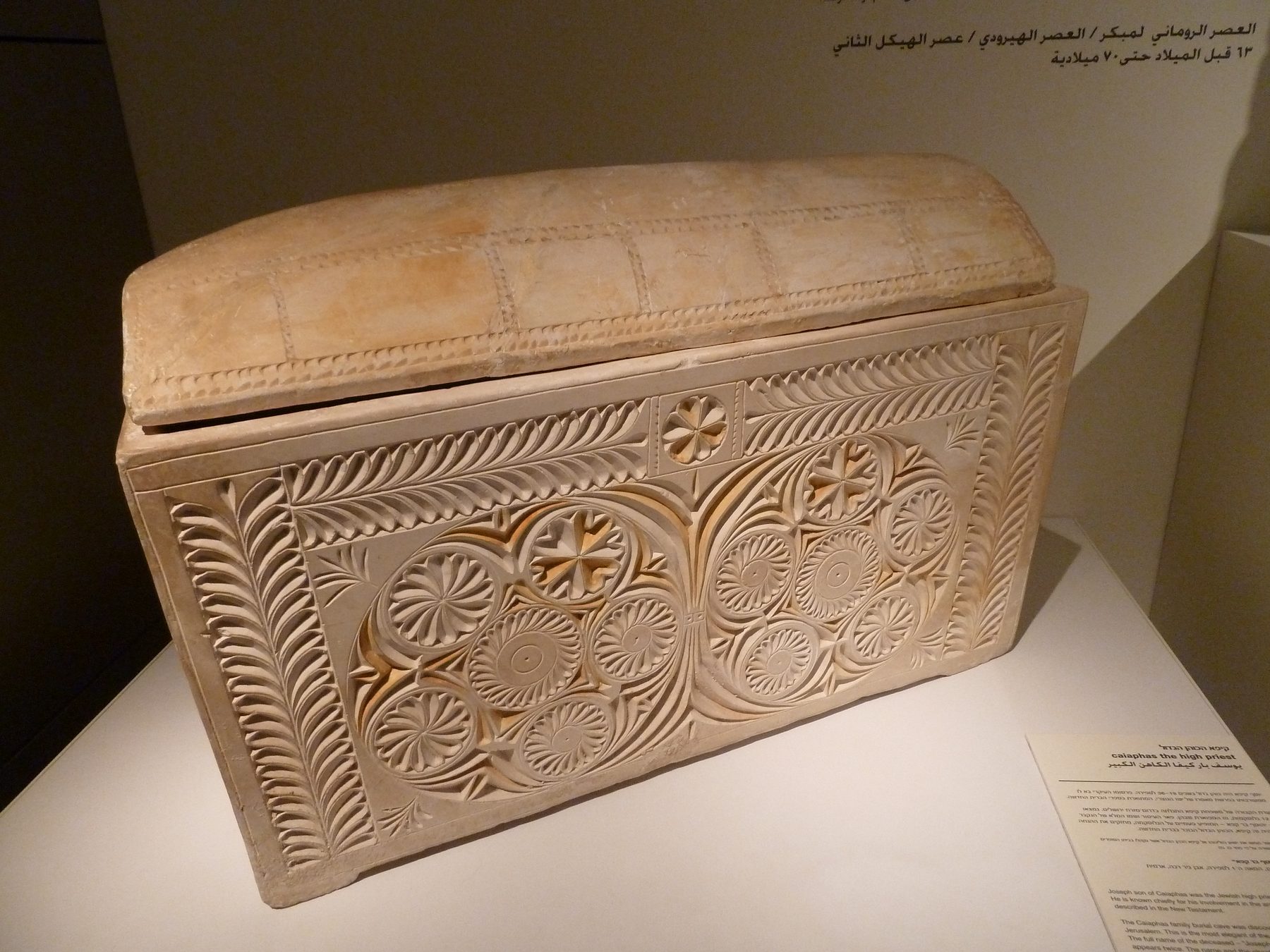
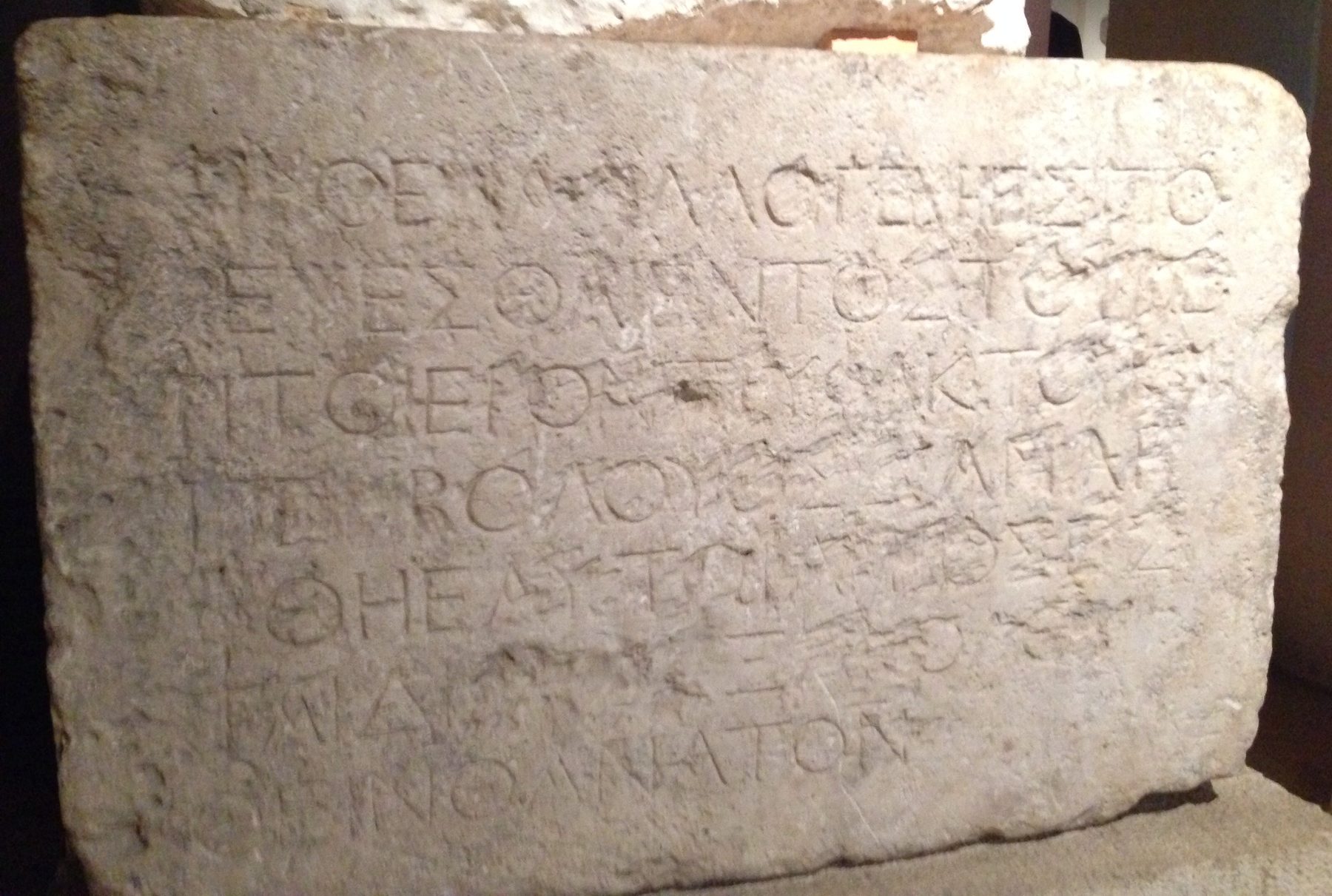
The tomb was cut in the first century CE and used for Helena of Adiabene's family burials, as Josephus describes. Its original identity was lost over the following centuries, and by the medieval and early modern periods local tradition had reattached the site to the kings of Judah, giving it the name it still carries. The French archaeologist Louis Félicien de Saulcy excavated the tomb in 1863, and it was his mistaken identification of the site as a burial place of the biblical kings that fixed the name in European scholarship, even as the finds he recovered pointed elsewhere. A sarcophagus lid from the tomb, inscribed in Aramaic script naming its occupant as a queen, was removed to Paris and remains in the Louvre's collection today.
In situ, Jerusalem; sarcophagus fragment, Musée du Louvre, ParisWhy a tomb, of all things, counts as evidence
A tomb built for use, not for display, is a hard thing to fake and a harder thing to misread. Nobody excavates a burial chamber, carves sarcophagus niches, and installs a stone door weighing as much as this one for a story they intend to tell about themselves rather than live out. The scale of the labour is itself the argument: a family that intended only a token association with Jerusalem's faith would not have committed a fortune in quarried rock, several sarcophagi and a multi-year building project to be buried in the city rather than at home.
What the site corroborates, set beside the literary record, is a Jerusalem of the late Second Temple period cosmopolitan enough to absorb a Mesopotamian royal house as fully as it absorbed its own nobility, and confident enough in its own identity that conversion by an outsider, even a queen, was received as real membership rather than performance. The tomb does not narrate that story. It simply sits where it has always sat, built the way it was built, and lets the claim stand on stone that has not moved since it was cut.
The site today
The tomb complex has long been in French governmental ownership, administered through the French consular presence in Jerusalem, a legacy of de Saulcy's nineteenth-century excavation and the acquisitions that followed it. It stands on Nablus Road in East Jerusalem, open to visitors on a limited schedule, its courtyard, staircase and rolling stone substantially as they were left by the original builders two thousand years ago.
Nablus Road, East JerusalemFurther reading