In the small town of Alqosh, in the hills of Iraqi Kurdistan north of Mosul, a modest stone building stands beside a mosque and a Chaldean Catholic monastery. Inside, under a canopy of coloured cloth, is a raised stone catafalque that local tradition has identified for centuries as the tomb of the prophet Nahum, the biblical author of the short book that announces the fall of Nineveh - the Assyrian capital that once stood roughly thirty miles to the south, across the Tigris from modern Mosul. The building around the tomb is a synagogue, built and rebuilt over a long span of use, and until the middle of the twentieth century it was the anchor of a working Jewish community in Alqosh. That community is gone. The building, and the tomb inside it, are not.
What makes the site evidence, rather than only legend, is not any proof that the historical Nahum is buried there - no inscription or excavation has settled that, and it cannot be settled from the building alone. What the site demonstrates, plainly and checkably, is something else: continuous or near-continuous Jewish habitation and pilgrimage in a specific Kurdish town, tied to a specific biblical figure, over a very long period, and the physical survival of a synagogue built to house that tradition after the community that built it had left the country entirely.
The synagogue-shrine at Alqosh
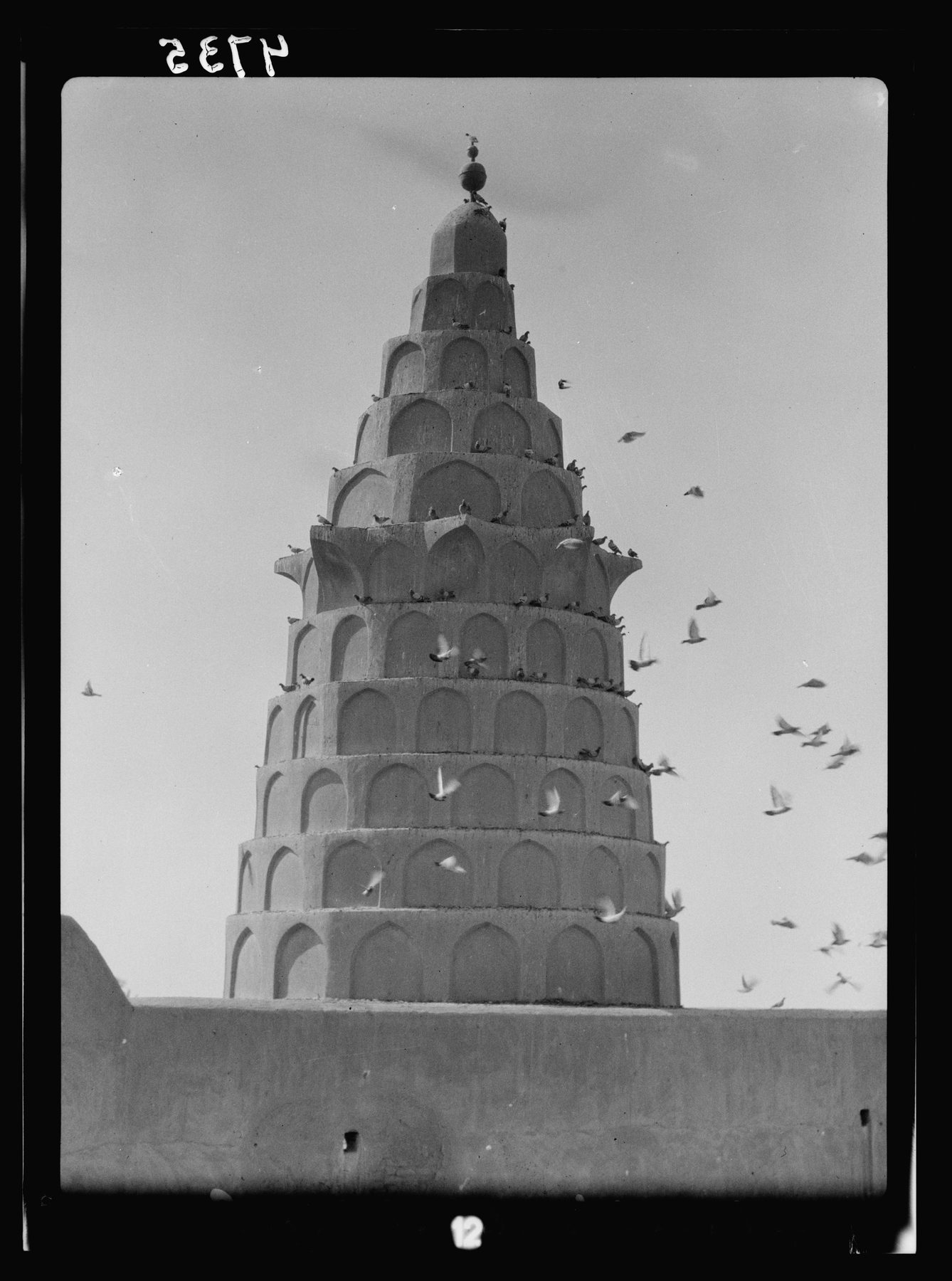
A stone synagogue building in the town of Alqosh, Iraqi Kurdistan, housing a raised catafalque venerated by local tradition as the tomb of the prophet Nahum. The structure has been repaired and partly rebuilt across its long history, most recently through a restoration project completed in the 2010s that stabilised the deteriorating roof and walls. It sits within a Christian-majority town, alongside a Chaldean Catholic monastery, and was maintained by Jewish caretakers until Iraq's Jewish community left the country, after which local Christian and Muslim residents kept the building from collapsing.
In situ, Alqosh, Iraqi KurdistanWhat the building shows
Set aside the question of whether the man buried under the catafalque is the historical Nahum. What the site itself proves does not depend on that question being answered. It proves that a Jewish community existed at Alqosh for a very long stretch of time, organised enough to build, maintain and repeatedly rebuild a synagogue around a shared object of veneration; that the community understood itself to be custodian of a specific biblical memory tied to a specific place, the fall of Nineveh, whose ruins lie within sight of the region; and that Jewish life in this corner of Kurdistan was continuous enough, across the centuries for which records survive, to keep a pilgrimage site functioning.
The tomb also matters as a marker of something larger: the depth and antiquity of Jewish settlement in Kurdistan generally. Kurdish Jews, an Aramaic-speaking community distinct in language and custom from both the Arabic-speaking Jews of Baghdad and the Jews of the wider Mediterranean world, trace their presence in the region back many centuries, some traditions reaching to the Assyrian and Babylonian deportations recorded in the Bible itself. Whatever the truth of the earliest claims, the archaeological and documentary record of Jewish life in towns across this part of northern Iraq, of which Alqosh's synagogue is the most visible surviving structure, is not in dispute.
The mass emigration of Iraqi Jewry
Under Operation Ezra and Nehemiah, Iraq's government stripped emigrating Jews of citizenship and property and allowed them to leave, chiefly for the new state of Israel. The great majority of Iraq's ancient Jewish population, including the Jews of Kurdish towns such as Alqosh, departed within a few years, ending millennia of continuous Jewish presence in the country. Synagogues and shrines across Iraq, the tomb at Alqosh among them, were left without the communities that had maintained them.
Documented by Israeli and Iraqi state recordsWhat happened after the Jews left is its own kind of evidence, and it is the part of the story that gives the site its particular weight. Alqosh remained a Christian-majority town, home to a historic Chaldean Catholic monastery on the hillside above it. With no Jewish community left to act as custodian, it was the town's Christian and Muslim residents who kept the tomb from being lost to weather and neglect, patching the roof, sweeping the floor, letting occasional Jewish visitors and researchers in to see it. A dilapidated roof and crumbling plaster eventually made the building unsafe, prompting the restoration effort of the 2010s that stabilised the structure. None of this proves anything about the prophet. It proves something about the neighbours - that a place built by one community's faith can be kept alive, for decades after that community is gone, by people who owe it nothing but a shared regard for an old and holy thing standing in their town.
Further reading