Stand on the Lungotevere de' Cenci and look up. The dome over the Tempio Maggiore is square at its base, not round, and it is sheathed in aluminium rather than the lead or copper that tops every church cupola in the city. That is not an accident of budget. It was a deliberate choice, made so that the silhouette on the skyline could never be mistaken for one more Roman church. The building itself is the evidence here: a synagogue commissioned the moment the legal walls around Rome's Jews finally came down, built to be seen from any bridge on the river, in a city that had confined its Jewish community behind a gate for more than three centuries.
The Tempio Maggiore - the Great Synagogue of Rome - stands at the edge of the old Roman Ghetto, the quarter where a papal bull had enclosed the city's Jews in 1555. Italian unification abolished the ghetto's legal status in 1870, and the physical walls came down not long after, cleared away in the late 1880s along with much of the surrounding riverside during the Tiber embankment works that reshaped this stretch of the city. The synagogue was built directly on land freed by that demolition, on the site of a smaller synagogue that had served the ghetto's five older congregations. Construction ran from 1901 to 1904, and the building still functions as the main synagogue of Rome's Jewish community and houses the Jewish Museum of Rome.

What the building proves
A structure like this is testimony of a specific kind. It does not describe an ancient claim; it records a nineteenth-century one, made in stone, aluminium and iron at a moment when the community finally had the legal standing to build in the open. Rome's Jewish community is generally reckoned the oldest continuous Jewish community anywhere in the diaspora, with a documented presence in the city going back to Judean embassies sent to Rome in the second century BCE, long before the destruction of either Temple in Jerusalem sent later waves of exiles west. The Tempio Maggiore is the visible continuation of that unbroken presence into the modern city: a community that had been walled in for generations choosing, as soon as it legally could, to build somewhere it could not be missed.
The architecture argues the same point in its own language. The style mixes elements drawn from Assyrian-Babylonian and Egyptian ornament with a Roman eclecticism fashionable at the turn of the twentieth century, rather than borrowing the Gothic or Baroque vocabulary of the churches around it. The interior is large enough to seat well over a thousand worshippers, with a decorated coffered ceiling and stained glass rare in a synagogue of its date. None of this is subtle. The building was meant to be read as a public, permanent, unapologetic statement that the community it served intended to stay.
Built on the cleared ghetto edge
The synagogue rose on the west bank of the Tiber, on ground opened up when the walls of the former Roman Ghetto were cleared during the late-nineteenth-century embankment works. It replaced a cluster of older, smaller synagogues that had served the ghetto's congregations under the old restrictions, consolidating them into a single monumental building for the first time in the community's modern history.
In situ, Lungotevere de' Cenci, RomeThe debate, and the scar
There is little dispute among historians about the dates or the intent behind the Tempio Maggiore; the documentary record of its commissioning and construction is well kept in the community's own archives and in the city's building records. Where discussion continues is more a matter of interpretation than of fact: how far the choice of an Assyrian-Babylonian and Egyptian idiom, rather than a style borrowed from European church architecture, was meant as a conscious break from the surrounding Christian city, and how far it simply reflected an eclectic taste common in Italian public building of the period. The building does not settle the question itself; it simply stands there, distinctive, refusing to blend in.
The synagogue also carries a harder, more recent layer of evidence. In October 1982 gunmen attacked worshippers leaving the building after a service, an assault that killed a small child and wounded dozens of others. The building today is guarded accordingly, a plain fact of its current life that sits alongside its nineteenth-century optimism without cancelling it. A structure raised as a statement of arrival has also had to be a structure that people needed protecting to enter.
The community the dome answers for
Rome's Jewish community traces a documented presence in the city back to embassies sent from Judea in the second century BCE, making it the oldest continuously attested Jewish community in the western diaspora. The Tempio Maggiore, completed in 1904, is that community's principal synagogue today and the seat of its rabbinate, standing a short walk from the streets of the old ghetto its congregation once had to remain inside.
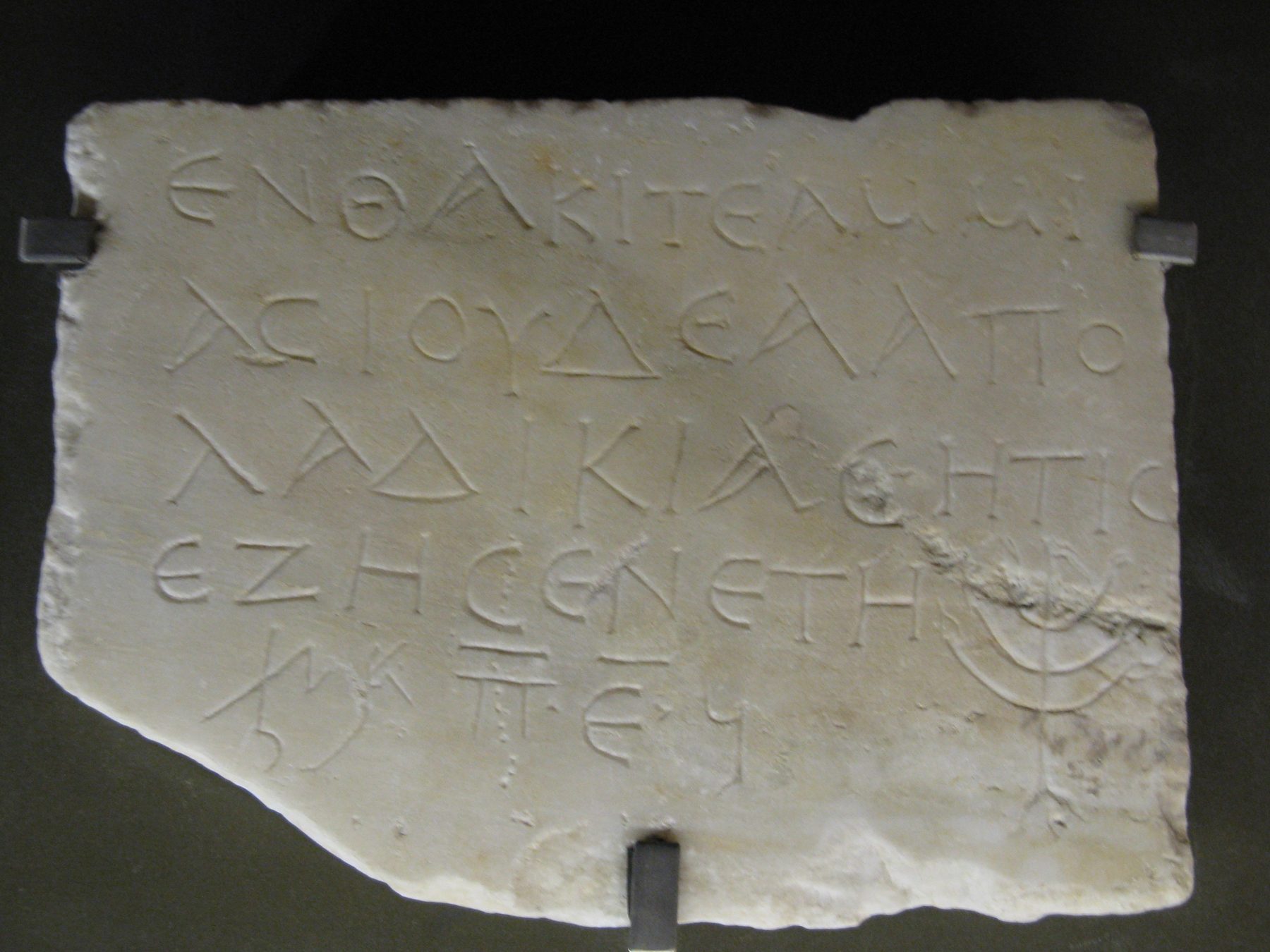
Jewish Museum of Rome, RomeFurther reading