In 1979, farmers working a field near Tell Fekheriye, in northeastern Syria close to the Turkish border, turned up a life-sized stone statue of a bearded man in a fringed robe, hands folded in the posture of prayer. It was carved from basalt and had stood, at some point, in a temple. What made the find important wasn't the sculpture - a competent but unremarkable piece of Iron Age craftsmanship - but the writing covering it. Two inscriptions, in two different languages and two different scripts, ran down the front and back of the same figure, saying more or less the same thing. One of them is the longest Aramaic text known from its period, and it is the reason the statue matters far beyond the mound where it was found.
Aramaic is not, on the face of it, a Jewish story. It was the working language of Iron Age Syrian kingdoms, later the administrative language of the Assyrian and Babylonian empires, then of the Persian empire that followed them. But it became a Jewish story anyway, and stayed one: parts of the Hebrew Bible are written in Aramaic, it was the daily language of Judea by the Second Temple period, it is the language of the Talmud and the Zohar, and it is still recited today in the Kaddish and under the wedding canopy. A statue that lets scholars read Aramaic grammar four centuries before its next-oldest long witnesses is, indirectly, a statue about the language the tribe would go on to think and argue and mourn in for the next two and a half thousand years.

What the two texts say
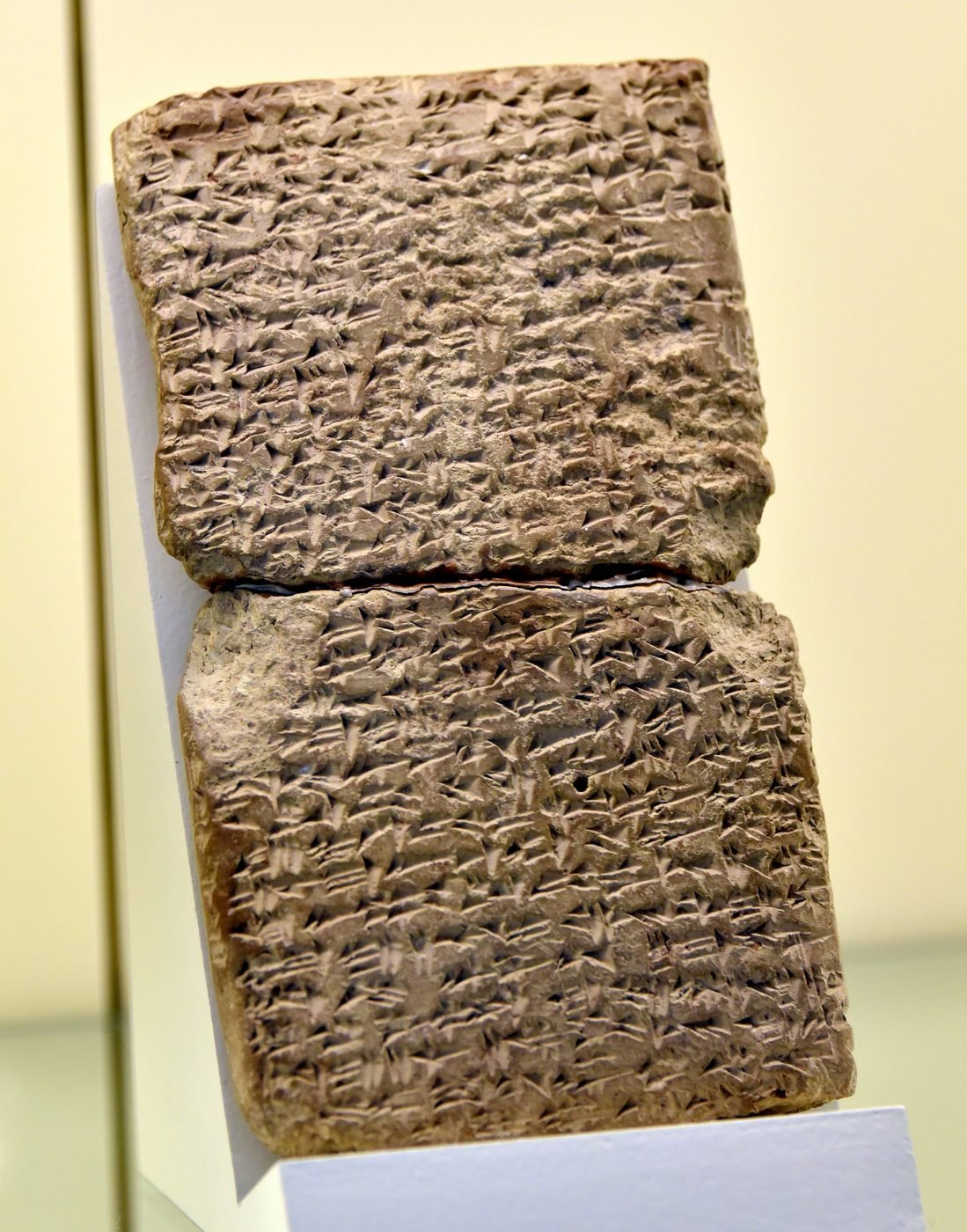
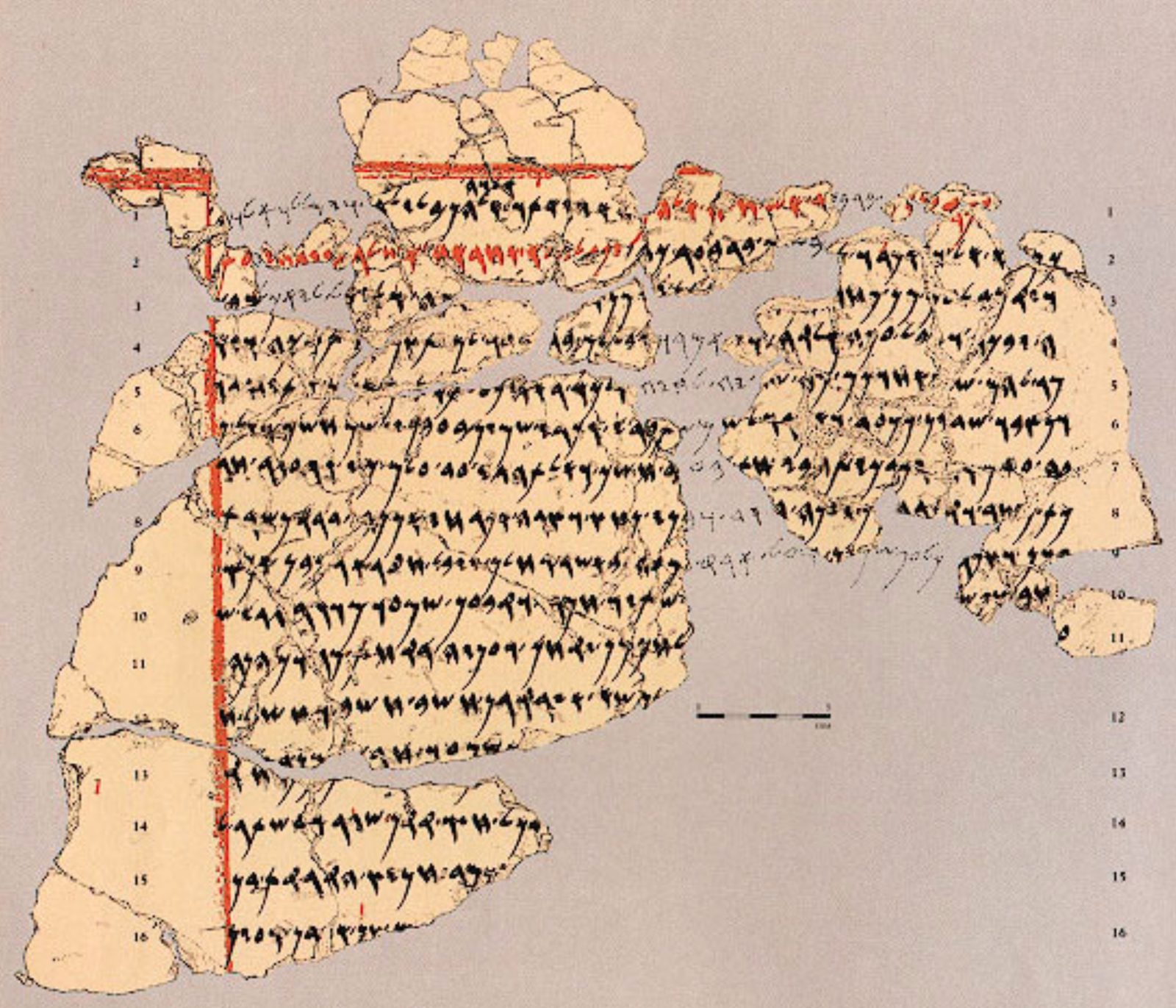
The statue carries an inscription in Akkadian, written in Assyrian cuneiform, down the front of the robe, and a second inscription in Aramaic, written in the early alphabetic script ancestral to the Hebrew square script, running down the back and skirt. Both texts are dedications: a ruler describes himself, lists his titles, and dedicates the statue to the storm god Hadad, asking for long life, descendants and prosperity in return. The two versions are not a word-for-word crib of one another - each has passages the other lacks - but they cover the same ground closely enough that each can be used to check and clarify the other. That is what makes the object valuable to linguists in a way that a single- language inscription, however long, could never be.
The ruler names himself, in the Akkadian text, as governor of Guzana and Sikan under Assyrian authority; the Aramaic version gives him a related but not identical form of the same name and title. Scholars generally read the two as versions of the same man, reflecting the ordinary reality of a bilingual, bicultural court on the edge of the Assyrian world: an Aramaic-speaking local dynasty operating in the vocabulary of Assyrian kingship, in a period when Aramaic-speaking populations were spreading widely across Mesopotamia and the Levant.
The Tell Fekheriye Statue
A basalt statue of a seated or standing ruler, found in 1979 near Tell Fekheriye (ancient Sikan), on the Khabur river in northeastern Syria. It carries a bilingual and biscriptal dedicatory inscription: Akkadian in Assyrian cuneiform on the front, Old Aramaic in the early alphabetic script on the back and skirt, both addressed to the god Hadad. Dated on grounds of script and historical context to the ninth century BCE, it is the longest and best-preserved Old Aramaic inscription known from that early a period. Held at the National Museum of Damascus.
National Museum of DamascusWhy a Syrian statue matters here
The Tell Fekheriye statue never mentions Israel, Judah or any biblical figure. It belongs to a separate, earlier chapter: a small Aramaic-speaking kingdom on the Assyrian frontier, two centuries before the neo-Babylonian exile that would make Aramaic the everyday language of Judean life. Its importance to this site's story is indirect but real. Biblical Hebrew and Aramaic are closely related languages, and words that survive only rarely or ambiguously in the Hebrew Bible sometimes appear more fully, in clearer grammatical context, in early Aramaic sources like this one. Comparative work using Tell Fekheriye's inscription has been part of the wider effort to fix the meaning of otherwise obscure biblical vocabulary and to understand how West Semitic scribal and political culture worked in the centuries before Israelite and Judean scribes were doing the same thing further south and west.
The statue is also, more simply, a monument to the durability of a language. Aramaic did not begin with this statue and did not end with the Assyrian empire that briefly ruled over Sikan. It went on to outlast Assyria, outlast Babylon, outlast Persia's rule over the region, and become - alongside Hebrew - one of the two languages in which the Jewish textual tradition was built. A ninth-century governor asking a storm god for long life, carved twice into the same block of basalt so that two audiences could both read it, turns out to have left behind one of the clearest windows onto the early life of a language that a very different tribe, in a very different kingdom, would still be speaking a thousand years later.
Aramaic after Tell Fekheriye
Aramaic spread as the common administrative and spoken language of the Assyrian and Babylonian empires, was adopted as the imperial chancery language of the Persian empire, and became the everyday language of Judea by the Second Temple period. Sections of the biblical books of Daniel and Ezra are written in Aramaic, as is the bulk of the Talmud and the Zohar, and Aramaic phrases remain embedded in Jewish liturgy - the Kaddish is recited in Aramaic, not Hebrew, and the traditional wedding contract, the ketubah, is written in Aramaic formulas still used today.
Comparative Semitic linguistics; Jewish liturgical practice