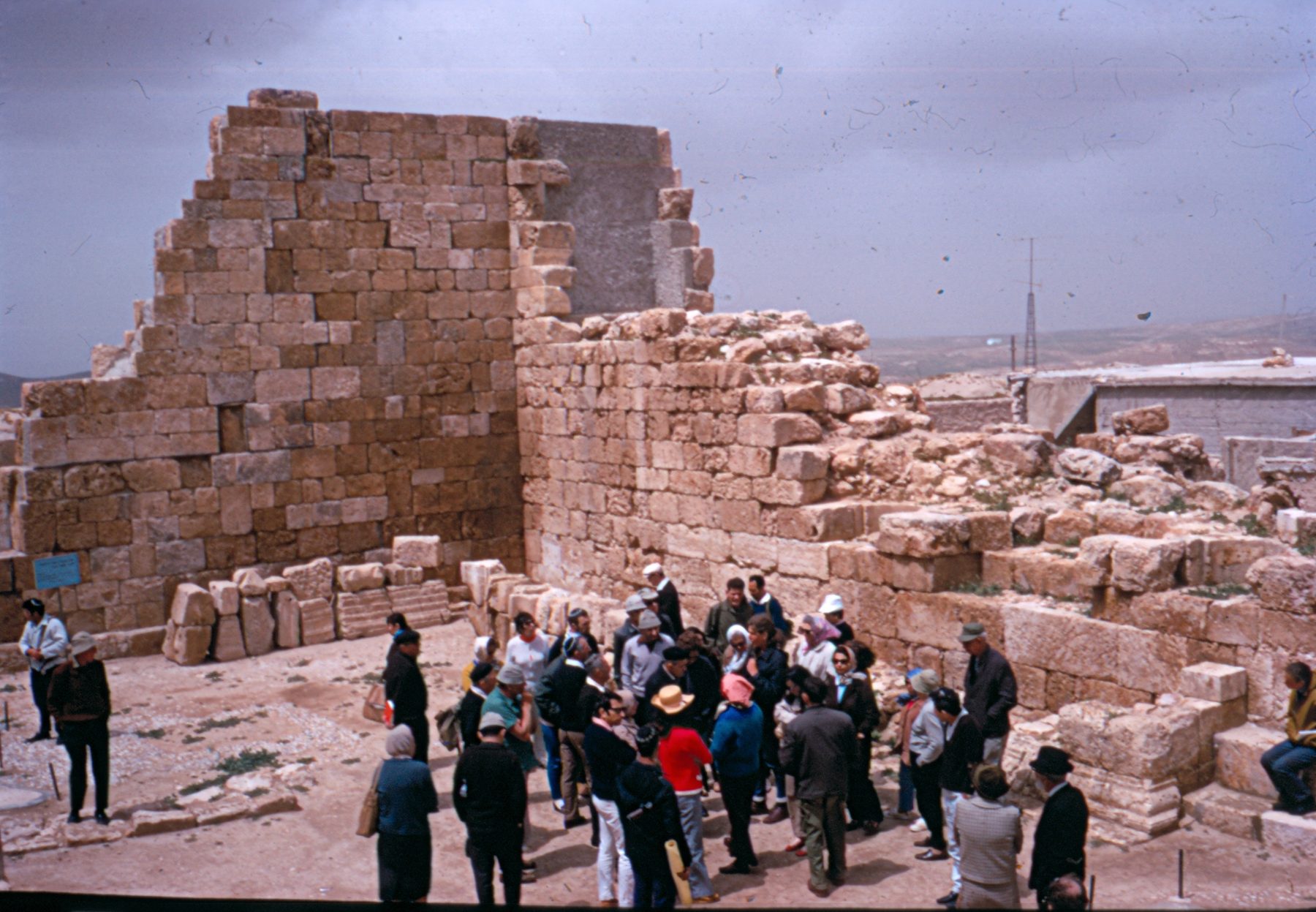
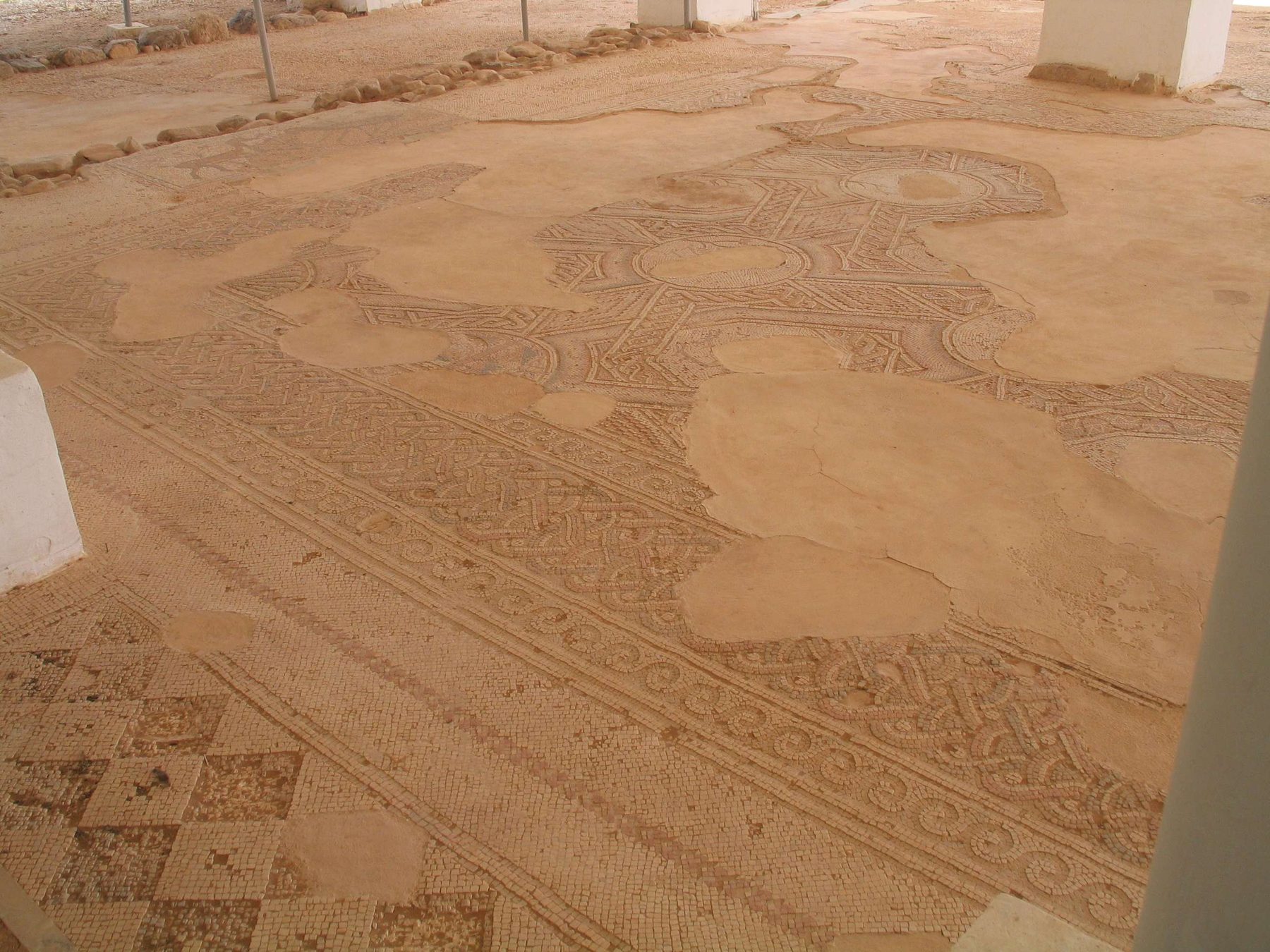
At Susiya, in the southern Hebron hills, a synagogue still stands more or less where its congregation left it. The hall's stone-paved floor, its raised bimah, and the niche that once held the Torah shrine remain in place at the site, along with mosaic panels and a set of inscriptions naming donors and asking for their remembrance. Nothing here had to be pieced together from a later description or argued from a single portable find. It is a building you can walk through, with its liturgical furniture where the congregation set it, in a part of Judea that biblical and later Jewish sources associate with the tribal territory of Judah and, much later, with the town of Eshtemoa nearby.
That matters because so much of what is known about Jewish village life in late antique Judea comes filtered through outside sources - Roman administrative records, church writers, later rabbinic texts composed elsewhere. Susiya is different. It is the community's own building, in a region where Jewish settlement is often assumed, from Roman and Christian sources alone, to have thinned out after the failed revolts against Rome. The stone says otherwise: a functioning, literate congregation, worshipping in the southern Hebron hills long after the Temple was gone.

What the building shows
The synagogue was laid out as a hall with a stone-paved floor and stone benches along its walls, its congregation seated facing the centre of the room in the older, benched-hall arrangement rather than in fixed rows facing one direction. A raised bimah stands within the hall, and a niche in one wall marks where the Torah shrine, the ark for the scrolls, was housed. Sections of mosaic decoration survive on the floor, including geometric and floral patterning and a menorah motif of the kind found repeatedly across synagogues of this period and region. The layout and orientation of the shrine niche, set to face Jerusalem, place the building firmly within the same devotional grammar as other ancient synagogues in the land of Israel, even where its specific plan differs from the better-known basilical halls of the Galilee.
The inscriptions are the part that speaks most directly. Cut into the floor and into architectural elements around the hall, they are in Hebrew and Aramaic, and they do what synagogue dedications of this period typically do: name individuals or families associated with the building's construction or upkeep, and ask that they be remembered for good. They are not narrative texts and they make no grand historical claims. They simply record, in the community's own hand, that real people paid for and used this room as a house of prayer and study.
A hall, a bimah, a shrine niche
The synagogue at Susiya comprises a stone-paved hall with benches along its walls, a raised bimah, and a niche marking the position of the Torah shrine, oriented toward Jerusalem. Surviving mosaic sections include geometric, floral and menorah decoration. Hebrew and Aramaic inscriptions, cut into the floor and other architectural elements, name individuals connected with the building and ask for their remembrance. The structure survives in situ, its principal furniture still in its original position.
In situ, Susya, southern Hebron hillsWhy a Judean synagogue, so far south, is evidence
Most of the well-known ancient synagogues of this period sit in the Galilee, where Jewish population and communal life after the revolts against Rome are best documented. Susiya sits well to the south of that cluster, in the hill country south of Hebron, in territory that outside sources sometimes treat as thinly Jewish, or not Jewish at all, by late antiquity. A working synagogue there, with its own bimah, its own Torah shrine, and its own congregants named in its own floor, is direct evidence against that assumption. It does not need to be argued from silence or inferred from a passing mention elsewhere. The building itself is the argument.
Set beside the synagogue at nearby Eshtemoa, Susiya also shows that this was not an isolated case. A stretch of Judean hill country, south of the Galilee and long after the destruction of the Temple, supported more than one settled Jewish community with the means to build, decorate and inscribe a permanent house of prayer. That is a modest claim by the standards of a headline, and a solid one by the standards of evidence.
Part of a southern cluster, not a single outlier
Susiya is one of a small group of ancient synagogues identified in the southern Hebron hills, alongside the synagogue at nearby Eshtemoa. Taken together, they show sustained Jewish communal life in this part of Judea across late antiquity, independent of the fuller written record for the Galilee in the same period. Each site preserves its own building, floor decoration and inscriptions rather than a single shared source.
Southern Hebron hills, JudeaFurther reading