Most of what gets called evidence for the united monarchy is a small object with a big argument attached to it - a seal, a sherd, a single line of text. This is the opposite kind of witness: an enormous mass of stone that nobody disputes is there, sitting exactly where it has sat for three thousand years, on the steep eastern slope of the ridge that ancient Jerusalem occupied before the city ever grew west toward where the Old City stands today. It is not a claim written on a tablet. It is a piece of engineering you can still climb.
The Stepped Stone Structure is a huge stepped and terraced construction of stone, built to hold up the crest of the ridge above the Kidron Valley so that whatever stood on top of it - almost certainly a fortress or royal precinct of some kind - would not slide down the hill it was built on. It is among the largest ancient structures of its type found in Israel, a retaining system on a scale that only a state with real resources and real reason to defend that summit would have bothered to build. That much is not seriously contested. What is argued over, energetically and still, is exactly when it went up and whose citadel it was holding in place.
Finding it
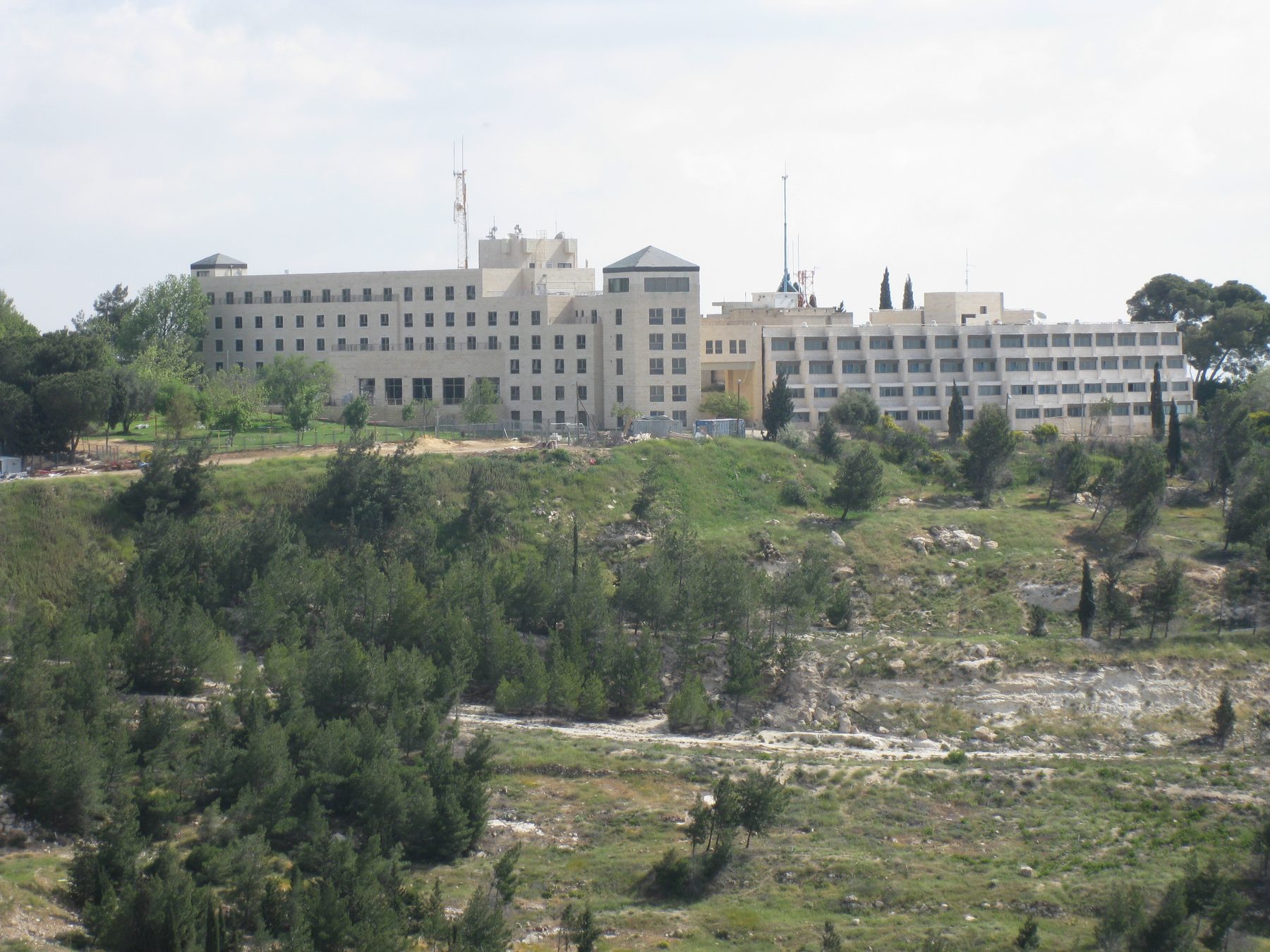
The City of David ridge, south of the Temple Mount and outside today's Old City walls, has been explored by archaeologists since the British engineer Charles Warren's nineteenth-century survey work for the Palestine Exploration Fund. The Stepped Stone Structure itself was substantially exposed through twentieth-century excavations on the ridge, including work led by Kathleen Kenyon in the 1960s and, more extensively, by Yigal Shiloh's excavations from the late 1970s into the mid-1980s, which uncovered the bulk of the structure standing on the steep eastern slope.
Israel Antiquities Authority; excavated in situ, City of David, JerusalemWhat it was built to hold up
A retaining wall this size only makes sense if something worth protecting sat above it. Excavations uphill from the Stepped Stone Structure, on the crest of the ridge, uncovered the remains of a large stone building - substantial walls of a scale unusual for the period - that some excavators have argued was physically bonded to the terracing below it, the two forming a single engineered unit: summit building and supporting revetment built and used together. On that reading, the Stepped Stone Structure is not a monument in its own right so much as the surviving skeleton of the platform beneath a citadel, the citadel itself having been robbed of most of its stone by later building over the following millennia.
That reading has made the structure a central exhibit in the argument over the united monarchy of David and Solomon. The Bible describes David taking a Jebusite stronghold on this ridge and Solomon later building up the Millo, a term connected to filling or terracing on the site. A massive Iron Age terracing system on the exact spot the text places that stronghold, holding up a building on the summit, is about as close as archaeology gets to a physical answer to a textual claim - if the dating lines up.
The dating argument
The Stepped Stone Structure was not built in a single season. Excavators have identified more than one phase of construction and repair in the terracing, and the pottery used to date those phases spans a range running from the last centuries of Canaanite Jerusalem through the early centuries of the Israelite kingdom. Some archaeologists read the core terracing as pre-Israelite, a Jebusite defensive work that David's forces inherited and reused when they took the city. Others argue that the structure, or major phases of it, belongs to the tenth century BCE and should be read as part of the building programme the biblical text attributes to David and Solomon. A minority position, associated with the low chronology of Iron Age dating, pushes the main construction later still, into the ninth century BCE.
City of David excavations, pottery and stratigraphyWhy it matters as evidence
Jerusalem's continuous occupation across three thousand years has stripped most of its earliest monumental architecture away, robbed for later building or simply built over by the next city on the same hill. The Stepped Stone Structure has survived largely because its function - holding up a slope - kept it useful to whoever lived above it, even after the building it once supported was gone. That survival is what makes it valuable. It is not a text about a citadel, or an inscription naming one. It is the load-bearing stonework of an actual fortification, standing on the actual ridge the historical and textual tradition places the Jebusite and early Israelite city on, in a scale that required real state capacity to build.
Whichever decade or century the terracing finally settles into once the pottery arguments are resolved, the structure already does real evidential work: it confirms that this ridge carried a serious, engineered fortress-scale building in the general period the Bible places David's Jerusalem, at a time when sceptics of the united monarchy have long argued Jerusalem was too small and too poor to have been a capital of anything. A stepped stone slope this size is a hard thing to explain away as a village.