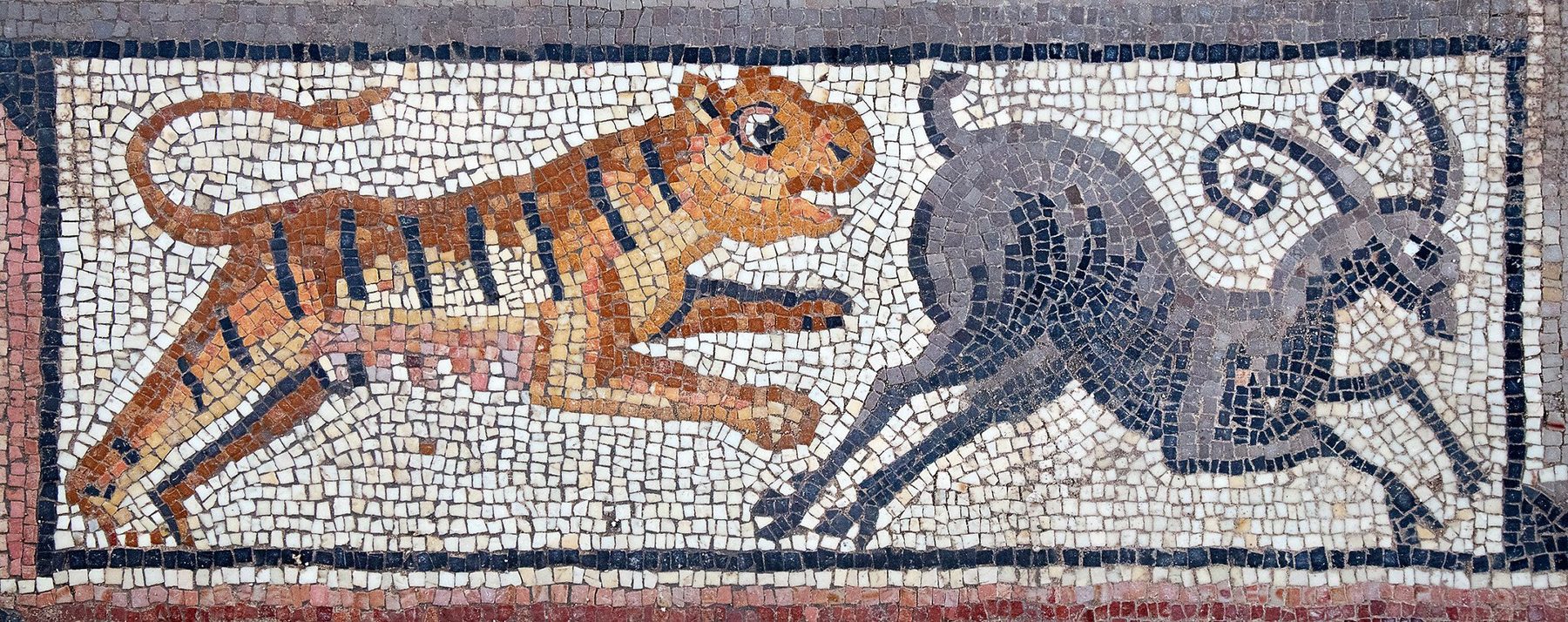
Most ancient inscriptions announce themselves: a name, a title, a prayer, a date. The mosaic floor of the synagogue at Rehov does something stranger. It sets out, town by town, which parts of the country were bound by the laws of the sabbatical year and the tithe, and which were not. It is administrative Hebrew, laid in stone tesserae for a congregation to stand on, and it is the longest such inscription in the language ever found.
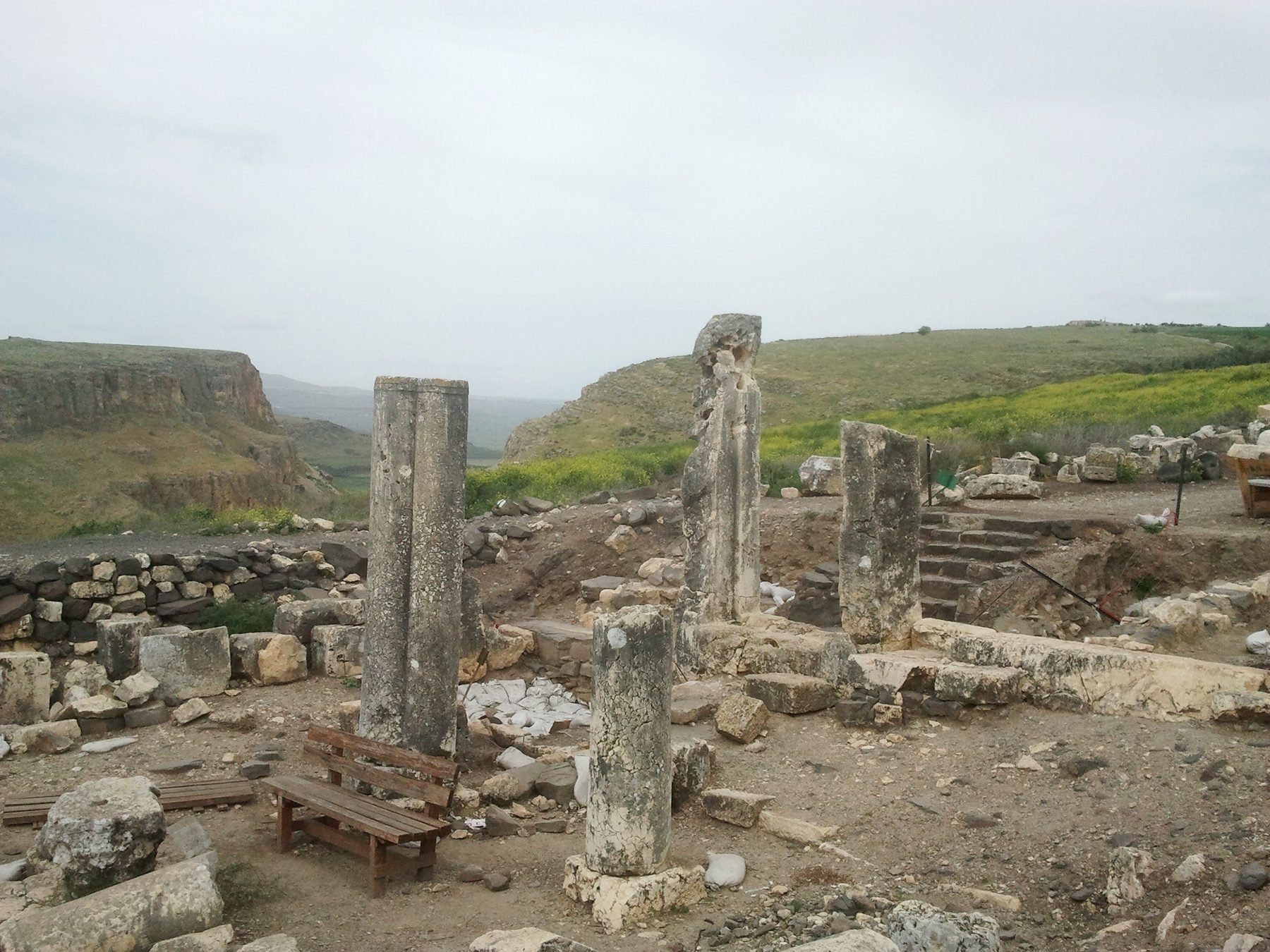
The floor was uncovered in the remains of a synagogue near Tel Rehov, in the Beit She'an valley at the southern edge of the Galilee. The building itself is unremarkable by the standards of Byzantine-period synagogue architecture in the region - a modest prayer hall, one among many built across the Galilee and the Golan in the fourth to seventh centuries CE. What makes it exceptional is what its floor was made to say.

What the text lays out
The inscription is written mainly in Hebrew, with some Aramaic, and its subject is halakhic: the rules governing the sabbatical year (shevi'it), in which Jewish law requires fields within the traditional boundaries of the Land of Israel to lie fallow, and the tithes owed on produce grown within those boundaries. The text works through a series of towns and districts, naming which are reckoned inside the halakhic borders of the land - and so subject to these obligations - and which lie outside them and are exempt.
This is not devotional language. It reads like a reference document, close in content and in places nearly verbatim to passages found in the Jerusalem Talmud, in tractate Sheviit, and in the Tosefta. A community that wanted to know whether produce from a particular village required tithing, or whether a particular field had to rest that year, could in principle look to this floor for an answer.
The mosaic floor
A Hebrew and Aramaic inscription set in mosaic tesserae in the floor of a Byzantine-period synagogue excavated near Tel Rehov, in the Beit She'an valley. It lists towns and districts of the region and states which are bound, for the purposes of the sabbatical year and tithing law, by the halakhic boundaries of the Land of Israel. It is recognised as the longest inscription in ancient Hebrew yet discovered.
Synagogue floor, Tel Rehov excavationWhy it matters as evidence
The value of the inscription lies less in any single fact it records than in what its existence proves about the texts it echoes. The Jerusalem Talmud and the Tosefta survive today in manuscripts copied centuries after the Rehov floor was laid. A sceptical reader can always ask how faithfully a medieval copyist preserved a much older legal tradition, and how much of a rabbinic text's fine detail is later editorial accretion. A mosaic floor cannot be edited after the fact in the way a manuscript can be recopied. Once the tesserae are set, the wording is fixed on the date the floor was laid.
Finding language this close to the Talmudic and Toseftan passages already fixed in stone, in a working synagogue, in late antiquity, is direct physical confirmation that this specific body of halakhic material - detailed geographic rulings about tithe and sabbatical-year boundaries - was already circulating in something close to its later written form centuries before the surviving manuscripts were copied. The floor does not just illustrate rabbinic law. It corroborates the transmission of a particular text.
A fixed witness to a living text
Passages in the inscription correspond closely to material preserved in the Jerusalem Talmud's tractate Sheviit and in the Tosefta. Because a mosaic floor cannot be silently revised the way a manuscript can be recopied, the inscription offers physical, datable confirmation that this halakhic material on sabbatical-year and tithe boundaries already existed in close to its later form well before the earliest surviving Talmudic manuscripts were written.
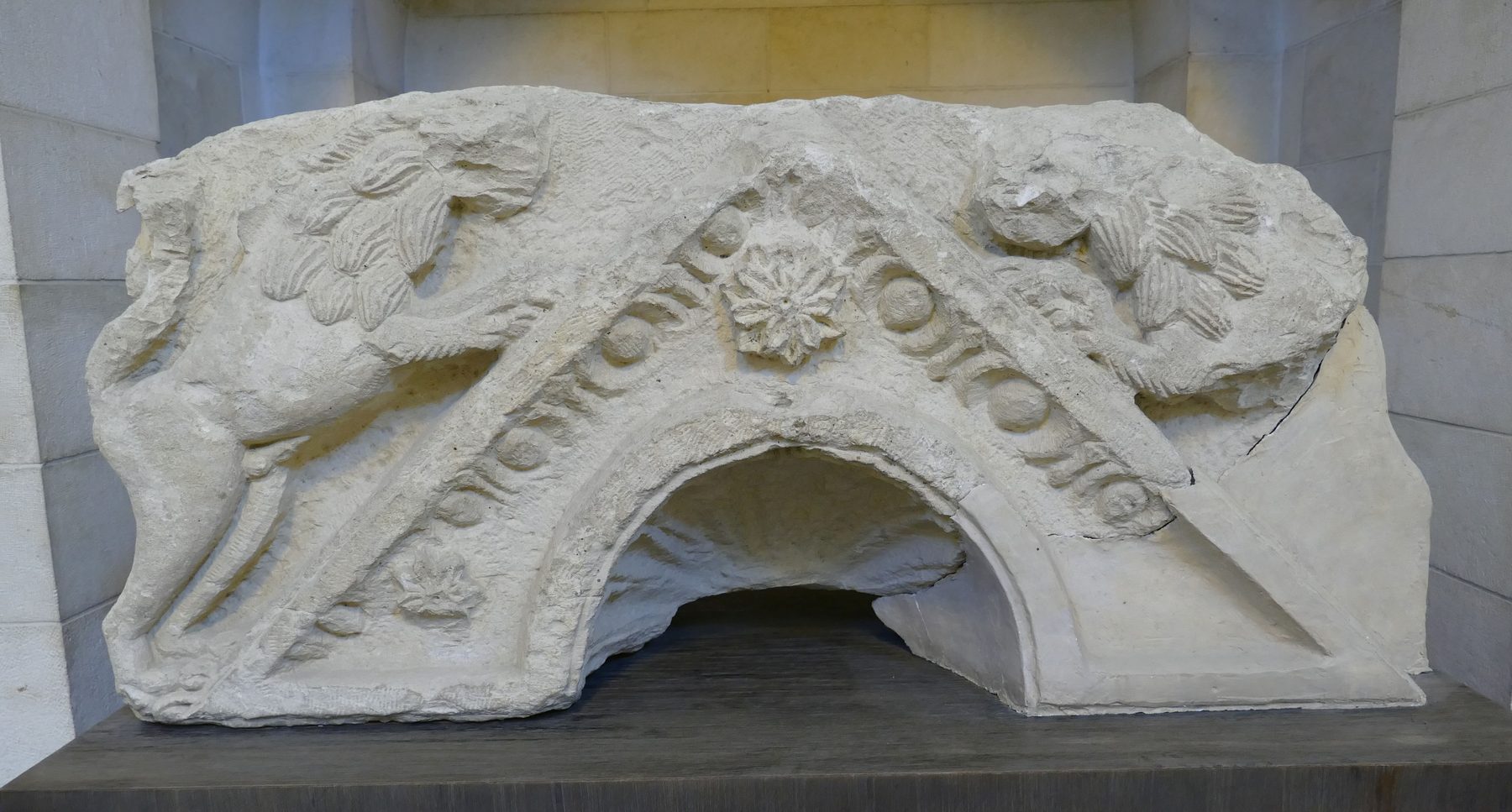
Compared with Jerusalem Talmud, Sheviit; Tosefta, SheviitThe inscription is displayed today at the Israel Museum in Jerusalem, where it can be examined as an object in its own right rather than read only through later copies of the texts it parallels. For a community two thousand years removed from the villages it names, that is close to as good as evidence gets: a legal text, fixed at a known place, standing where the people who lived by it once stood.
Further reading