A synagogue does not usually survive its own demolition. This one did, after a fashion, because an artist happened to be standing in front of it with a burin in the days before the wreckers arrived. The building itself is gone. What remains is a pair of etchings, a documented date, and, discovered nearly five centuries later beneath a city square, the stone footings the etchings had described.
Regensburg's Jewish community was among the oldest in the German lands, settled in the city since at least the eleventh century and concentrated in a quarter close to what is now the Neupfarrplatz. By the early sixteenth century it had built a substantial stone synagogue there, along with a study house, a hospital and a ritual bath - the ordinary infrastructure of a settled medieval community rather than a temporary encampment. That ordinariness is itself evidence. Communities do not build in stone unless they expect to stay.
The community did not get to stay. Emperor Maximilian I had protected Regensburg's Jews against a city council eager to expel them; when he died in January 1519, that protection died with him. Within weeks the council moved. The synagogue and the rest of the Jewish quarter were seized and demolished, and the community that had lived there for some four hundred years was driven out.
Two etchings, made just in time
Albrecht Altdorfer, the painter and city architect of Regensburg, etched the synagogue's interior and exterior in the very short window between the expulsion order and the building's demolition. The interior view shows a vaulted, pillared hall in the Gothic style then current in the region; the exterior shows the building set among the streets of the old Jewish quarter. Altdorfer inscribed the interior print with a note recording that the synagogue was destroyed shortly after the image was taken. The plates are rare, deliberate documentary work by a major German artist of the period, made for no obvious commercial reason except to keep a record of a building about to disappear.
Prints held in European print collections; widely reproducedThe etchings are not incidental sketches. They are close, careful architectural records - proportioned bays, ribbed vaulting, a reader's platform - the kind of attention an artist gives a building he understands he will not see again. For four centuries they were also the only substantial visual evidence that the synagogue had ever existed in that particular form. Everything else was memory, archive references and an empty square.
What the ground confirmed
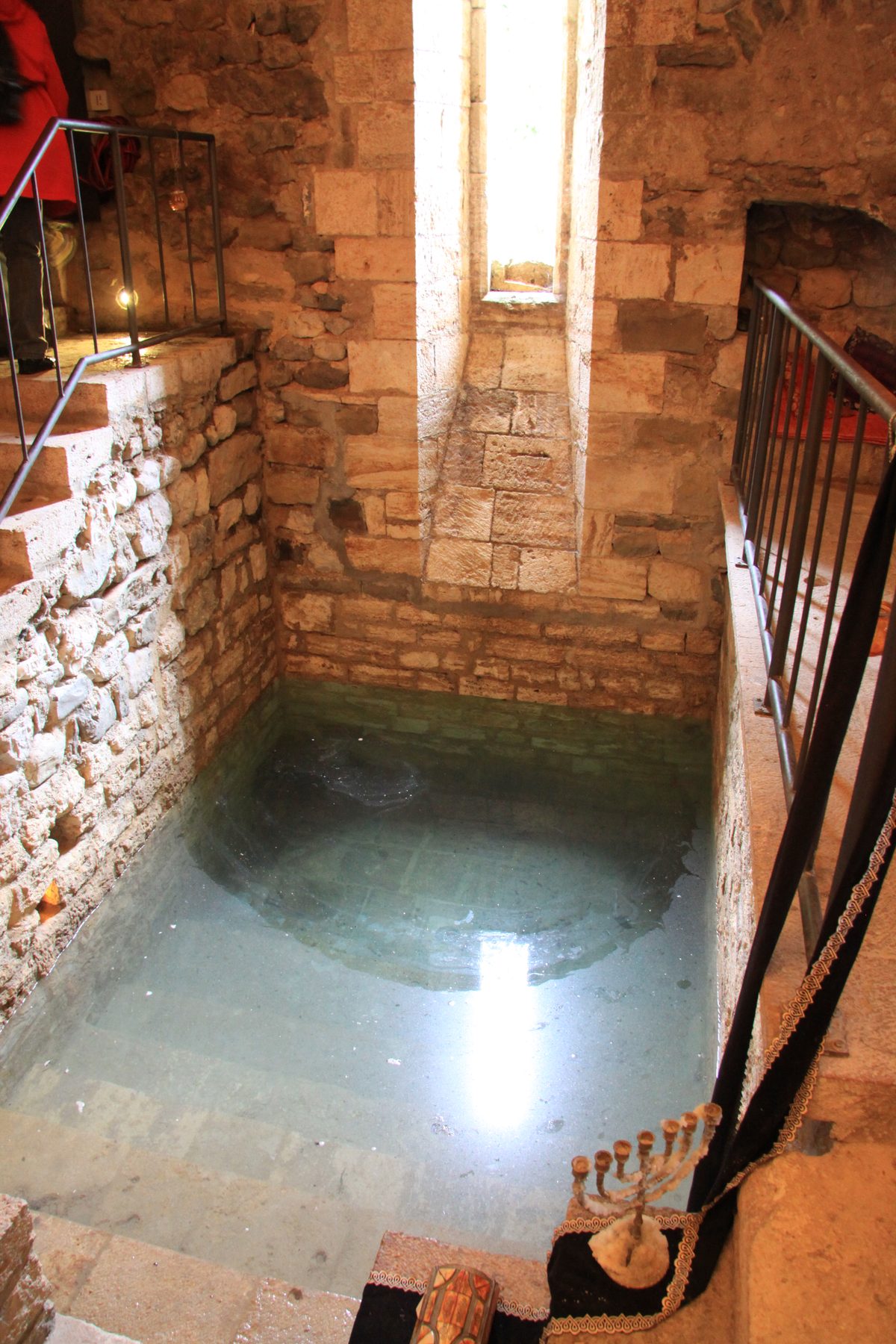
In 1995, work to build an underground car park beneath the Neupfarrplatz uncovered the foundations of the old Jewish quarter directly below the modern square - among them, remains identified as belonging to the synagogue itself, along with traces of other communal buildings and a mikveh. The excavation let archaeologists check the layout Altdorfer had drawn against the footprint actually in the ground: proportions, orientation and the general form of the hall corresponded well enough to confirm that his etchings were a faithful record and not an artist's invention or generalisation.
That correspondence matters beyond Regensburg. Few medieval European synagogue interiors survive in any form, drawn or built; German Jewish communities in particular lost their major medieval buildings to expulsion, demolition and later destruction. A case where an eyewitness image and an excavated foundation can be set against one another is unusual, and it gives historians something firmer than either source offers alone: an architectural plan checked against a picture, and a picture checked against a plan.
The Neupfarrplatz excavation
Construction work beneath Regensburg's Neupfarrplatz exposed the buried foundations of the medieval Jewish quarter, including remains associated with the synagogue destroyed in 1519 and evidence of a ritual bath nearby. The finds let the drawn record and the physical record be compared directly, and the site is now marked at street level rather than built over, keeping the quarter's footprint legible in the modern city.
Neupfarrplatz, RegensburgWhat the case demonstrates, plainly, is that an expulsion can erase a building from a city without erasing it from the record. The council that tore the synagogue down in 1519 did not anticipate that an artist working in its own employ would leave a document precise enough to be checked against the ground nearly five hundred years later. The etchings and the foundations do not restore what was lost. They do something more modest and more durable: they prove, past reasonable argument, exactly what stood there, how it was built, and that it was destroyed on purpose rather than lost to time.
Further reading