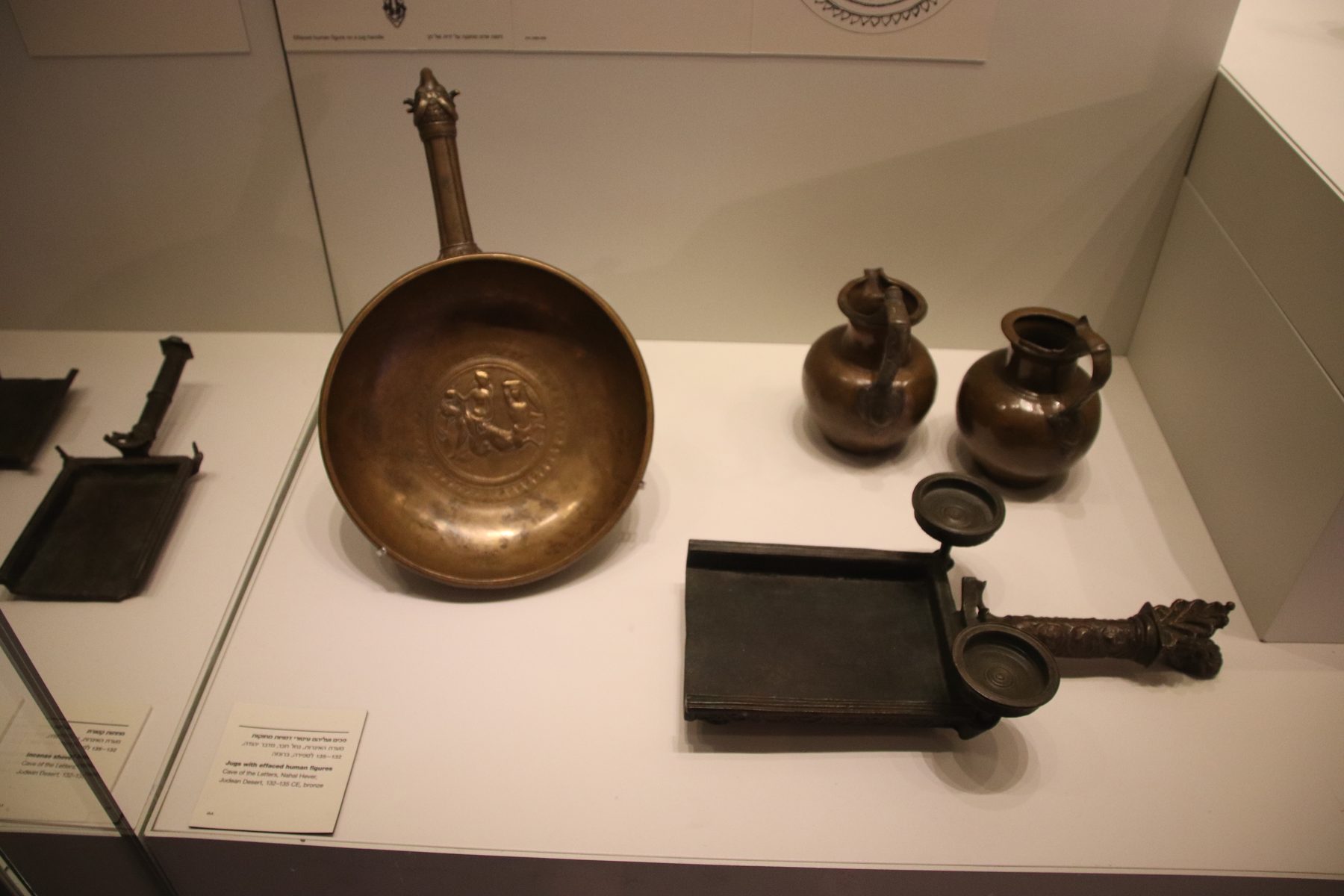
The Cave of Horror sits high in a cliff face above Nahal Hever, a dry canyon cutting through the Judean Desert between En Gedi and the Dead Sea. The name is modern, given by the archaeologists who excavated it in the 1960s and found what the cave actually held: the skeletons of Jewish refugees who fled there during the Bar Kokhba revolt against Rome and never came down. Among the debris of their last encampment - cooking pots, sandals, letters, a woman's mirror - was a leather scroll carrying a Greek translation of the biblical books of the twelve Minor Prophets.
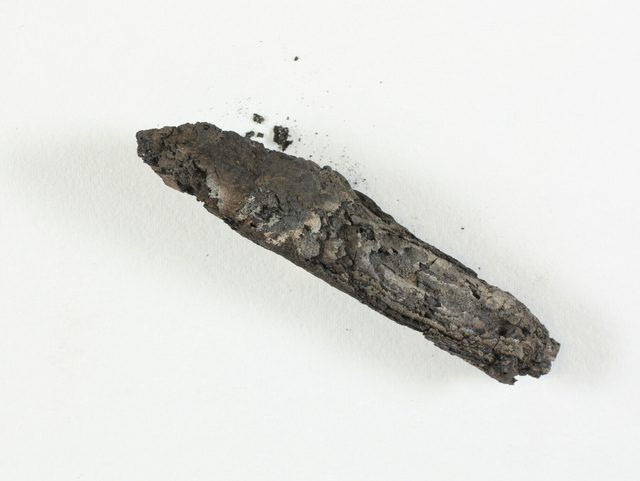
The scroll is fragmentary. Long stretches of it survive only as strips and scraps, some barely wide enough to hold a column of letters. But what remains is enough to place it among the most important Greek biblical manuscripts ever recovered from the Judean Desert, and to settle a question that had puzzled scholars of the Bible in translation for decades: whether Jews of the Roman period were still producing their own Greek versions of scripture, distinct from and older than the Christian editions that eventually eclipsed them.

What the scroll is
The manuscript is written on leather, in Greek, in a script that palaeographers place in the late first century BCE to the early first century CE - meaning it was already old, by a generation or more, when its last owners carried it into the cave during the Bar Kokhba revolt of the 130s CE. It preserves portions of at least eight of the twelve Minor Prophets, including sections of Jonah, Micah, Nahum, Habakkuk, Zephaniah and Zechariah, arranged as a single continuous scroll rather than as separate books.
What makes the scroll significant is not simply that it is Greek and biblical and old, but what kind of Greek it contains. Its text is not the familiar Septuagint, the Greek translation traditionally associated with Alexandrian Jewry and later adopted wholesale by the early Church. It is a distinct, more literal revision of that older Greek translation, brought closer to the developing standard Hebrew text of the period. Scholars refer to this family of revision as the kaige tradition, after a habit of translating a particular Hebrew phrase with the Greek "kaige" ("and indeed") in place of looser renderings used by the original Septuagint translators.
8ḤevXIIgr, the Greek Minor Prophets scroll
A leather scroll bearing a Greek text of the twelve Minor Prophets, written in a hand dated on palaeographic grounds to roughly the turn of the era. Recovered in fragments from the Cave of Horror in the Nahal Hever gorge, Judean Desert, alongside the remains of refugees from the Bar Kokhba revolt (132 to 135 CE). Its text follows a revision of the Septuagint distinct from the version later standard among Christian communities, bringing the Greek closer to the Hebrew as the Hebrew text itself was stabilising. It is among the oldest substantial witnesses to any Greek translation of these biblical books.
Israel Museum, JerusalemWhy it was there
The presence of a Greek biblical scroll among Bar Kokhba-era refugees is itself a piece of evidence, not just a curiosity. It tells us that Greek was in active liturgical or scholarly use among at least some Judean Jews on the eve of the revolt, alongside the Hebrew and Aramaic documents found in the same caves - contracts, letters, even correspondence attributed to the rebel leadership itself, found nearby in the same cave system and in the adjacent Cave of Letters. A Greek scripture scroll was not a foreign import carried in from the diaspora; it belonged to the working religious life of people who ended their lives in a Judean cliff cave rather than accept Roman terms.
The refugees' choice of this particular cave was tactical rather than symbolic. Nahal Hever's cliffs offered natural refuge from Roman patrols during the final, brutal phase of the revolt, when much of the Judean countryside had been laid waste. Roman siege installations on the clifftops above both the Cave of Horror and the nearby Cave of Letters show that the tactic did not work: the garrisons above simply waited, and the people below did not come out.
That precision is the scroll's real value as evidence. Most ancient Greek biblical manuscripts survive as later copies, sometimes centuries removed from their source and passed down through Christian scribal transmission, which makes untangling earlier Jewish translation practice from later editorial layers difficult. The Nahal Hever scroll, sealed in a cave and dated by both palaeography and its refugees' known fate, offers a fixed point: a Jewish Greek biblical text, demonstrably in Jewish hands, from a demonstrable moment before the revolt's end in 135 CE. It did not pass through Christian hands at all before it went into the ground.
The Bar Kokhba revolt and the Judean Desert caves
The Bar Kokhba revolt was the last large-scale Jewish uprising against Roman rule in Judea, crushed after roughly three years of fighting. In its final phase, refugees from villages across the Judean hills fled to caves in the cliffs above the Dead Sea, including Nahal Hever's Cave of Horror and Cave of Letters. Roman siege camps, still visible on the clifftops, blockaded the caves rather than storm them. Excavations from the 1950s to 1960s recovered the refugees' remains and their possessions, including administrative and personal documents in Hebrew, Aramaic and Greek - among them the Minor Prophets scroll.
Nahal Hever, Judean Desert, IsraelFurther reading