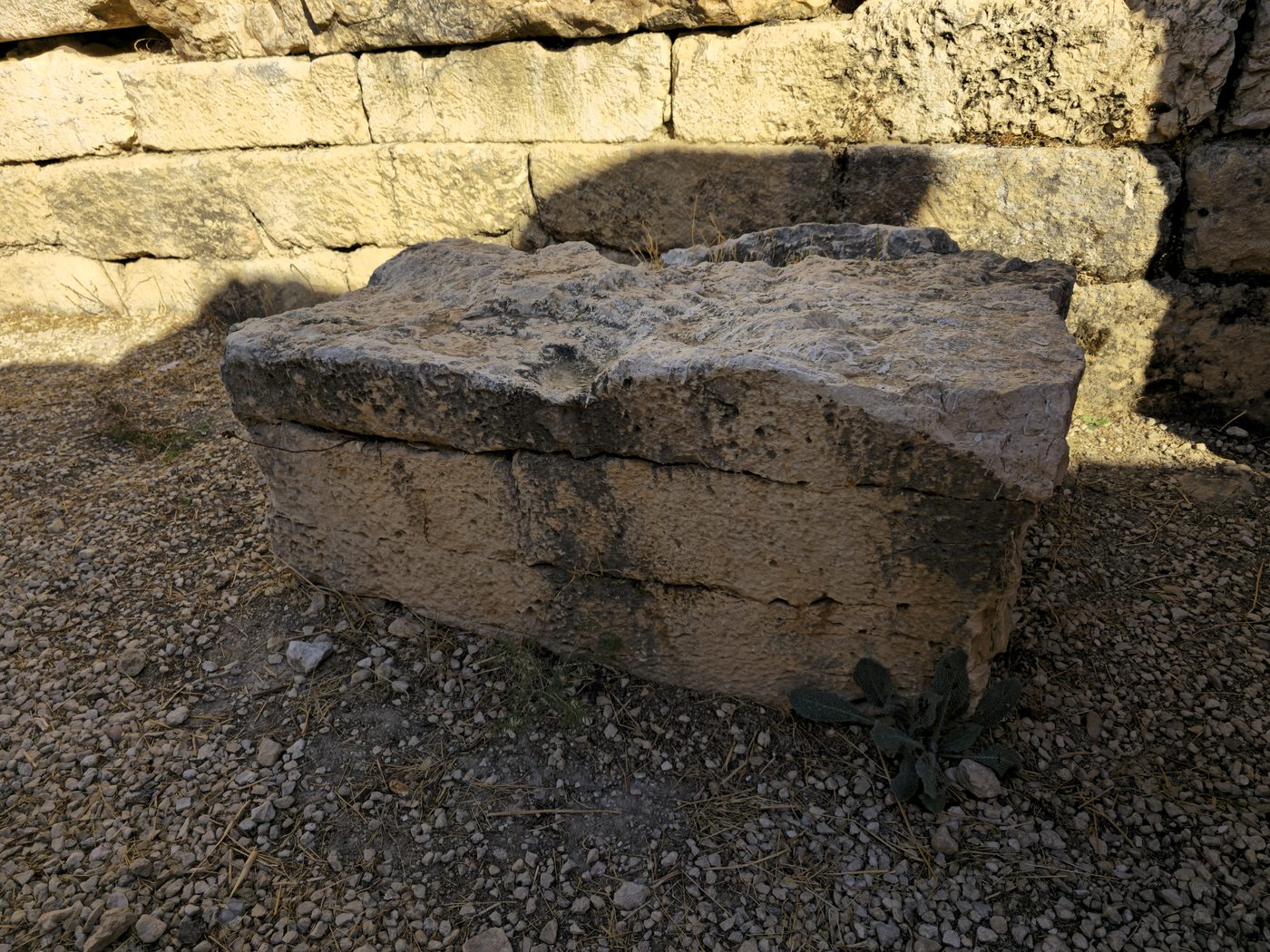
What survives of Maresha is mostly underground. The town itself, up on the Judean lowland hills between the coastal plain and Hebron, was flattened long ago and its stones taken for other buildings. What was not taken is what lies beneath it: an entire second town cut into the soft, easily worked chalk on which Maresha stood, a labyrinth of cisterns, quarries, stables, olive presses, dovecotes and burial chambers that the inhabitants dug for centuries and that nobody since has had much reason to fill in. Beit Guvrin-Maresha National Park, which holds the site today, is above ground a modest archaeological park. Below ground it is one of the densest concentrations of man-made caves anywhere in the Levant.
The town Maresha itself is old - it appears in the biblical lists of the towns of Judah and in the book of Micah - but the caves that make the site famous belong mostly to its later life, when it was the chief city of Idumea under Ptolemaic and then Seleucid rule in the third and second centuries BCE. The population by then was mixed: Idumeans descended from Edomite settlers who had moved into the southern hill country, alongside Phoenician and Greek residents drawn by trade. It was a small, cosmopolitan lowland town, and it left behind a startling amount of evidence for how such a town actually worked - not through its ruined houses, which tell relatively little, but through the caves quarried beneath them.
Cisterns, columbaria, and a town built twice
Water in the Judean lowlands has always had to be caught and kept, and the Maresha caves begin, practically, as cisterns - bell-shaped chambers cut narrow at the surface and wide below, plastered to hold winter rain through the dry season. Once a household had dug a cistern it had, in effect, already begun quarrying, and the chalk taken out was itself the building stone for the house above. Digging down paid for building up. That single practical fact explains why the underground town grew as large as it did: every structure on the surface implied a cavity beneath it, and generations kept enlarging what earlier generations had begun.
Some of the resulting caves were put to specialised use. The columbaria - dovecote caves, their walls cut with row upon row of small nesting niches - are the most visually startling of them, chambers whose every surface is honeycombed for pigeons. Doves and pigeons at Maresha supplied meat, and their droppings supplied fertiliser and, for tanning and dyeing installations elsewhere on the site, ammonia. Other caves served as olive presses, working from vats and press-weights cut directly into the rock, and others still as stables, workshops and simple storage. None of this was built to be seen. It was infrastructure, cut by people solving the ordinary problems of an ancient lowland town, and it happens to have survived far better than the town itself because there was nothing above ground worth quarrying it for a second time.
The subterranean complexes
Beneath the ruined surface town of Maresha, excavation has uncovered an extensive network of man-made caves cut into the local chalk bedrock: cisterns, columbaria with carved nesting niches for doves and pigeons, olive presses, stables and burial chambers, most datable to the Hellenistic-period occupation of the site. The complexes were excavated over successive campaigns from the late nineteenth century onward, including systematic Israel Antiquities Authority work directed by Amos Kloner from 1989, and continuing seasons run with Bar-Ilan University.
Beit Guvrin-Maresha National Park, Israel Antiquities AuthorityThe painted tomb and the Sidonian community
The single most striking find at Maresha is a painted burial cave in the town's necropolis, discovered in the early twentieth century and known from its Greek inscriptions as the tomb of a man named Apollophanes. Its walls carry a painted frieze of animals, real and imagined - lion, leopard, giraffe, rhinoceros and others alongside creatures out of Greek myth - rendered in a lively Hellenistic style unlike almost anything else surviving from the ancient Land of Israel. A Greek inscription identifies the tomb's occupant as the leader of the Sidonian community at Maresha, evidence that a resident colony of Phoenicians from Sidon lived in the town as neighbours to its Idumean majority and its Greek administrators.
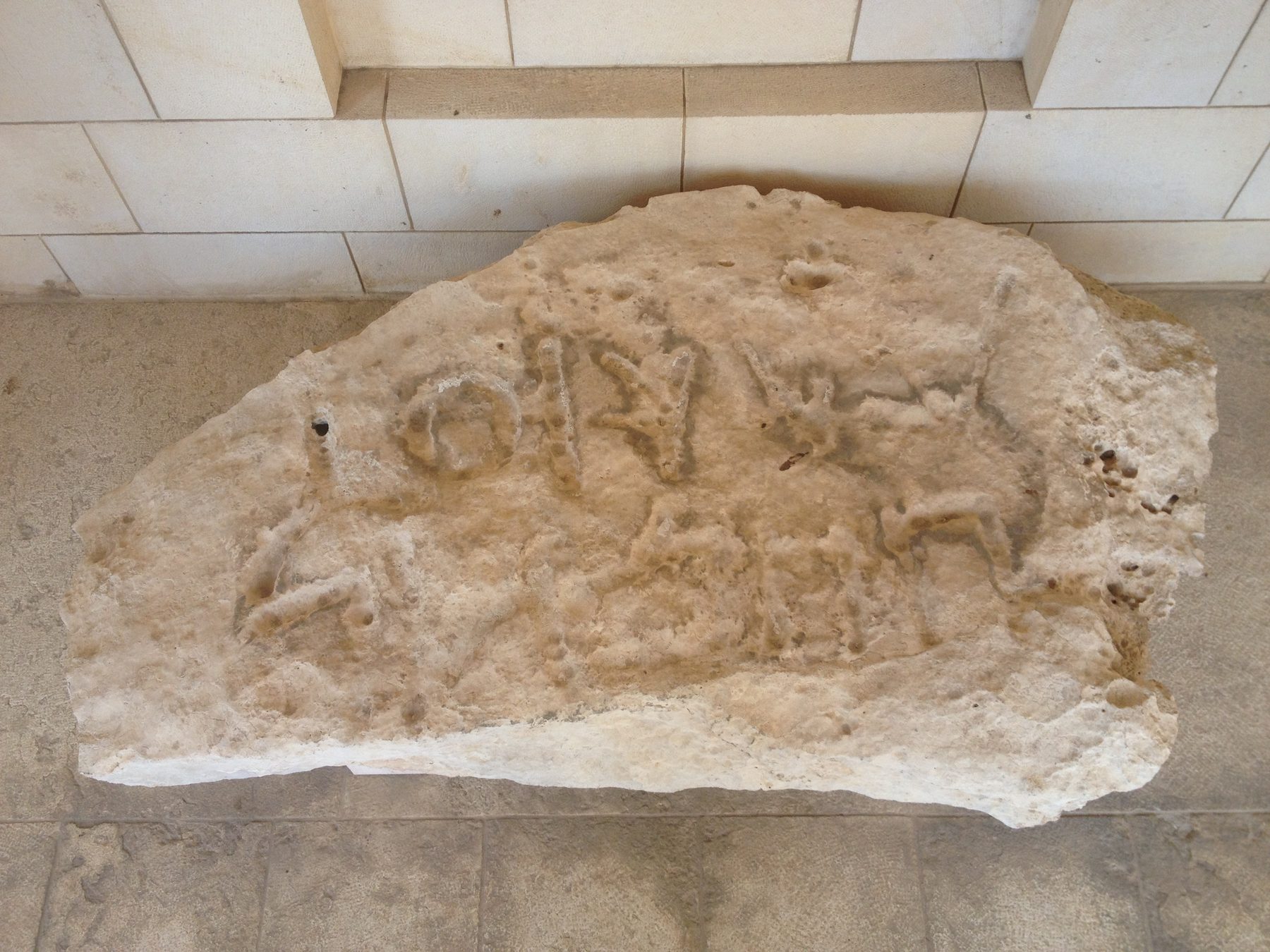
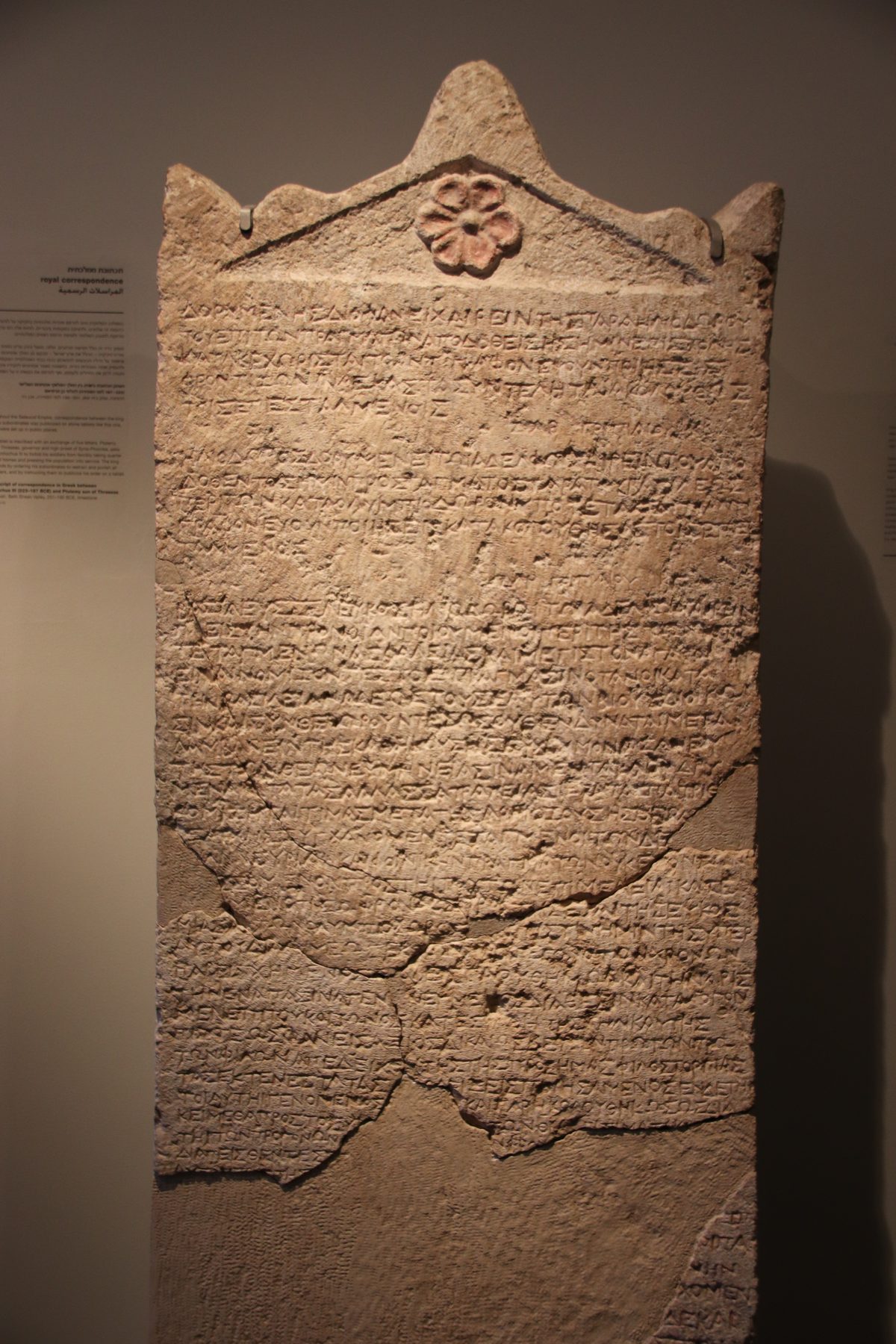
The tomb matters as evidence on two levels at once. As art history, it is a rare surviving example of Hellenistic tomb painting from the region, its animal frieze unusually well preserved by having spent two thousand years sealed underground rather than exposed to weather. As social history, the inscription is direct testimony - not inference from pottery types or building styles, but a named claim in Greek, carved by the community itself - that Maresha's population in this period was genuinely plural: Idumean, Phoenician and Greek residents sharing one small lowland town, each visible in the material record rather than merged into an assumed single culture. Ostraca and inscribed objects recovered from the site, in Greek and in Aramaic, corroborate the same picture of a multilingual community going about ordinary trade and record-keeping.
Why the town ends where the evidence gets sharper
Maresha's occupation does not fade out gradually; it stops. Josephus records that the Hasmonean ruler John Hyrcanus conquered Idumea and its cities in the late second century BCE, and Maresha was destroyed not long after, apparently by Parthian forces early in the following century, and never significantly resettled. That abrupt end is itself part of why the site is so informative: a town abandoned rather than continuously rebuilt leaves its last phase largely undisturbed, sealed rather than overwritten by later construction. What excavators find in the upper fill of the caves is close to a single snapshot of Hellenistic-period lowland life, rather than the blended, hard-to-separate layers that centuries of continuous habitation usually leave behind.
That combination - an unusually complete underground infrastructure, a rare painted tomb with a legible inscription, and a settlement whose end is early and clean enough to leave one period sharply in focus - is why Maresha carries more evidential weight than its modest surface ruins would suggest. It corroborates, concretely and outside any biblical or literary text, that the Judean lowland in the Hellenistic period was a working, mixed, literate landscape: Idumeans, Phoenicians and Greeks living in one small town, keeping pigeons, cutting cisterns, burying their dead with inscriptions naming themselves, in the two centuries before Hasmonean rule reshaped the region. In 2014 the caves of Maresha and neighbouring Beit Guvrin were inscribed together as a UNESCO World Heritage Site, recognition of the same fact the excavators had already established underground: that this ordinary-looking hill preserves an unusually complete record of how people actually lived here.
The tomb of Apollophanes
A painted burial cave in the Maresha necropolis, its walls decorated with a frieze of real and mythical animals in Hellenistic style, carries a Greek inscription naming Apollophanes son of Sesmaios as head of the resident Sidonian community. The tomb was uncovered in 1902 and remains one of the best-preserved examples of Hellenistic-period tomb painting found in the region, exhibited and protected in place within the park.
Maresha necropolis, Beit Guvrin-Maresha National ParkFurther reading