A short walk from Kibbutz Maoz Haim, on the eastern edge of the Beth Shean valley, the ground holds three synagogue floors stacked one above another. Nobody built this way by accident. A community here kept meeting on the same spot for something like four hundred years, and when a building failed or fell out of use, its successor was raised directly on top of it rather than somewhere new. The result is a rare kind of evidence: not a single snapshot of Jewish life in late-antique Galilee, but a sequence, a set of floors a visitor can read like the rings of a tree.
The site sits in situ, in the open, in the valley it was built in. That matters. Most of what survives from Jewish communities of this period survives as a fragment lifted into a museum case - a mosaic panel cut free of its floor, an inscription pried from its wall. Maoz Haim is instead still where it was laid, still oriented the way its builders oriented it, still legible as a building and not only as a collection of pieces. What it proves does not depend on trusting a label. It depends on walking the ground.

Three buildings, one address
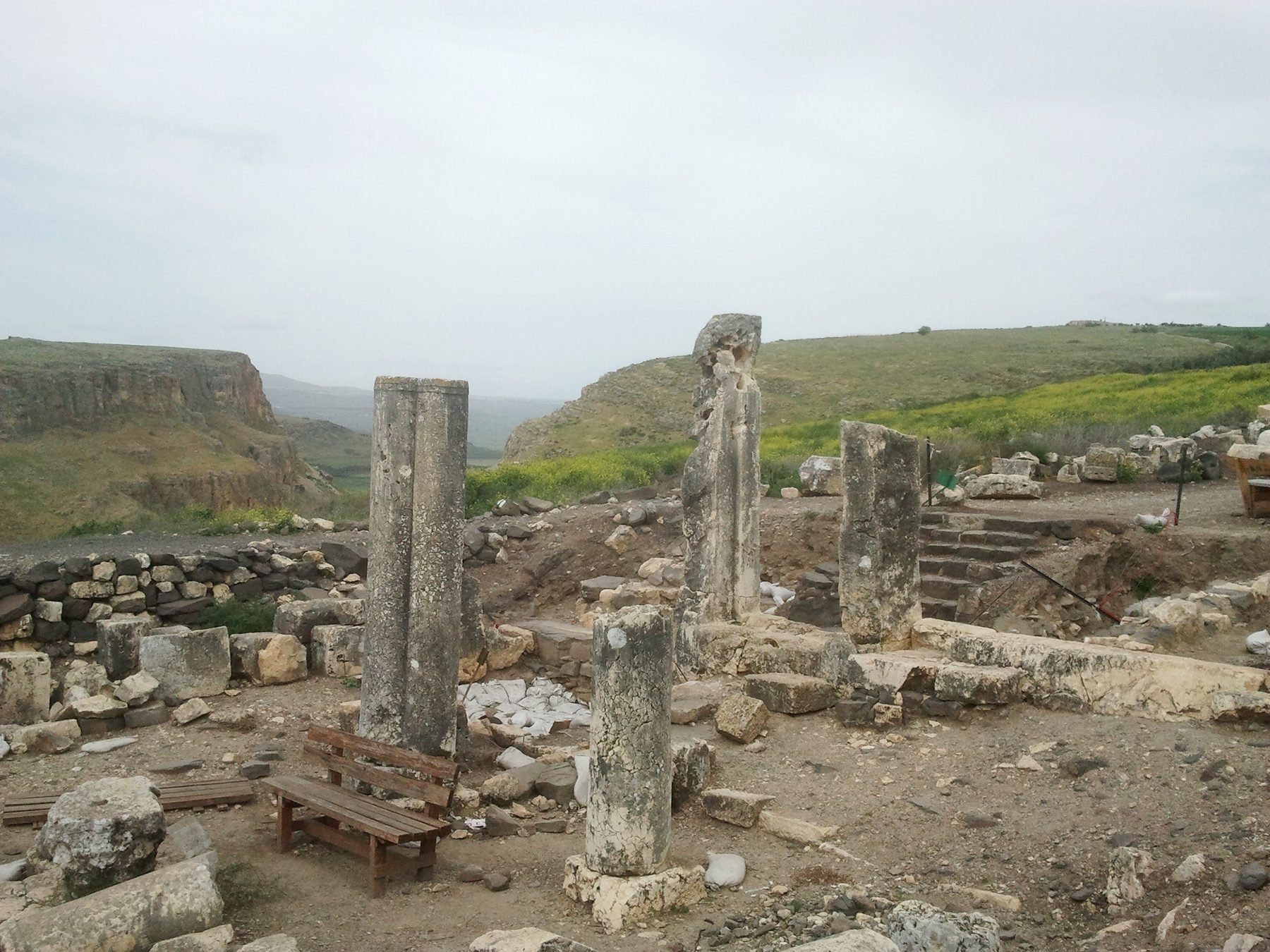
Excavation at the site uncovered a sequence of three synagogue structures built one on top of another over roughly four centuries, from around the fourth century CE into the early Islamic period. Each phase kept broadly the same footprint and the same orientation, with a mosaic floor renewed or replaced as the building above it changed. The stratigraphy - the layering of the phases in the earth - is what allows archaeologists to set the sequence in order and estimate how long each phase stood before being rebuilt.
Excavated site, Beth Shean valley, IsraelWhat the floors show
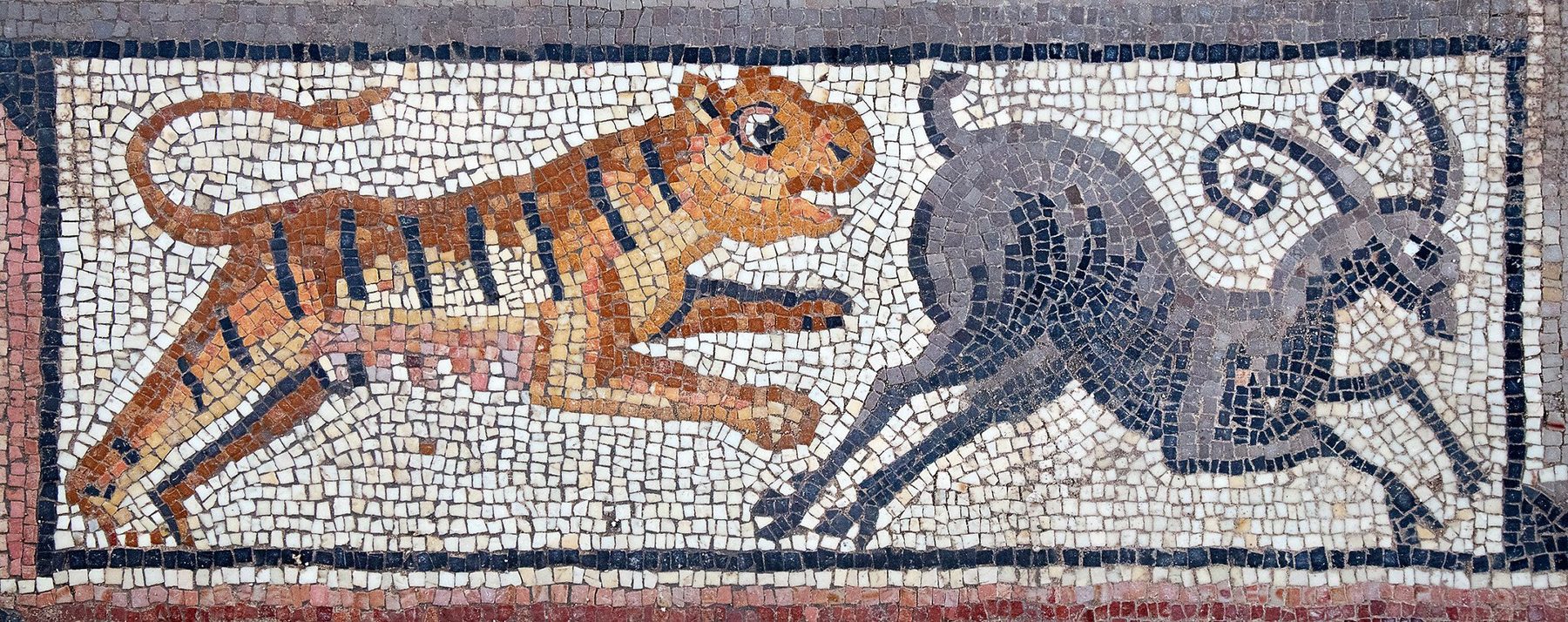
The mosaic pavements are geometric in the main, made of small coloured tesserae set into patterns of the kind found across late-antique synagogues in the region - a decorative language shared with churches and public buildings of the period, and not unique to Jewish sites. What marks the building as a synagogue rather than any other public hall is the combination of its orientation, toward Jerusalem, its internal arrangement suited to communal prayer, and inscriptions found within it that name the building's purpose and its patrons.
One of the floors carries a dedicatory inscription, the kind of text common in synagogues of this era: a record of who gave money toward the building or its renovation, sometimes naming a donor, sometimes simply invoking a blessing on those who supported the community's house of prayer. These inscriptions are not incidental decoration. They are the building speaking about itself, in its own period, in its own words, without needing a later chronicler to describe what the place was for.
The building names itself
An inscription set into one of the mosaic floors records a dedication connected to the synagogue's construction or renovation, in the tradition of donor texts known from other synagogues of the period. Combined with the building's Jerusalem-facing orientation and its layout for communal worship, the inscription is part of the evidence that identifies the structure as a synagogue rather than assuming it from architecture alone.
Mosaic floor, in situ, Beth Shean valleyWhy a valley floor matters
The Beth Shean valley in late antiquity was a mixed landscape, its cities and towns home to Jews living alongside pagan, Samaritan and, later, Christian neighbours under Roman and then Byzantine rule. A rural community maintaining a synagogue here, generation after generation, rebuilding it in the same spot each time a structure gave out, is not a dramatic claim. It is a quiet one, and that is exactly its value as evidence. Maoz Haim does not record a single spectacular event. It records the ordinary, repeated fact of a community that kept meeting, kept building and kept naming its patrons on the floor beneath its feet for longer than most political regimes in the region lasted.
That is the case the site makes, without needing to argue it. Continuity in the Galilee across the Roman-to-early-Islamic transition is sometimes treated as a matter for texts and inference. Here it is a matter of stratigraphy - three floors, one on top of the other, on the same patch of ground.