Most synagogues that survive from medieval Spain survive because they were converted into something else - a church, a warehouse, a private house - and stripped of their contents in the process. The synagogue inside the walls of Lorca Castle, in the Murcia region of south-eastern Spain, survives a different way. It was simply left. Excavation found its floor plan intact, its ritual fittings in place and small glass oil lamps still hanging from the ceiling on the metal hooks that had held them when the building went out of use. Nothing was cleared out for reuse. The room was closed, and the world moved on around it, until archaeologists opened it again centuries later.
That combination - a complete plan and untouched furnishings - is unusual enough that the site has become one of the more closely studied Jewish buildings excavated in Spain in recent decades. It sits inside the Jewish quarter that occupied part of the castle precinct at Lorca in the final years before the expulsion of the Jews from Spain in 1492, and it gives archaeologists something rarer than an inscription or a document: a working synagogue interior, largely as its last congregation left it.

What was found
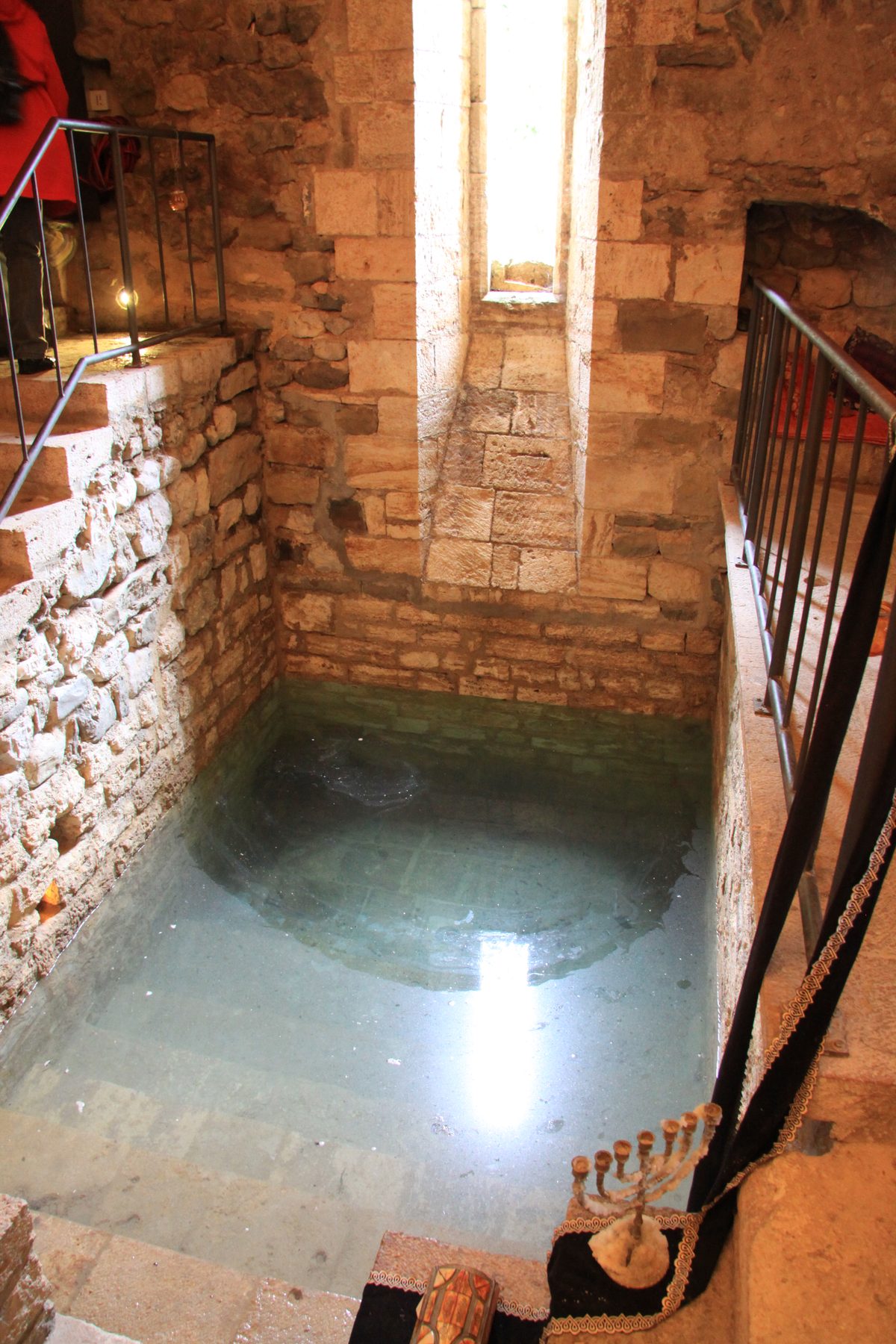
The synagogue occupies part of the fortified enclosure of Lorca Castle, which overlooks the town from its hilltop and had, by the later Middle Ages, come to house a mixed community living under the protection of the fortress walls. Excavation inside the castle uncovered a rectangular prayer hall with benches around its walls, a niche in the wall oriented toward Jerusalem that would have held the Torah scrolls, and a raised platform for the reading of the Torah - the standard furniture of a working synagogue, recovered not as fragments but as a coherent room. Around the hall, archaeologists also identified a bath under the layers of the site associated with a mikveh, a ritual immersion pool, part of the same Jewish quarter of the fortress.
The detail that has drawn the most attention is domestic rather than architectural: a set of small glass oil lamps, of a type used across the medieval Mediterranean to light interiors, found still hanging in position from the hooks set into the ceiling. Lamps like these are common enough as isolated finds in the region's archaeology. Finding them still strung in their working positions, inside the room they lit, is not. It points to a building abandoned rather than emptied - closed up with its fittings in place rather than stripped and repurposed, which is the more usual fate of a synagogue in Spain after 1492.
When it was built, and when it fell silent
The synagogue belongs to the last phase of open Jewish life in Lorca, in the decades before 1492, when the Catholic Monarchs' edict ordered the Jews of Castile and Aragon to convert or leave. Lorca's Jewish quarter, tucked inside the protection of the castle rather than in the open town below, was one of many such communities across the Crown of Castile that kept a synagogue functioning up to the eve of expulsion. The physical evidence at the site is consistent with a building that went out of use at, or close to, that moment rather than one abandoned earlier and later reoccupied - though the excavators have been careful to describe the sequence of the site's final years as a question the archaeology narrows rather than settles outright.
Because the castle continued to serve a military and administrative role after 1492, the synagogue quarter was not immediately redeveloped for housing or commerce in the way many town-centre synagogues in Spain were, which is very likely why the fittings survived to be excavated rather than being dismantled for building material. The find belongs to a wider pattern of Jewish quarters uncovered inside or beside Spanish castles and fortified towns, where a change in the site's use after expulsion sometimes meant the ground was left largely undisturbed until modern archaeology reached it.
A prayer hall closed at the expulsion
Excavation inside Lorca Castle recovered a synagogue prayer hall with its benches, its Jerusalem-facing Torah niche and a reading platform intact, alongside remains associated with a mikveh in the same quarter. Small glass oil lamps were found still hanging from ceiling hooks in their working positions. The building's last active phase falls in the years before the 1492 edict that ordered Spain's Jews to convert or leave.
Lorca Castle Archaeological Park, MurciaWhy it matters as evidence
Documents can describe a synagogue - its location, its congregation, an argument over its upkeep - without ever showing what the room looked like or how a service inside it actually functioned. Lorca supplies the part the documents cannot: a floor plan that shows where people sat and where the Torah was kept, oriented correctly toward Jerusalem, fitted out with the ordinary lighting of daily use rather than staged for later visitors. It corroborates, from the ground rather than from the archive, that organised congregational Jewish life continued in provincial Castilian towns right up to the edict that ended it, and it does so with an object as unglamorous and as convincing as a row of glass lamps still on their hooks.
Held at Lorca Castle
The synagogue remains form part of the Lorca Castle archaeological park, in the Murcia region, where the excavated Jewish quarter is presented alongside the fortress's other medieval structures. It stands among a small group of Spanish synagogue sites - most famously in Toledo - where a Jewish prayer hall from before 1492 can still be walked into, rather than only read about, which is what makes Lorca a genuine glass case: the room and its fittings, not a reconstruction of them.
Lorca Castle Archaeological Park, Region of MurciaThe site now sits within the wider Lorca Castle archaeological park, presented to visitors alongside the fortress's other medieval remains, and it functions as one of Spain's clearer physical witnesses to a community whose buildings were, in most other towns, converted, demolished or built over long before archaeology had the chance to look.