Japhia sits on a low hill just southwest of Nazareth, in the heart of Lower Galilee, and for most visitors today it is a modern Arab town with an ancient name still attached to it - Yafa, the Hebrew Yafia. Underneath the modern streets lies a Jewish village with a very long memory of its own: fortified and defended during the great revolt against Rome in the first century CE, and still Jewish enough, centuries later, to lay a mosaic floor in a synagogue that named its congregation in stone. That floor is the subject here, not the legend of the place, though the two sit close together.
What survives is a pavement, not a building. The walls of the synagogue that stood above it have not been preserved to any height worth describing, and no single find from the site carries the fame of the grander Galilee synagogues at Beit Alfa or Hammat Tiberias. What Japhia offers instead is more modest and, in its way, more useful: a village-level floor, decorated with an eagle and a wheel-shaped medallion, that shows how far this decorative language had travelled by the time an ordinary Galilee community sat down to build its own house of prayer.

What was found, and where
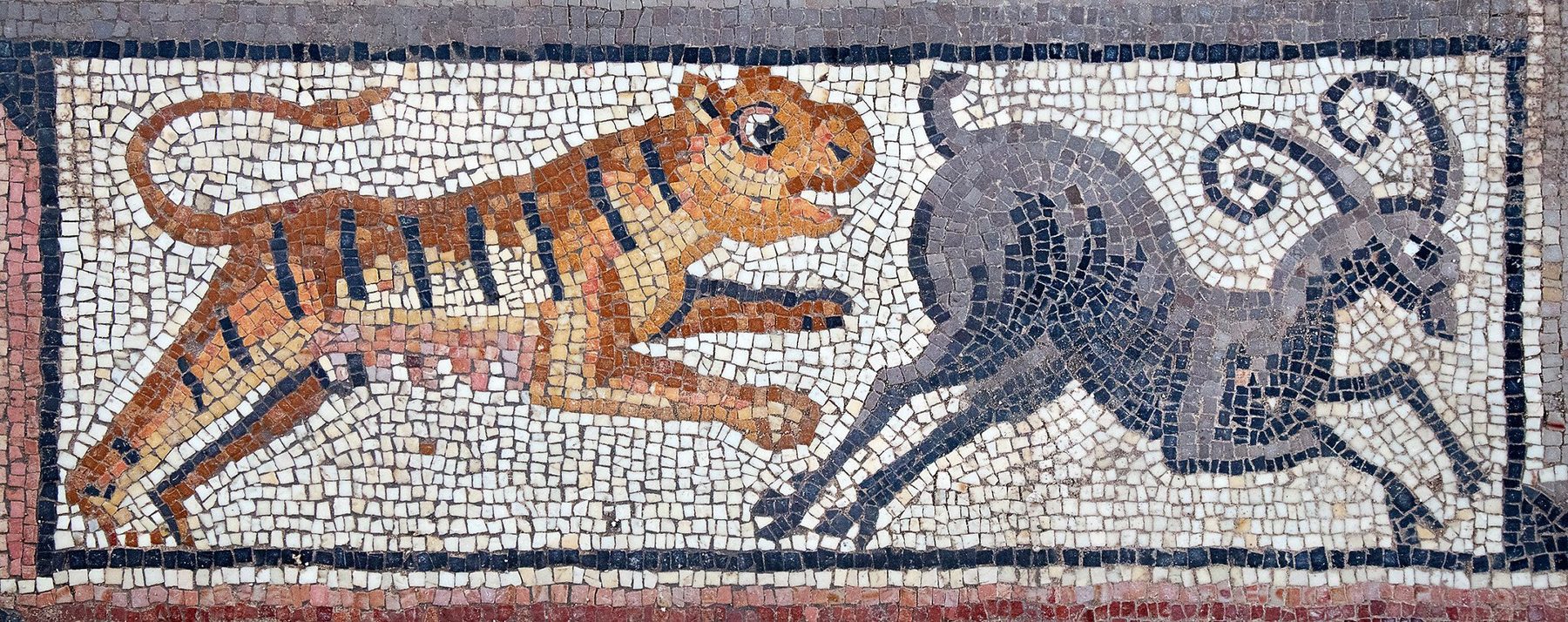
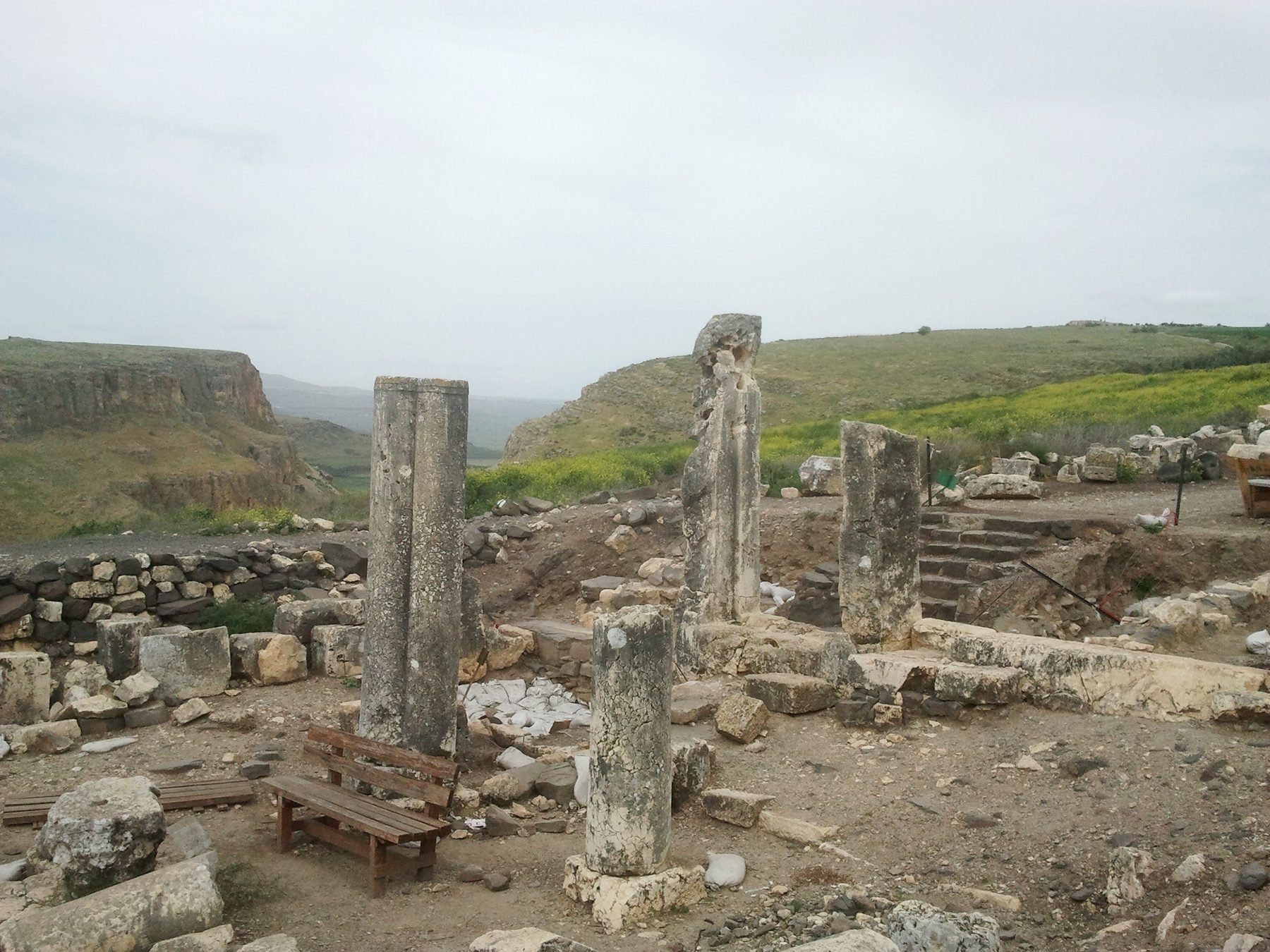
Excavation at Japhia in the twentieth century uncovered the remains of a synagogue building with a decorated mosaic floor, set within the built-up area of the modern town rather than in an open, easily managed archaeological park. That is the ordinary condition of Galilee village archaeology: a find made under someone's field or yard, recorded, partly cleared, and then largely left where it lay, in situ, rather than lifted to a museum case. The floor's decoration includes an eagle rendered in tesserae and a wheel-shaped medallion of the kind used elsewhere in the region to frame a zodiac cycle - a circle divided into segments, each holding a figure or symbol, with a further image at the centre. Weathering and later disturbance have left the pavement incomplete, and not every element of the original design can be read with confidence today.
On style and by comparison with better-preserved Galilee floors, the synagogue is generally placed in late antiquity, in the centuries after the destruction of the Second Temple, when this decorative vocabulary of wheels, animals and geometric borders spread across a string of Jewish villages in the Galilee and the Golan. A precise building date for Japhia is harder to pin down than the style itself, and is best treated as an approximate placement within that wider late antique building phase rather than a fixed year.
The Japhia synagogue mosaic
A mosaic pavement from a synagogue at ancient Japhia, in Lower Galilee, decorated with an eagle and a wheel-shaped medallion in the regional tradition of geometrically framed synagogue floors. The pavement survives in situ, incomplete, within the modern town of Yafa. It has not been reassembled or transferred to a museum collection.
In situ, Yafa (Japhia), Lower GalileeThe revolt next door
Japhia's place in the story of the first Jewish revolt against Rome, in 66 to 73 CE, is well attested independently of the mosaic. The Jewish historian and general Josephus, who commanded the Jewish forces in the Galilee at the start of the revolt before he was captured by the Romans and turned to writing its history, names Japhia among the Galilean towns fortified against the coming Roman campaign, and it fell to Roman forces during the fighting that swept the region. The synagogue whose floor survives today was built later, in the centuries after that war was lost and the Temple in Jerusalem destroyed - a Jewish community rebuilding ordinary religious life on the same hill where an earlier generation had dug in against Vespasian's legions.
That sequence matters for what the site can tell us. It is not evidence of the revolt itself; the fortifications Josephus describes and the mosaic floor belong to different centuries and different structures. What the continuity shows is something quieter and, in the end, more telling: a Jewish village that survived defeat, survived the loss of the Temple that had anchored its worship, and still found the means, generations on, to build a synagogue and pay for a decorated floor. Destruction did not end Jewish presence on that hill. It only interrupted it.
A fortified Galilee town
Josephus lists Japhia among the towns of Lower Galilee that Jewish forces fortified at the outbreak of the revolt against Rome, and records its fall to Roman troops during the Galilee campaign. The account comes from Josephus's own narrative of the war rather than from an inscription at the site, and should be read as literary testimony, not as an archaeological find in itself - though it fixes Japhia firmly on the map of the revolt, well before the synagogue floor was ever laid.
Josephus, The Jewish WarFurther reading
Why it counts as evidence
Set beside the grander, better-published synagogue floors of the Galilee, Japhia is a minor entry - incomplete, unglamorous, still lying under a working town rather than displayed for visitors. That is exactly its value. Ancient Jewish life did not happen only at the sites grand enough to be turned into national parks. It happened in villages like this one, whose synagogue floor is one data point among many that together sketch the real distribution of Jewish settlement in the Galilee in late antiquity: village after village, each building along the same shared decorative grammar of wheel, animal figures and geometric border, each paying for it out of its own modest means.
The floor does not prove a text or settle a debate the way a named inscription might. What it corroborates is broader and, for that reason, harder to dismiss: that a defeated community, on a hill Rome had once had to storm, kept building synagogues for centuries afterwards, in a shared regional style that connects it to Beit Alfa, Hammat Tiberias and the rest of the Galilee's late antique Jewish landscape. Presence, not just survival - and presence is the claim stone is best at proving.
The legend remembers a war fought here and lost. The floor remembers a community that stayed, and kept building.