Most of what the tribe remembers about the empires that ruled it comes from its own books, written afterwards, with a verdict already reached. It is rarer to catch an empire filing its own paperwork, in its own hand, before anyone knew how the story would end. A block of inscribed stone found in a field in the Beit She'an valley does exactly that. It preserves a set of royal letters, written in Greek in the name of a Seleucid king, to the official who governed the province that had just swallowed Judaea. Nobody in Jerusalem is named. That is rather the point.
The letters belong to Antiochus III, the Seleucid king who took Coele-Syria and Phoenicia - the province that included Judaea and Jerusalem - from the Ptolemaic kingdom of Egypt at the end of the third century BCE. They are addressed to Ptolemaios, son of Thraseas, a former Ptolemaic officer who had changed sides and risen to become one of Antiochus's senior men in the newly won province. The subject is not conquest but administration: land, villages and the ordinary business of running territory that has just changed hands.

What the stone says
The inscription is a dossier rather than a single announcement: several royal letters, inscribed together, along with the correspondence that carried them down the chain of command. Their subject is a grant of villages and land to Ptolemaios, son of Thraseas, as a personal estate, together with instructions protecting the people who worked that land from the burdens an army on the move could impose - the billeting of soldiers, the requisitioning of livestock and supplies, the demands that could otherwise fall on any village near a marching column. It reads as exactly what it is: a king organising his new property and rewarding the men who helped him win it.
Nothing in the surviving text mentions Jerusalem, the Temple or the Jews. The interest for readers of the Jewish story lies in the province itself, not in any single line of the letters. Judaea sat inside the territory Ptolemaios administered, subject to the same king, the same chain of command and the same kind of paperwork this stone happens to preserve. The historian Josephus records that Antiochus III issued a separate decree in favour of Jerusalem after this same conquest, granting the city privileges and easing its obligations to the crown. The Hefzibah letters do not confirm that decree - they say nothing about it - but they confirm the administrative world it would have belonged to: a Seleucid bureaucracy, freshly installed in this province, already writing detailed, dated instructions about who owed what to whom.
The Hefzibah letters
A Greek inscription preserving royal letters of Antiochus III, addressed to his official Ptolemaios, son of Thraseas, granting him villages and land in the newly conquered province of Coele-Syria and Phoenicia and protecting his estate's inhabitants from military requisition. Judaea lay within the same province but is not named in the surviving text. The document is administrative rather than narrative - an empire managing new territory, not telling a story about it.
Findspot: Beit She'an valley, Israel - held in situWhy it matters as evidence
The Jewish story of this period is usually told through the Books of Maccabees, written a generation or two later about a different Seleucid king and a very different kind of crisis. The Hefzibah letters sit earlier and lower down the administrative ladder. They do not describe a crisis at all. That is precisely their value. They show, in the empire's own words, the ordinary machinery Judaea now belonged to: a king rewarding loyal officers with land, a bureaucracy issuing protections against military abuse, correspondence moving through ranks and being inscribed for permanence. It is the texture of imperial administration that Jewish sources rarely bother to record, because Jewish sources are usually busy telling a different kind of story.
That is a modest claim, and modesty is what makes it checkable. The stone does not tell us how Jerusalem fared under Antiochus III, and it does not corroborate any specific privilege Josephus says the city received. What it establishes is the setting: a real, dated Seleucid administration, freshly arrived in the province that held Judaea, already producing exactly the kind of detailed land grant and protective decree that a later Jerusalem charter would have had to resemble to be believed.
The stone never mentions Jerusalem, and was never meant to. It is evidence of the world Jerusalem had just been filed into.
Found in the Beit She'an valley
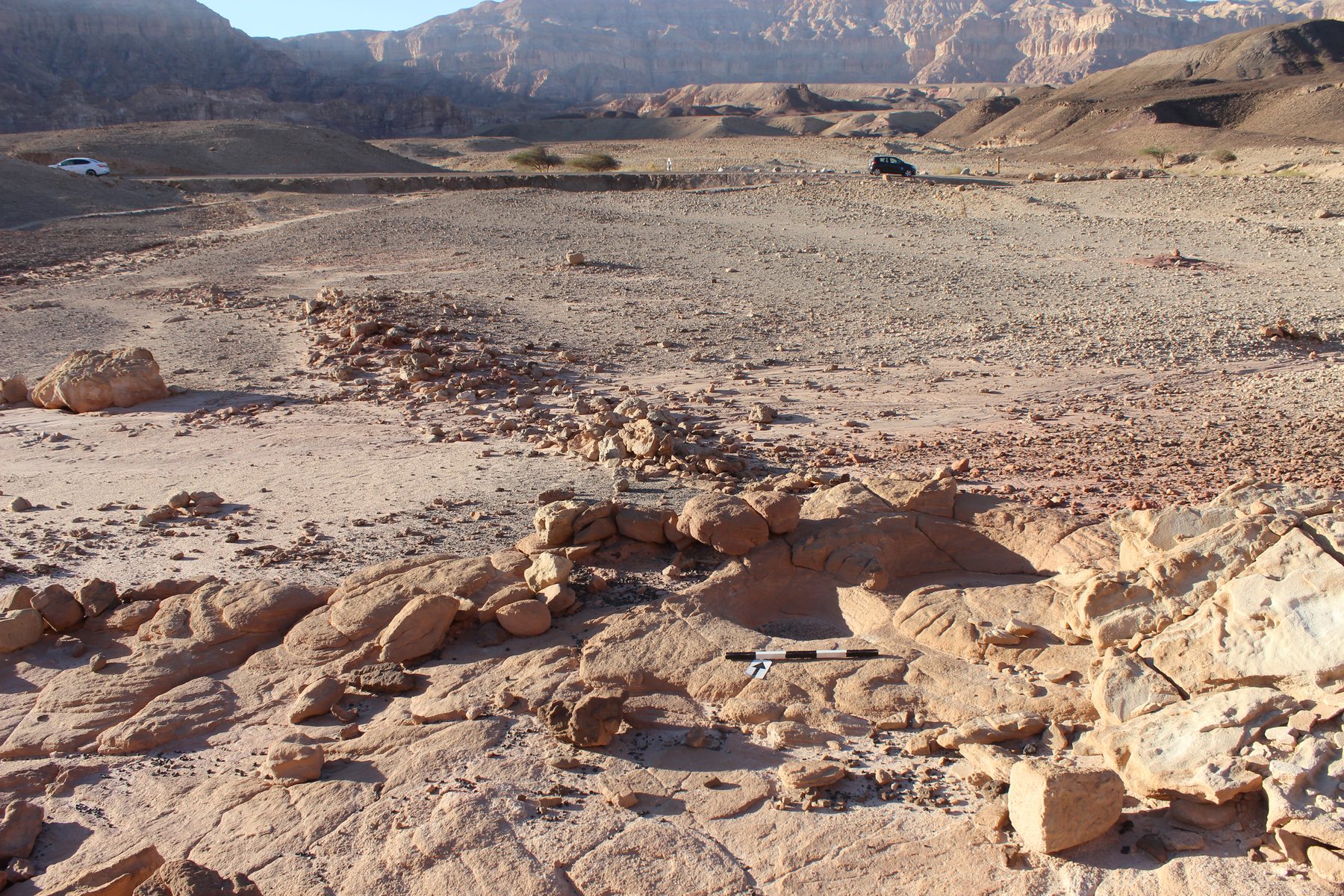
The inscribed block was uncovered in a field near Kibbutz Hefzibah in the Beit She'an valley, in what was then the eastern edge of the province the letters themselves describe. Its findspot, well outside any ancient city, matches the character of the document: a record of a rural estate, left where the estate itself once lay rather than carried off to a temple or a capital.
Beit She'an valley, IsraelWhat stays in the record
The Hefzibah inscription will never carry the drama the Books of Maccabees carry, and it was never written to. It is a landlord's paperwork, preserved by accident in a field rather than by design in an archive. Its value to the Jewish story is exactly that accident: proof, independent of any Jewish text, that Judaea's masters in this period wrote things down, granted estates, protected tenants and expected to be obeyed - the ordinary weather of empire that every later story, Jewish or otherwise, had to be told inside.
Further reading