A few kilometres west of the modern town of Jericho, where the Wadi Qelt opens onto the Jordan Valley floor, two low mounds sit beside the remains of a sunken garden and a great rectangular pool. The site is known today as Tulul Abu el-Alayiq. It is not a temple or a fortress. It is a resort - a winter estate built by the Hasmonean dynasty, the priestly family that ruled an independent Judean state after the Maccabean revolt, so that its kings could spend the cold months somewhere warmer and lower than Jerusalem. The ruins are unglamorous to look at: mudbrick and fieldstone footings, plaster floors, the outline of pools drained two thousand years ago. What they prove is not unglamorous at all. They show a Judean state confident enough, and rich enough, to build itself a palace complex on the Hellenistic model, complete with formal gardens, bathhouses and swimming pools, in the very century the tribe is sometimes assumed to have been living hand to mouth under foreign rule.
Jericho's winter appeal was practical. The Jordan Valley sits far below sea level and stays mild when Jerusalem, eight hundred metres higher, is cold and wet. The Hasmoneans were not the first to notice this - the oasis had been valued for its date palms and balsam groves long before them - but they were the first Judean rulers to build a permanent royal estate there, drawing water off the Wadi Qelt through aqueducts to feed pools and irrigate gardens in the middle of a desert. The engineering is the point as much as the architecture. A palace that can run a swimming pool in the Jordan Valley is a palace backed by a state that controls its water.

Building a state's own leisure
Construction at the site began under the early Hasmonean rulers and was expanded across several generations, with successive kings enlarging the pools, adding pavilions and reshaping the gardens. The complex grew in phases rather than as a single design, which is itself informative: this was a working royal residence in continuous use, not a one-off monument. Excavators found a large swimming pool, subsidiary pools, a formal sunken garden with planting pits arranged in rows, and bathhouses fitted with the hot, warm and cold rooms familiar from the Hellenistic and Roman bathing tradition. None of this is native Judean building practice inherited from the First Temple period. It is the vocabulary of Hellenistic royal architecture, the same architectural language used by the Ptolemies and Seleucids, adopted wholesale by a Judean dynasty that fought a war against Hellenising pressure and then built itself a Hellenistic-style palace all the same.
That tension is not a contradiction to explain away. It is the ordinary condition of a small state operating inside a larger Hellenistic world - able to reject foreign religious imposition on the Temple while borrowing foreign architectural fashion for a royal estate, because one was a matter of cult and the other a matter of taste and display. The palace complex was a stage for entertaining envoys and allies, and its scale said something plain: the Hasmonean state could compete, materially, with its Hellenistic neighbours.
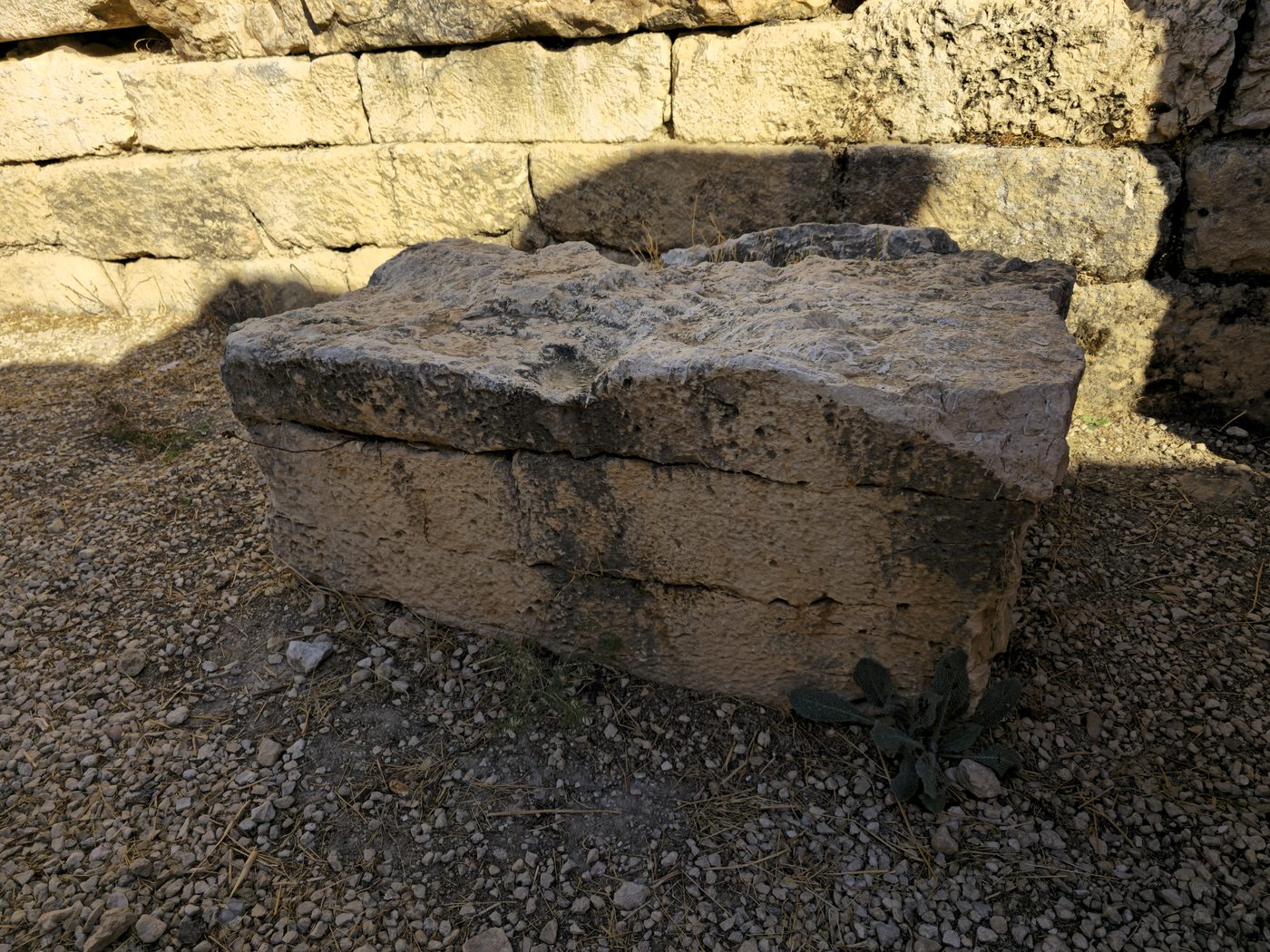
Tulul Abu el-Alayiq, the twin mounds
Excavations at the site west of Jericho, led over several seasons from the 1970s onward, uncovered a multi-phase Hasmonean palace with a large swimming pool, subsidiary pools fed by aqueducts off the Wadi Qelt, a formal sunken garden and at least one bathhouse. The complex was substantially reworked and expanded by Herod the Great after he took the Judean throne, whose builders reused and enlarged the Hasmonean water system rather than starting from nothing - a sign of how well the original engineering was regarded.
In situ, Jericho - Israel Antiquities AuthorityA drowning Josephus remembered
The palace pools are not only an archaeological find. They appear in the historical record too, in an episode that shows how political the site's leisure architecture actually was. The historian Josephus records that the young high priest Aristobulus III, the last male heir of the Hasmonean line and brother-in-law of Herod, was drowned in a swimming pool at the Jericho estate on Herod's orders, an accident staged to look like play among the royal household's young men. Whether or not every detail of Josephus's account can be taken at face value, the setting he describes matches what excavation has actually found on the ground: a royal pool large enough for young courtiers to swim in, at a winter residence where the Hasmonean and Herodian dynasties overlapped and where dynastic rivalry ran through generations of the same family.
The episode is worth including here because it is a rare case where the physical site and a specific written account can be tested against each other, and where they hold up. Archaeology confirms the kind of place Josephus describes existed, at the scale he implies. It does not and cannot confirm the murder itself; that remains a matter of textual source criticism, not excavation. Historians continue to weigh how far Josephus's account of the Herodian court, written decades after the events he describes and with his own agenda, can be trusted in its particulars. What is not in dispute is that the palace, the pool and the political stakes of a Hasmonean prince swimming in Herod's Jericho estate were all real.
The pool where Aristobulus III drowned
Josephus's account places the drowning of the last Hasmonean high priest in a swimming pool at Herod's Jericho estate, built on and around the earlier Hasmonean palace. The physical pools recovered by excavation match the scale and setting his narrative requires, giving the written source a checkable material context even where its precise claims about intent remain a question of textual interpretation rather than archaeology.
Josephus, Jewish Antiquities; site in situ, JerichoTaken together, the mudbrick footings at Tulul Abu el-Alayiq are a corrective to a certain flattened picture of Second Temple Judea as either purely pious or purely put-upon. The Hasmoneans who wintered there were priests and kings at once, ruling a real state with real engineering and real Hellenistic taste, entertaining allies beside a pool their own aqueduct kept full. The site is unglamorous rubble today. In its own time it was the government at leisure, and leisure on that scale is itself a form of evidence.