Hammat Gader sits in the Yarmuk River valley, below sea level, where hot mineral springs rise out of the ground hot enough to steam. In antiquity this made it one of the great bathing resorts of the region - a sprawling complex of pools, vaulted halls and channelled water that drew visitors from across the Galilee, the Golan and further afield for over five hundred years. It was not a quiet backwater. Rabbinic literature knows the place by name, and tradition remembers scholars, among them Judah ha-Nasi, coming to bathe in its waters. Set apart from the great bath complex, on the same mound, a Jewish community built itself a synagogue - a public building for a resident congregation living beside a resort that was, for centuries, one of the more cosmopolitan addresses in the land.

A hall beside the baths
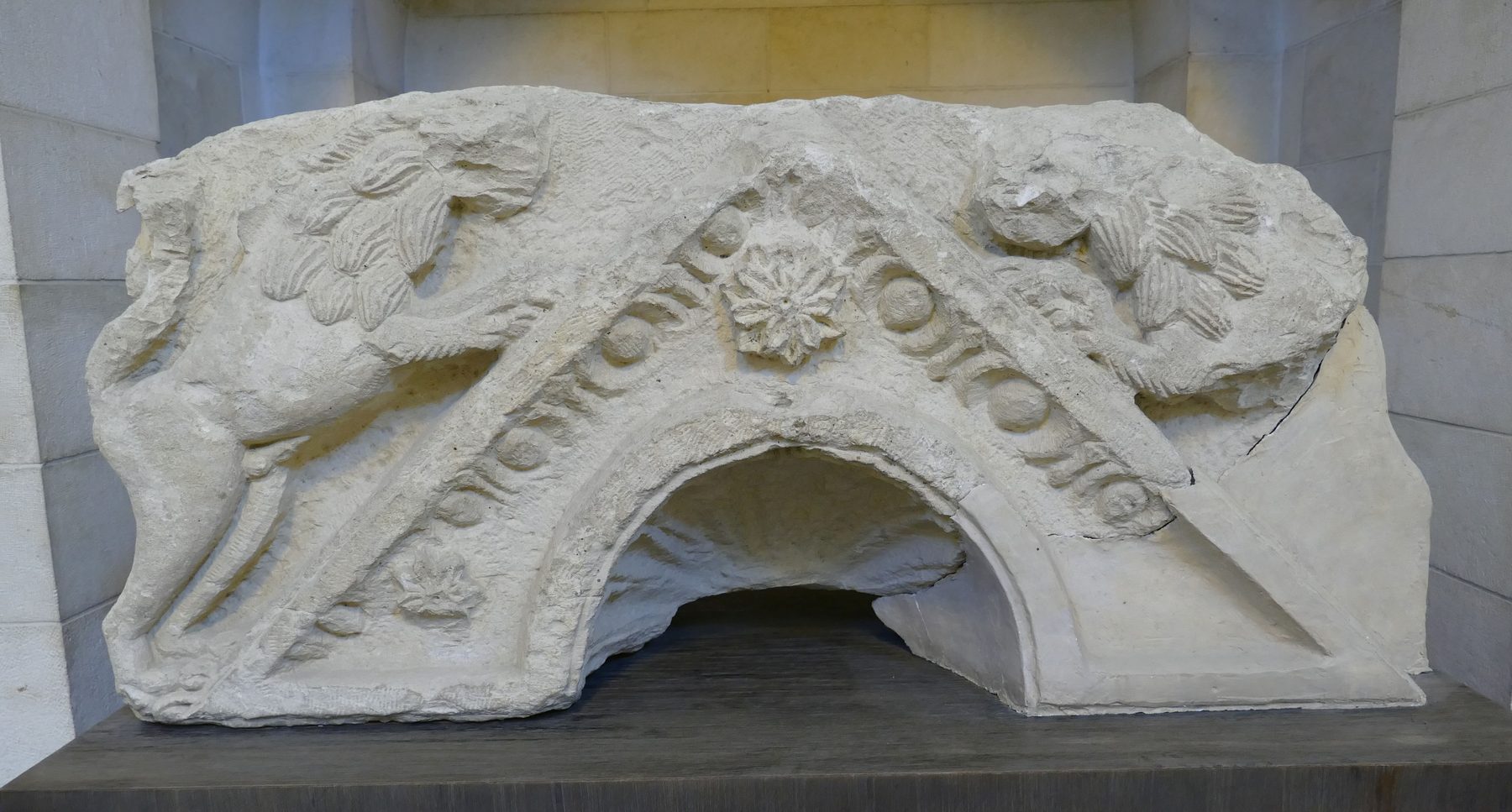
The synagogue was excavated in 1932 by Eleazar Lipa Sukenik of the Hebrew University of Jerusalem, on behalf of the same institution that would later carry out the early work on the Dead Sea Scrolls. Sukenik uncovered a substantial rectangular prayer hall enclosed by a wall running some thirty metres, with two rows of columns dividing the room into a nave and side aisles, a bema set into the southern wall, and an apse - the whole building oriented so that worshippers faced south, toward Jerusalem. A chancel screen of carved marble stood before the apse, decorated with a menorah. Further excavation in the early 1980s, led by Gideon Foerster, clarified the building's construction phases and confirmed that the standing hall belongs to the fifth century CE, in the Byzantine period, though the site's use as a bathing resort reaches back considerably earlier, into the Roman period.
No part of the synagogue is visible above ground today; the excavated remains lie beneath the modern spa and nature reserve that still occupies the site, reburied for protection after recording. The most significant single element to leave the site is a large panel of the mosaic pavement, removed and now displayed at the entrance to the Supreme Court of Israel in Jerusalem, where it is seen by more visitors than the ruin itself.
The Hammat Gader synagogue
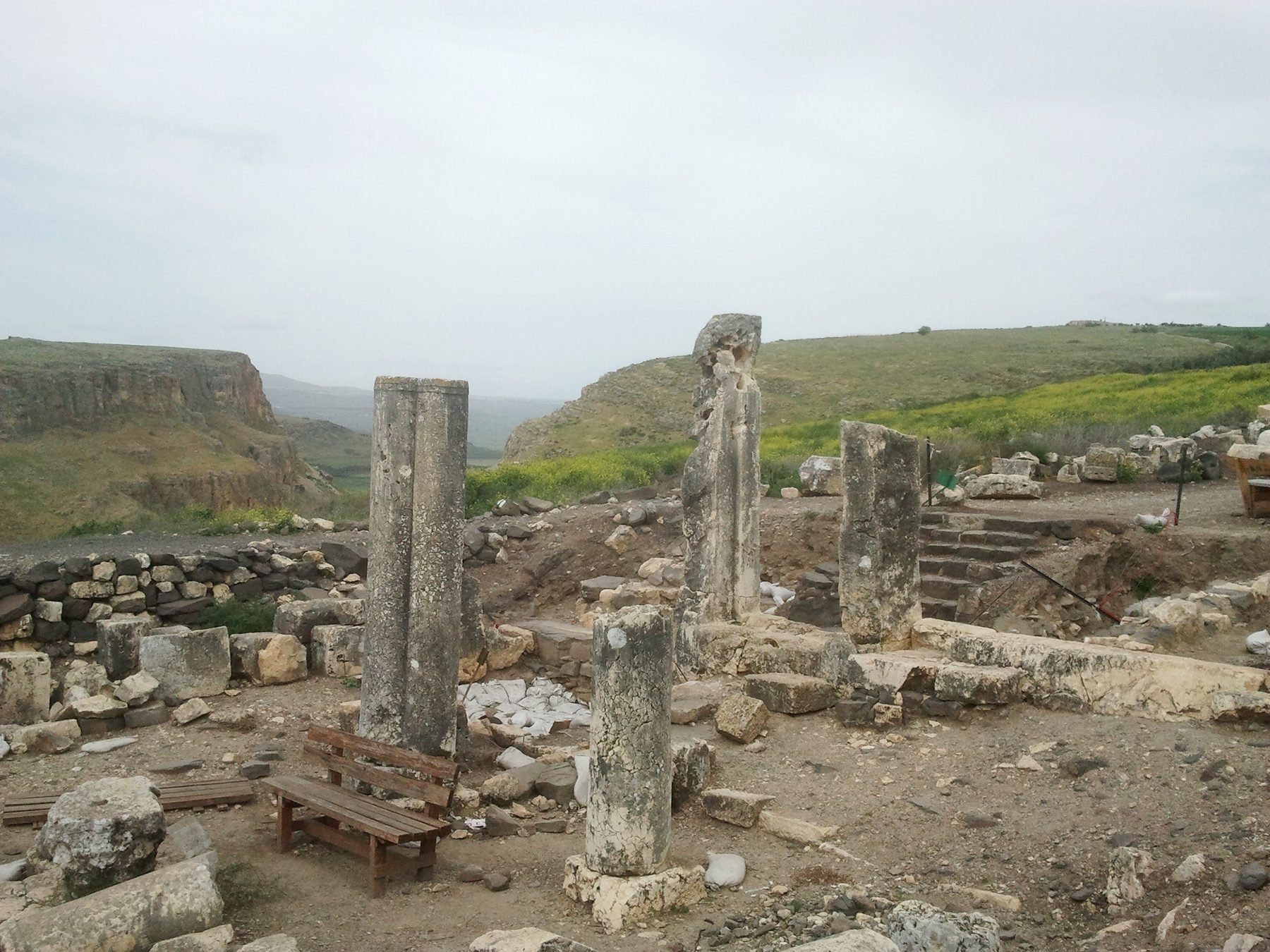
A rectangular prayer hall with two rows of columns, a southern bema, an apse and a carved marble chancel screen, built on the mound above the Hammat Gader hot springs in the Yarmuk valley. Excavated by E. L. Sukenik in 1932 and further examined by Gideon Foerster in 1982 to 1983, the standing building dates to the fifth century CE. It remains in situ, reburied beneath the modern spa site for protection.
In situ, Hammat Gader, Yarmuk valleyNaming the donors
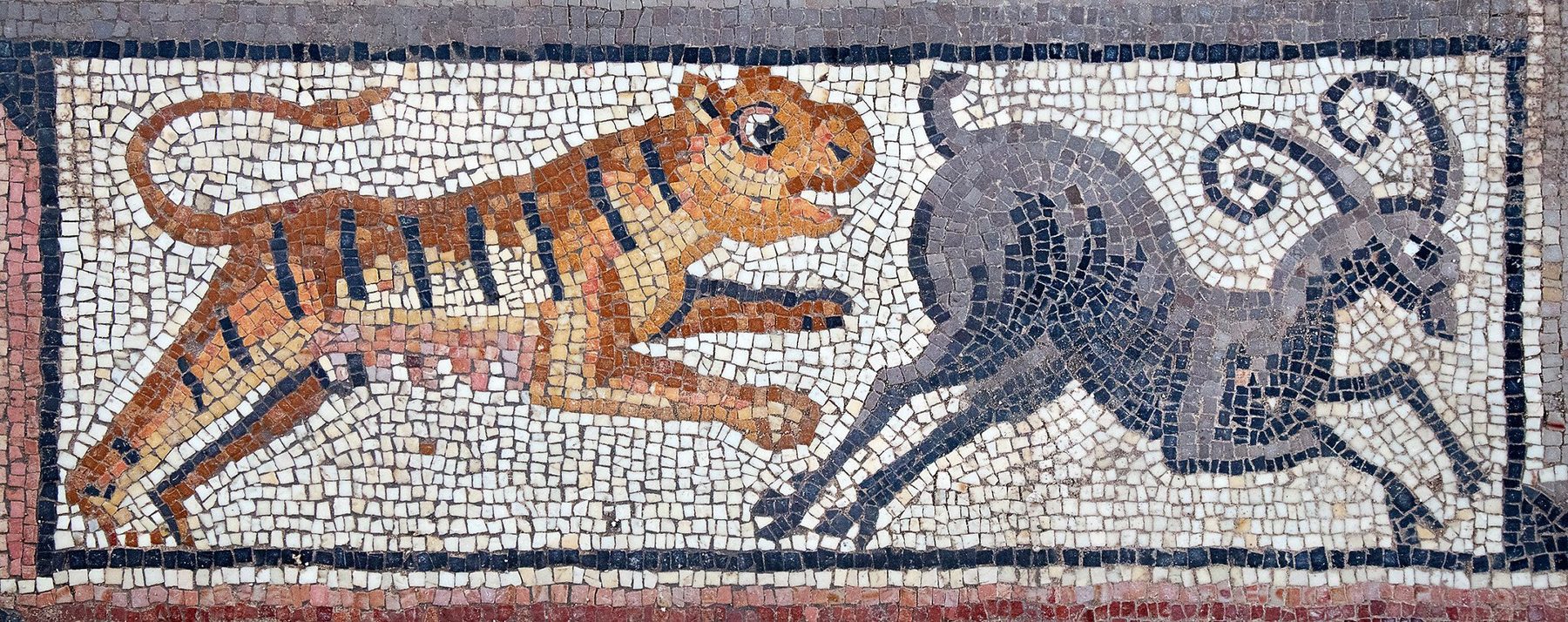
The mosaic floor of the prayer hall carries several Aramaic inscriptions, along with a shorter one in Greek from the area of the chancel screen. The best preserved of the Aramaic texts sits in a carpet before the bema, framed by two facing lions and two cypress trees worked into the mosaic, with a wreath enclosing the dedicatory text itself. It records that named individuals gave toward the building - one gift recorded as five gold coins - in formulas that bless the donors and, in some cases, name the villages they came from. Other, more damaged inscriptions elsewhere in the floor preserve further donor names and further places of origin, so that even in its fragmentary state the pavement reads less like a single dedication than like a running subscription list, updated as different households and different communities paid their share.
That is what makes the floor unusual as evidence. Most surviving synagogue dedications name a single patron, or a community acting as one body. Hammat Gader's inscriptions instead itemise individual contributions, in a resort town whose congregation evidently drew members, or at least donors, from more than one nearby settlement. A mosaic floor is normally read for its decoration - the lions, the cypresses, the geometric borders. Here the decoration frames a ledger, and the ledger is the more informative half of the object.
The Aramaic donor inscriptions
Several Aramaic inscriptions set into the synagogue's mosaic floor, the best preserved framed by lions and cypress trees before the bema, record gifts toward the building's construction by named individuals - one gift specified as five gold coins - together with blessings for the donors and, in places, the villages they came from. A separate, shorter Greek inscription is associated with the chancel screen.
Panel displayed at the Supreme Court of Israel, JerusalemA synagogue that needed no persuading
The Hammat Gader inscriptions do not preach. They thank. That is a modest thing for a stone floor to do, and it is also a precise kind of evidence: proof that a fifth-century Jewish community, in a valley better known for its Roman-built baths than for its piety, had the means, the organisation and the will to fund a substantial public building, and chose to record who paid for it rather than to leave the gift anonymous. The names are not those of kings or sages. They are householders, some from Hammat Gader itself and some, it appears, from villages nearby, each one recorded because a floor was being paid for one household's contribution at a time.
Set beside the grandeur of the bathhouse complex next door - vaulted halls, engineered water channels, a resort built and maintained across centuries of Roman and Byzantine occupation - the synagogue is a smaller and plainer thing. What its floor preserves that the baths cannot is a list of ordinary names, given not to a god of healing waters but to the building where this valley's Jewish community gathered to pray, and paid for the privilege in a currency the mosaic still records.
Further reading