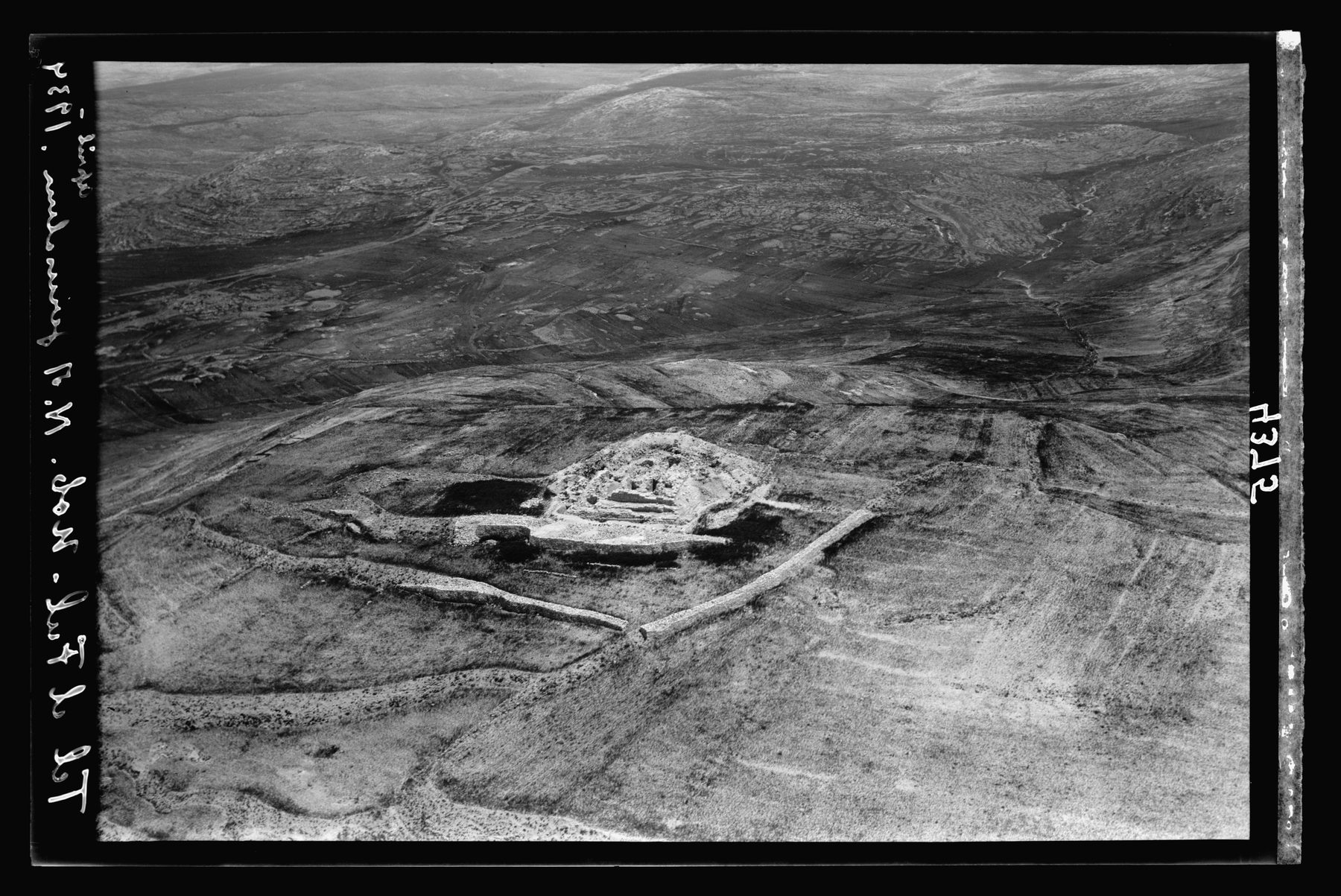
Walk the perimeter of Tell en-Nasbeh, a low mound eleven kilometres north of Jerusalem on the road toward Ramallah, and the wall is the first thing that argues for itself. It is a casemate wall, built as two parallel faces linked by short cross-walls to make a ring of rooms, and it runs for hundreds of metres round the summit - a serious undertaking for a town of modest size. Cut into it on the eastern side is a gate: four chambers set in pairs facing each other across a paved passage, the standard plan of an Iron Age Judahite town gate, built to be defended and to be seen. Whoever built this expected trouble, and built for it in stone rather than argument.
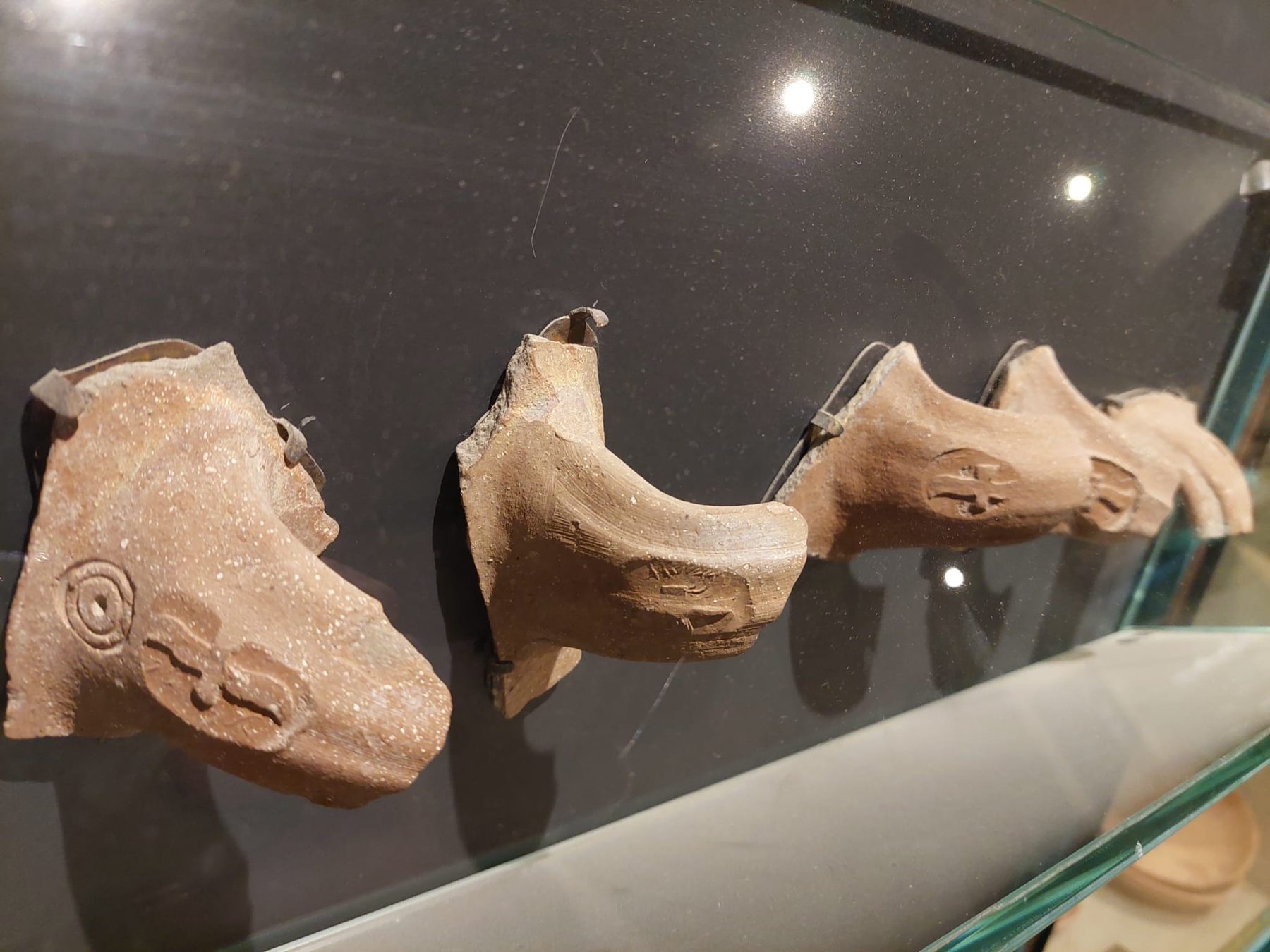
The site was excavated between 1926 and 1935 by William Frederic Badè, working for the Pacific School of Religion, in one of the earlier large-scale American digs in the region. The finds - pottery, seal impressions, the gate and wall themselves - are catalogued and still held largely in situ and in the Badè Museum's study collections rather than dispersed to a single national museum, which is part of why the site is less famous than its scale deserves. It was never picked up and carried anywhere. It simply stayed where it was built, on its own low hill, waiting for someone to dig down to it.
The identification of Tell en-Nasbeh with biblical Mizpah in Benjamin is not settled beyond all challenge, but it is the position most excavators and epigraphers of the site have converged on, and it rests on more than convenience. The location fits the biblical geography of Mizpah as a town on the northern frontier of Judah, near Ramah, on the road between Jerusalem and the hill country to the north. The pottery sequence runs through the right centuries. And the fortifications themselves belong to exactly the kind of building programme the biblical text describes happening at Mizpah - a town strengthened, deliberately, at a moment when the border needed watching.
A four-chambered gate, built to hold a border
The gate at Tell en-Nasbeh follows the standard Judahite plan seen at other fortified towns of the period: two guard chambers on each side of a paved entry passage, set into a thick casemate wall that rings the whole summit. Building work at this scale points to a town under state direction, not a village improvising its own defences. The masonry and the plan are consistent with construction in the ninth to seventh centuries BCE, a window that includes the account, in the book of Kings, of King Asa of Judah fortifying Mizpah with stone and timber stripped from a rival's abandoned building project further north.
Tell en-Nasbeh, in situ - excavation records held by the Badè Museum, Pacific School of ReligionThe town that outlasted Jerusalem
What makes this gate matter is not only that it stood, but what walked through it in 586 BCE. When the Babylonians took Jerusalem, burned the Temple and deported much of the political and priestly leadership, they did not simply erase the province. Judah still needed administering, and the Babylonian crown appointed a Judahite official named Gedaliah ben Ahikam to govern what remained of the population from a seat away from the ruined capital. The biblical account, in the book of Kings and at greater length in Jeremiah, places that seat at Mizpah. If the identification with Tell en-Nasbeh holds, then this gate is the one through which the remnant of the kingdom passed to reach its new, improvised centre of government - officials, refugees drifting back from the countryside, and eventually the assassins who killed Gedaliah and ended the experiment within months.
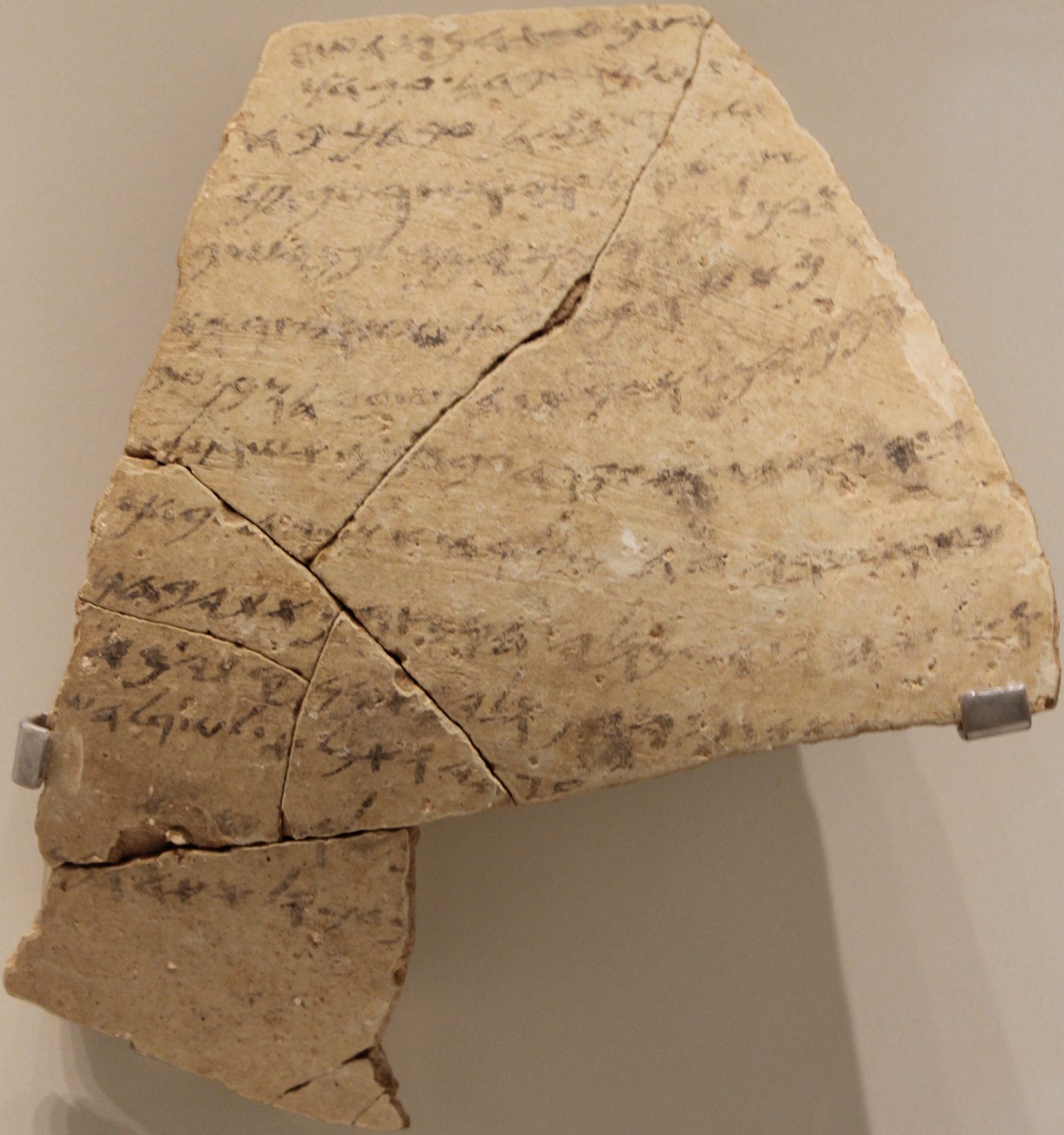
That is a striking amount of history to rest on a gate and a stretch of wall, and it is worth being honest about the shape of the evidence. No inscription found at the site names Mizpah outright, and the case for the identification is cumulative rather than a single decisive find. What the excavation does supply is something rarer and in some ways more useful than a labelled stone: a real fortified Judahite town, of the right size and the right period, still standing on its own foundations, that fits every independent test the biblical geography sets for the place. The gate does not shout its own name. It simply continues to stand where a town once needed exactly this kind of gate, at exactly the moment the text says one mattered most.
A governor, a remnant, and a very short peace
After the fall of Jerusalem, the book of Kings and the book of Jeremiah both record that the Babylonian king set Gedaliah ben Ahikam over the Judahites left in the land, and that Gedaliah made his seat at Mizpah. Refugees and soldiers who had scattered during the siege are described gathering back to him there, briefly, before he was assassinated by a rival with royal blood, an act that triggered a further flight into Egypt. Whether or not the gate excavated at Tell en-Nasbeh is literally the one Jeremiah describes people passing through, the site is the strongest physical candidate for the administrative centre the text insists existed at this exact moment - proof that Judahite life, however diminished, continued to function through a functioning gate, a functioning wall and a functioning town, in the very years the kingdom is often assumed to have simply stopped.
Biblical text: 2 Kings 25 and Jeremiah 40 to 41; site: Tell en-Nasbeh, in situ